
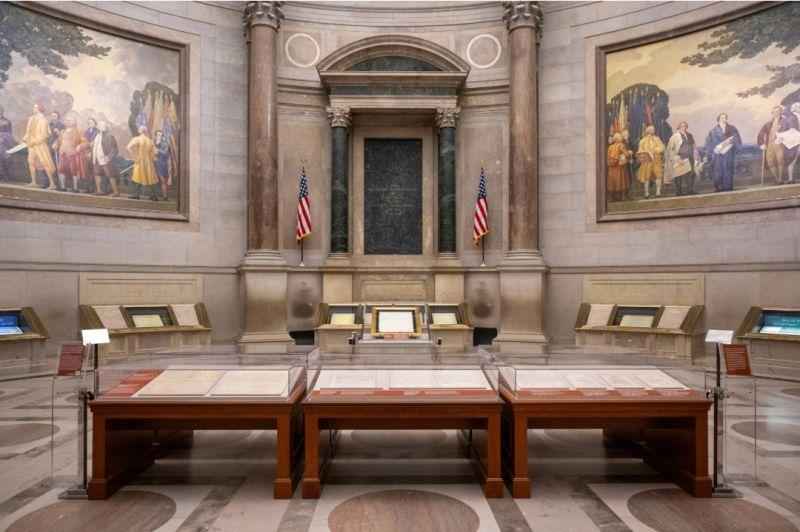
The United States Constitution is one of the most influential governing documents in history, laying the foundation for the nation’s laws, rights, and system of government. Signed in 1787, it established the framework that continues to guide the country while protecting the freedoms and principles that define American democracy. Exploring Constitution trivia is a fun and educational way to learn about its history, key ideas, important amendments, and the people who helped shape it.
This collection of U.S. Constitution trivia questions and answers covers a wide range of topics, including the Constitutional Convention, the Bill of Rights, the three branches of government, famous Founding Fathers, landmark amendments, and important historical facts. With a mix of easy, medium, and challenging questions, there’s something for students, history enthusiasts, educators, and trivia lovers alike.
Get ready to test your knowledge, discover fascinating facts, and deepen your understanding of one of the world’s most significant legal documents. Whether you’re preparing for a classroom activity, quiz competition, family game night, or simply expanding your knowledge, these U.S. Constitution trivia questions and answers offer an engaging and rewarding challenge.
Us Constitution Trivia Questions and Answers
1. When was the U.S. Constitution signed?
A) 1776
B) 1781
C) 1787 ✅
D) 1791
Answer: C) 1787
Explanation: The U.S. Constitution was signed by delegates at the Constitutional Convention on September 17, 1787.
2. In which city was the U.S. Constitution written?
A) Boston
B) Philadelphia ✅
C) New York City
D) Washington, D.C.
Answer: B) Philadelphia
Explanation: The Constitution was drafted at Independence Hall in Philadelphia, Pennsylvania.
3. What is the supreme law of the United States?
A) The Declaration of Independence
B) The Bill of Rights
C) The U.S. Constitution ✅
D) The Articles of Confederation
Answer: C) The U.S. Constitution
Explanation: The Constitution is the highest law in the United States and establishes the framework of the federal government.
4. How many branches of government does the Constitution establish?
A) Two
B) Three ✅
C) Four
D) Five
Answer: B) Three
Explanation: The Constitution creates the legislative, executive, and judicial branches.
5. Which branch of government makes federal laws?
A) Executive
B) Judicial
C) Legislative ✅
D) Military
Answer: C) Legislative
Explanation: Congress, the legislative branch, is responsible for creating federal laws.
6. What are the first ten amendments to the Constitution called?
A) Federal Papers
B) Bill of Rights ✅
C) Articles of Freedom
D) Liberty Amendments
Answer: B) Bill of Rights
Explanation: The first ten amendments, ratified in 1791, protect individual rights and freedoms.
7. How many amendments does the U.S. Constitution currently have?
A) 20
B) 24
C) 27 ✅
D) 30
Answer: C) 27
Explanation: Since its adoption, the Constitution has been amended 27 times.
8. Which amendment guarantees freedom of speech?
A) First Amendment ✅
B) Second Amendment
C) Fifth Amendment
D) Tenth Amendment
Answer: A) First Amendment
Explanation: The First Amendment protects freedom of speech, religion, the press, assembly, and petition.
9. Which amendment protects the right to bear arms?
A) First Amendment
B) Second Amendment ✅
C) Fourth Amendment
D) Ninth Amendment
Answer: B) Second Amendment
Explanation: The Second Amendment protects the right of the people to keep and bear arms.
10. Which amendment abolished slavery in the United States?
A) Tenth Amendment
B) Twelfth Amendment
C) Thirteenth Amendment ✅
D) Fifteenth Amendment
Answer: C) Thirteenth Amendment
Explanation: The Thirteenth Amendment abolished slavery in 1865.
11. How many articles are in the U.S. Constitution?
A) Five
B) Six
C) Seven ✅
D) Eight
Answer: C) Seven
Explanation: The Constitution contains seven articles that outline the structure and powers of the federal government.
12. Who is often called the “Father of the Constitution”?
A) George Washington
B) Thomas Jefferson
C) James Madison ✅
D) Benjamin Franklin
Answer: C) James Madison
Explanation: James Madison played a key role in drafting the Constitution and promoting its ratification.
13. Which branch interprets the Constitution?
A) Legislative
B) Executive
C) Judicial ✅
D) State Governments
Answer: C) Judicial
Explanation: The judicial branch, led by the Supreme Court, interprets the Constitution.
14. What is the opening phrase of the U.S. Constitution?
A) We the People ✅
B) Life and Liberty
C) In God We Trust
D) United We Stand
Answer: A) We the People
Explanation: The Constitution begins with the famous words “We the People.”
15. Which amendment gave women the right to vote?
A) Fifteenth Amendment
B) Nineteenth Amendment ✅
C) Twenty-First Amendment
D) Twenty-Sixth Amendment
Answer: B) Nineteenth Amendment
Explanation: Ratified in 1920, the Nineteenth Amendment guaranteed women the right to vote.
16. Which amendment lowered the voting age to 18?
A) Twenty-First Amendment
B) Twenty-Third Amendment
C) Twenty-Fourth Amendment
D) Twenty-Sixth Amendment ✅
Answer: D) Twenty-Sixth Amendment
Explanation: The Twenty-Sixth Amendment, ratified in 1971, lowered the voting age from 21 to 18.
17. Which document was replaced by the U.S. Constitution?
A) Bill of Rights
B) Articles of Confederation ✅
C) Magna Carta
D) Declaration of Independence
Answer: B) Articles of Confederation
Explanation: The Constitution replaced the Articles of Confederation as the nation’s governing framework.
18. Which branch of government is headed by the President?
A) Legislative
B) Executive ✅
C) Judicial
D) Senate
Answer: B) Executive
Explanation: The President leads the executive branch and is responsible for enforcing federal laws.
19. Which amendment protects people from unreasonable searches and seizures?
A) Third Amendment
B) Fourth Amendment ✅
C) Sixth Amendment
D) Eighth Amendment
Answer: B) Fourth Amendment
Explanation: The Fourth Amendment protects citizens against unreasonable searches and seizures by the government.
20. What is the main purpose of the U.S. Constitution?
A) To create state governments only
B) To establish the federal government and protect citizens’ rights ✅
C) To regulate international trade only
D) To create political parties
Answer: B) To establish the federal government and protect citizens’ rights
Explanation: The Constitution establishes the structure of the federal government, defines its powers, and protects the rights and freedoms of the people.
Read Also:156+ Hilarious Social Studies Puns
u.s. Constitution Test with Answers

1. The U.S. Constitution begins with which famous words?
A) “When in the Course of human events…”
B) “We the Colonies…”
C) “We the People…” ✅
D) “We the States…”
Answer: C) “We the People…”
Explanation: The Constitution opens with “We the People,” emphasizing that the government’s power comes from the citizens.
2. Which document contains the phrase “All men are created equal”?
A) The U.S. Constitution
B) The Bill of Rights
C) The Declaration of Independence ✅
D) The Articles of Confederation
Answer: C) The Declaration of Independence
Explanation: This famous phrase appears in the Declaration of Independence, not the Constitution.
3. Which original state did NOT send delegates to the Constitutional Convention?
A) Connecticut
B) Rhode Island ✅
C) New Hampshire
D) Georgia
Answer: B) Rhode Island
Explanation: Rhode Island boycotted the Constitutional Convention because it feared a stronger national government.
4. How many states had to ratify the Constitution before it took effect?
A) 13
B) 11
C) 9 ✅
D) 7
Answer: C) 9
Explanation: Article VII required approval from nine of the thirteen states for the Constitution to become law.
5. Who is known as the “Father of the Constitution”?
A) George Washington
B) Benjamin Franklin
C) Thomas Jefferson
D) James Madison ✅
Answer: D) James Madison
Explanation: Madison played a leading role in drafting the Constitution and promoting its ratification.
6. Under the original Constitution, U.S. senators were chosen by whom?
A) Popular vote
B) State legislatures ✅
C) State governors
D) The House of Representatives
Answer: B) State legislatures
Explanation: Senators were originally selected by state legislatures until the 17th Amendment established direct elections.
7. How many articles are in the original Constitution?
A) 5
B) 7 ✅
C) 10
D) 13
Answer: B) 7
Explanation: The Constitution contains seven articles outlining the structure and powers of the federal government.
8. How many amendments have been added to the Constitution?
A) 10
B) 17
C) 27 ✅
D) 33
Answer: C) 27
Explanation: The Constitution has been amended 27 times, beginning with the Bill of Rights.
9. Who was the oldest delegate to sign the Constitution?
A) George Washington
B) James Madison
C) Benjamin Franklin ✅
D) Roger Sherman
Answer: C) Benjamin Franklin
Explanation: Franklin was 81 years old when he signed the Constitution in 1787.
10. Who was the youngest signer of the Constitution?
A) James Madison
B) Alexander Hamilton
C) Jonathan Dayton ✅
D) Gouverneur Morris
Answer: C) Jonathan Dayton
Explanation: Jonathan Dayton of New Jersey was only 26 years old when he signed the document.
11. In which city was the Constitutional Convention held?
A) Washington, D.C.
B) New York City
C) Philadelphia ✅
D) Boston
Answer: C) Philadelphia
Explanation: Delegates met at Independence Hall in Philadelphia during the summer of 1787.
12. Which method of electing the president did James Wilson originally support?
A) Election by Congress
B) Election by governors
C) Popular vote ✅
D) Election by the Supreme Court
Answer: C) Popular vote
Explanation: Wilson favored direct election by the people, but the Electoral College was adopted as a compromise.
13. Which amendment is the only one ever repealed?
A) 13th Amendment
B) 18th Amendment ✅
C) 19th Amendment
D) 22nd Amendment
Answer: B) 18th Amendment
Explanation: The 18th Amendment established Prohibition and was later repealed by the 21st Amendment.
14. Approximately how many words are in the U.S. Constitution?
A) 1,500
B) 4,543 ✅
C) 7,500
D) 10,000
Answer: B) 4,543
Explanation: The Constitution is surprisingly brief, containing about 4,543 words, including the signatures.
15. How many delegates signed the Constitution?
A) 55
B) 42
C) 39 ✅
D) 27
Answer: C) 39
Explanation: Thirty-nine of the fifty-five delegates signed the Constitution on September 17, 1787.
16. Which phrase does NOT appear in the Constitution’s Preamble?
A) “To form a more perfect Union”
B) “Establish Justice”
C) “All men are created equal” ✅
D) “Secure the Blessings of Liberty”
Answer: C) “All men are created equal”
Explanation: That phrase belongs to the Declaration of Independence, not the Constitution.
17. Before the 22nd Amendment, how many presidential terms did the Constitution allow?
A) One
B) Two
C) Three
D) Unlimited ✅
Answer: D) Unlimited
Explanation: The original Constitution set no term limits for presidents. The two-term limit was added in 1951.
18. Which state’s name appears with a historical spelling variation on the Constitution?
A) Massachusetts
B) Pennsylvania ✅
C) Virginia
D) Maryland
Answer: B) Pennsylvania
Explanation: The document spells it “Pensylvania,” a common spelling variation during the 18th century.
19. How much was Jacob Shallus paid to handwrite the Constitution?
A) $10
B) $30 ✅
C) $100
D) $500
Answer: B) $30
Explanation: Jacob Shallus received $30 for carefully writing the final Constitution on parchment.
20. According to the Constitution, where must all revenue (tax) bills originate?
A) The President
B) The Senate
C) The House of Representatives ✅
D) The Supreme Court
Answer: C) The House of Representatives
Explanation: Article I, Section 7 requires that all bills for raising revenue begin in the House, although the Senate may amend them.
Read Also:294+ Best Connecticut Instagram Captions
Easy Us Constitution Trivia Questions and Answers
1. In what year was the U.S. Constitution signed?
A) 1776
B) 1787 ✅
C) 1789
D) 1791
Answer: B) 1787
Explanation: The U.S. Constitution was signed on September 17, 1787, at the Constitutional Convention in Philadelphia.
2. How many original articles does the U.S. Constitution contain?
A) 5
B) 7 ✅
C) 10
D) 27
Answer: B) 7
Explanation: The Constitution originally included seven articles that establish the structure and powers of the federal government.
3. What are the first ten amendments to the Constitution called?
A) The Reconstruction Amendments
B) The Bill of Rights ✅
C) The Civil War Amendments
D) The Federalist Papers
Answer: B) The Bill of Rights
Explanation: Ratified in 1791, the first ten amendments protect many of the fundamental rights and freedoms of individuals.
4. Which amendment abolished slavery in the United States?
A) 13th Amendment ✅
B) 14th Amendment
C) 15th Amendment
D) 19th Amendment
Answer: A) 13th Amendment
Explanation: The 13th Amendment, ratified in 1865, ended slavery and involuntary servitude except as punishment for a crime.
5. What principle divides government power among three branches?
A) Federalism
B) Separation of powers ✅
C) Popular sovereignty
D) Judicial review
Answer: B) Separation of powers
Explanation: The Constitution divides authority among the legislative, executive, and judicial branches to prevent the concentration of power.
6. Who is known as the “Father of the Constitution”?
A) George Washington
B) Thomas Jefferson
C) James Madison ✅
D) Alexander Hamilton
Answer: C) James Madison
Explanation: James Madison played a leading role in drafting the Constitution and later helped secure its ratification.
7. How many amendments does the U.S. Constitution currently have?
A) 10
B) 17
C) 27 ✅
D) 33
Answer: C) 27
Explanation: Since 1789, the Constitution has been amended 27 times, with the most recent amendment ratified in 1992.
8. Which amendment protects freedom of speech, religion, the press, assembly, and petition?
A) 1st Amendment ✅
B) 2nd Amendment
C) 4th Amendment
D) 5th Amendment
Answer: A) 1st Amendment
Explanation: The First Amendment guarantees several essential freedoms that are central to American democracy.
9. The 19th Amendment granted voting rights regardless of which factor?
A) Race
B) Sex ✅
C) Age
D) Property ownership
Answer: B) Sex
Explanation: Ratified in 1920, the 19th Amendment guaranteed women the right to vote nationwide.
10. Which amendment defines citizenship and guarantees equal protection under the law?
A) 13th Amendment
B) 14th Amendment ✅
C) 15th Amendment
D) 16th Amendment
Answer: B) 14th Amendment
Explanation: The 14th Amendment established birthright citizenship and equal protection under the law.
11. What system allows each branch of government to limit the powers of the others?
A) Federalism
B) Checks and balances ✅
C) Republicanism
D) Enumerated powers
Answer: B) Checks and balances
Explanation: This system prevents any one branch from becoming too powerful by allowing each branch to check the others.
12. The Constitution established what type of government system?
A) Unitary
B) Confederal
C) Federal ✅
D) Parliamentary
Answer: C) Federal
Explanation: Federalism divides governmental authority between the national government and the states.
13. Which amendment protects people from unreasonable searches and seizures?
A) 3rd Amendment
B) 4th Amendment ✅
C) 5th Amendment
D) 6th Amendment
Answer: B) 4th Amendment
Explanation: The Fourth Amendment protects privacy by requiring warrants to be supported by probable cause in most situations.
14. The 15th Amendment protects voting rights regardless of what?
A) Sex
B) Race, color, or previous condition of servitude ✅
C) Age under 21
D) Property ownership
Answer: B) Race, color, or previous condition of servitude
Explanation: Ratified in 1870, the 15th Amendment prohibited denying voting rights based on race.
15. How many states had to ratify the Constitution before it became effective?
A) 7
B) 9 ✅
C) 13
D) All 13
Answer: B) 9
Explanation: Article VII required approval from nine of the original thirteen states for the Constitution to take effect.
16. Which article establishes the legislative branch of government?
A) Article I ✅
B) Article II
C) Article III
D) Article IV
Answer: A) Article I
Explanation: Article I creates Congress and outlines the powers and responsibilities of the legislative branch.
17. What is the formal process of changing the Constitution called?
A) Ratification
B) Amendment ✅
C) Judicial review
D) Impeachment
Answer: B) Amendment
Explanation: Article V explains how constitutional amendments are proposed and ratified.
18. Which amendment lowered the voting age from 21 to 18?
A) 19th Amendment
B) 24th Amendment
C) 26th Amendment ✅
D) 27th Amendment
Answer: C) 26th Amendment
Explanation: Ratified in 1971, the 26th Amendment granted voting rights to citizens aged 18 and older.
19. What does the Supremacy Clause establish?
A) State laws are always superior
B) The Constitution and federal laws are the supreme law of the land ✅
C) The President has unlimited authority
D) Courts cannot review laws
Answer: B) The Constitution and federal laws are the supreme law of the land
Explanation: Found in Article VI, the Supremacy Clause establishes that valid federal law takes precedence over conflicting state laws.
20. The Preamble begins with which famous words?
A) “When in the Course of human events…”
B) “We the People of the United States…” ✅
C) “Four score and seven years ago…”
D) “I pledge allegiance to the Flag…”
Answer: B) “We the People of the United States…”
Explanation: The Preamble introduces the Constitution and begins with the iconic phrase “We the People,” emphasizing that governmental authority comes from the people.
Read Also:450+ Best Navy captions for Instagram
U S Constitution Test PDF Answer Key

1. Question: Before the Constitution, the U.S. had a different rulebook — kinda like switching from VHS to streaming. What was it called?
Answer: The Articles of Confederation
Fun Fact: It was basically the beta version of America’s government — cool idea, but it lagged hard on federal power.
2. Question: The Constitution kicks off with a word that sounds like a superhero team. What’s the first word?
Answer: “We” (as in “We the People”)
Fun Fact: It’s the ultimate group project intro — except this one actually worked.
3. Question: How many amendments are in the Constitution as of today?
Answer: 27
Fun Fact: The first 10 came as a bundle — like the original DLC pack — known as the Bill of Rights.
4. Question: Which founding father is basically the Constitution’s lead writer — the James Cameron of American government?
Answer: James Madison
Fun Fact: He’s called the “Father of the Constitution,” but he was only 5’4″. Big ideas, compact frame.
5. Question: Which amendment gives you the right to say “I plead the Fifth” in a courtroom drama?
Answer: The Fifth Amendment
Fun Fact: It’s the go-to move for anyone trying to avoid self-incrimination — or just dodge awkward questions.
6. Question: Which branch of government does Article I of the Constitution create?
Answer: The Legislative Branch
Fun Fact: Congress gets top billing — like the headliner at a music festival of democracy.
7. Question: Which amendment ended Prohibition — basically saying, “Okay, fine, you can drink again”?
Answer: The 21st Amendment
Fun Fact: It’s the only amendment that repealed another one. Cheers to that!
8. Question: Who has the power to veto laws? (Hint: Think Oval Office.)
Answer: The President
Fun Fact: It’s like swiping left on a bill — but Congress can swipe back with a two-thirds override.
9. Question: Which amendment guarantees freedom of speech, religion, press, assembly, and petition — basically the First Amendment Avengers?
Answer: The First Amendment
Fun Fact: It’s the reason you can tweet your hot takes without getting arrested (usually).
10. Question: How many articles are in the original Constitution?
Answer: Seven
Fun Fact: Think of them as the seven horcruxes of American government — each one holds serious power.
11. Question: Which amendment gave women the right to vote?
Answer: The 19th Amendment
Fun Fact: Ratified in 1920 — finally letting half the population join the voting party.
12. Question: Which part of the Constitution says it’s the “supreme law of the land”?
Answer: The Supremacy Clause (Article VI)
Fun Fact: It’s the Constitution’s mic drop moment — “I’m the boss now.”
13. Question: Which amendment lowered the voting age from 21 to 18 — thanks in part to the Vietnam War?
Answer: The 26th Amendment
Fun Fact: If you’re old enough to be drafted, you’re old enough to vote. Fair deal.
14. Question: Which amendment abolished slavery?
Answer: The 13th Amendment
Fun Fact: Passed in 1865 — and yes, it’s the one referenced in that intense Spielberg movie.
15. Question: Which branch of government interprets the Constitution — like the ultimate book club?
Answer: The Judicial Branch
Fun Fact: The Supreme Court gets to decide what the Constitution really means — no spoilers, though.
16. Question: Which amendment says you have the right to bear arms — and no, it’s not about sleeveless shirts?
Answer: The Second Amendment
Fun Fact: It’s one of the most debated lines in American history — and it’s only one sentence long.
17. Question: Which amendment says you don’t have to let soldiers crash at your place?
Answer: The Third Amendment
Fun Fact: It’s like the original “No couch-surfing allowed” rule — thanks, Revolutionary War.
18. Question: Which amendment gave African American men the right to vote?
Answer: The 15th Amendment
Fun Fact: Ratified in 1870 — but sadly, voter suppression didn’t vanish with it.
19. Question: Which article explains how to amend the Constitution — basically the “patch notes” section?
Answer: Article V
Fun Fact: Changing the Constitution isn’t easy — it’s like trying to rewrite the rules of Monopoly mid-game.
20. Question: Which amendment limits the president to two terms — so no one pulls a “Fast & Furious 9” on the Oval Office?
Answer: The 22nd Amendment
Fun Fact: Passed after FDR served four terms. America said, “Okay, let’s set some boundaries.”
Hard Us Constitution Trivia Questions and Answers
1. Question: The U.S. Constitution was signed in a year that changed history. Can you name that momentous year?
Answer: 1787
Fun Fact: It wasn’t the year of Independence (1776), but when the framework for the nation took shape!
2. Question: Known as the “Father of the Constitution,” which Founding Father was the mastermind behind drafting it?
Answer: James Madison
Fun Fact: His detailed notes are our best window into the behind-the-scenes drama of the Constitutional Convention.
3. Question: How many original articles did the Constitution start with before adding the Amendments?
Answer: Seven
Fun Fact: Think of it like the original 7 chapters in a book that’s still being written!
4. Question: The Bill of Rights includes 10 key amendments. Which major right, often discussed today, wasn’t part of this initial package?
Answer: The right to vote for all citizens
Fun Fact: Voting rights evolved over time—originally, it was more limited than you might expect.
5. Question: To become President, the Constitution sets a minimum age requirement. How old must that be?
Answer: 35 years old
Fun Fact: Older than your average college grad but young enough to be full of energy!
6. Question: The Constitution splits government into three branches. Which branch actually writes the laws?
Answer: The Legislative Branch (Congress)
Fun Fact: The branch with the longest working hours, thanks to all that lawmaking!
7. Question: How many states had to agree and ratify the Constitution before it became America’s official rulebook?
Answer: Nine states
Fun Fact: That’s just over two-thirds — a serious quorum for the time.
8. Question: The iconic phrase “We the People” starts which powerful part of the Constitution?
Answer: The Preamble
Fun Fact: It’s like a rallying call that says, “Hey, this is all about us!”
9. Question: Who presides as the leader of the Senate according to the Constitution?
Answer: The Vice President of the United States
Fun Fact: They only show up in the Senate chamber when a tie needs breaking—talk about a dramatic entrance!
10. Question: Which amendment famously repealed Prohibition, reopening the bars and party spots?
Answer: The 21st Amendment
Fun Fact: It’s the only one that completely overturned a previous amendment—the 18th.
11. Question: How many amendments does the Constitution have as of now?
Answer: 27
Fun Fact: Each one is like a legal “patch update” to keep the Constitution relevant.
12. Question: Besides Congress proposing amendments, what’s the other method for amending the Constitution?
Answer: A national convention called by two-thirds of the states
Fun Fact: This second route is rarely used—kind of like a secret level in a video game!
13. Question: What was the original goal of the 1787 Constitutional Convention?
Answer: To fix the failing Articles of Confederation
Fun Fact: Instead of just fixing, they rewrote the whole thing — sometimes radical is necessary!
14. Question: Which branch of government has the power to declare war under the Constitution?
Answer: The Legislative Branch (Congress)
Fun Fact: War powers come with great responsibility—and lots of debate.
15. Question: The “necessary and proper clause” gives Congress flexibility. What is this clause’s popular nickname?
Answer: The Elastic Clause
Fun Fact: It lets Congress stretch its powers — like legal yoga!
16. Question: How often does the Constitution need to be ratified or renewed?
Answer: Never—it’s designed to last indefinitely with amendments as needed
Fun Fact: It’s the ultimate “set it and forget it” document, with occasional upgrades.
17. Question: Which state was the very last to ratify the Constitution, finally sealing the deal?
Answer: Rhode Island
Fun Fact: The smallest state took its sweet time, holding out until 1790.
18. Question: The Constitution institutes a federal system of government. Which of these is NOT a recognized level of government?
Answer: Galactic government
Fun Fact: For now, all politics remains Earthbound—no interstellar representatives yet!
19. Question: Who has the ultimate say on interpreting the meaning of the Constitution?
Answer: The Supreme Court
Fun Fact: Their rulings can redefine how the Constitution applies without changing a single word.
20. Question: Which historic document inspired many ideas in the U.S. Constitution?
Answer: The Magna Carta
Fun Fact: It was a medieval “check on power” that planted seeds for modern democracy.
Tricky Us Constitution Trivia Questions and Answers
1. Question: Picture this: It’s 1787, Philly’s sweltering like a bad rom-com sauna, and 55 dudes are secretly drafting the ultimate rulebook. How many delegates actually showed up to sweat it out?
Answer: 55 (but only 39 signed it—talk about ghosting!)
Fun Fact: James Madison took such detailed notes, we basically have the world’s first podcast transcript. Nerd level: expert.
2. Question: Okay, Constitution superfans, the Preamble starts with “We the People”—but who really penned those epic opening words like a Founding Father poet?
Answer: Gouverneur Morris
Fun Fact: He had a peg leg from a carriage accident—talk about walking the walk for liberty!
3. Question: Fun setup: The Constitution’s been around 236 years, but it’s only been amended 27 times. How many of those are the Bill of Rights (the OG top 10)?
Answer: 10
Fun Fact: They were added FAST in 1791 because folks were like, “Uh, where’s our freedom fries clause?”
4. Question: Imagine you’re Ben Franklin at 81, signing the Constitution with shaky hands. How old was the oldest delegate? (Spoiler: It was him.)
Answer: 81
Fun Fact: Franklin quipped it was a “miracle” they agreed—grandpa wisdom for the win!
5. Question: Nerd alert: Article I kicks off with Congress, but how many total articles make up the Constitution’s backbone?
Answer: 7
Fun Fact: They’re shorter than a TikTok—about 4,400 words. Twitter would approve!
6. Question: Hot Philly summer vibes: The framers banned states from printing money to avoid economic rom-com chaos. What’s that power exclusively given to?
Answer: Congress
Fun Fact: Thanks to them, your dollar bill isn’t “state-specific”—no Texas bucks drama!
7. Question: Pop quiz, Hamilton fans: How many years did it take to ratify the Constitution after that sweaty convention?
Answer: 1 (from 1787 to 1788)
Fun Fact: Rhode Island was the last holdout, pouting like the quirky sidekick in an ’80s flick.
8. Question: Setup with sass: The Electoral College picks presidents, but how many electors does the winning candidate snag from a state?
Answer: Equal to the state’s total senators + representatives
Fun Fact: It’s like Congress’s group chat—Wyoming gets VIP access with just 3!
9. Question: Whoa, time machine: The Constitution doesn’t say “United States”—it calls the country what quirky two-word phrase?
Answer: United States
Fun Fact: Wait, that’s it? Nope—full nerd: It’s “the United States of America” only in the signature. Plot twist!
10. Question: Bill of Rights bash: Amendment 2 is all “arms,” but which one guarantees you won’t be forced to house soldiers in your Airbnb?
Answer: 3rd Amendment
Fun Fact: Born from Brits crashing in colonists’ cribs—Revolutionary War’s ultimate “get out!” moment.
11. Question: Clever twist: Presidents serve 4 years now, but the original Constitution said how long for their first term?
Answer: 4 years (same as today!)
Fun Fact: Washington set the two-term tradition—like eating dessert first, but for politics.
12. Question: Geeky gem: How many states had to ratify the Constitution before it was officially “live”?
Answer: 9
Fun Fact: New Hampshire hit #9 on June 21, 1788—party like it’s 1788!
13. Question: Setup: It’s the Supreme Court’s jam, but which Article lets them “say what the law is” (shoutout, Marbury v. Madison)?
Answer: Article III
Fun Fact: John Marshall turned it into judicial judo—nerds still high-five over that case.
14. Question: Hamilton musical nod: The VP breaks ties in the Senate, but what’s their official gig in the Constitution?
Answer: President of the Senate
Fun Fact: Aaron Burr dueled over it—talk about workplace drama!
15. Question: Quick hit: The Constitution lets Congress declare war, but who actually leads our troops as Commander in Chief?
Answer: The President
Fun Fact: Lincoln grew a beard for the role—ultimate power-up glow-up.
16. Question: Fun factoid first: It’s been copied by 100+ countries, but how many pages is the original Constitution (parchment-style)?
Answer: 4
Fun Fact: Shorter than your grocery list—efficiency goals!
17. Question: Sass alert: Amendment 22 limited prez terms after FDR’s four-win streak. How many total can a president serve?
Answer: 2
Fun Fact: FDR was like the marathon runner of politics—now it’s sprint city!
18. Question: Nerd heaven: Which Framer smuggled the final draft out of secret sessions like a spy thriller hero?
Answer: James Madison
Fun Fact: His notes were hidden for decades—National Treasure vibes, anyone?
19. Question: Pop-culture tie-in: The 13th Amendment axed slavery, but which earlier one made DC voting a thing (hello, Lincoln movie)?
Answer: 23rd Amendment
Fun Fact: DC finally got 3 electors in 1961—better late than never, cherry blossoms!
20. Question: Grand finale: The Constitution’s lasted through TikTok trends and all—how many amendments total as of 2025?
Answer: 27
Fun Fact: The 27th (congressional pay) took 203 years to ratify—like fine wine, but for lawmakers’ wallets!
Best Us Constitution Trivia Questions and Answers
1. Question: Which compromise at the Constitutional Convention decided how slaves would count for representation and taxes?
Answer: The Three-Fifths Compromise
Fun Fact: Essentially, three out of every five enslaved people were counted—history’s awkward math problem.
2. Question: Who is known as the “Father of the Bill of Rights”?
Answer: James Madison
Fun Fact: He originally thought it wasn’t necessary, but then wrote the first ten amendments anyway—plot twist!
3. Question: Which amendment protects freedom of religion, speech, press, assembly, and petition?
Answer: The First Amendment
Fun Fact: Without it, your viral cat videos might be illegal. Just saying.
4. Question: Which amendment guarantees the right to bear arms?
Answer: The Second Amendment
Fun Fact: One of the shortest but most debated lines in the Constitution—tiny text, huge arguments.
5. Question: Which amendment ensures that you can’t be tried twice for the same crime?
Answer: The Fifth Amendment
Fun Fact: That’s the “Double Jeopardy” rule—great for lawyers and trivia buffs alike.
6. Question: Which branch of government interprets laws and can declare them unconstitutional?
Answer: The Judicial Branch
Fun Fact: Basically the ultimate referee in the game of U.S. politics.
7. Question: How many senators does each state have, regardless of population?
Answer: 2
Fun Fact: Even tiny states like Delaware get equal say—no matter how small!
8. Question: Which amendment gave all women the right to vote?
Answer: The 19th Amendment
Fun Fact: Passed in 1920—finally letting half the country have a say in politics.
9. Question: What is the minimum age to serve as a U.S. Senator?
Answer: 30 years old
Fun Fact: Older than your average college grad, but still plenty of energy for filibusters.
10. Question: Which amendment abolished slavery?
Answer: The 13th Amendment
Fun Fact: Ratified in 1865—ending centuries of legalized human bondage in the U.S.
11. Question: Which amendment gave 18-year-olds the right to vote?
Answer: The 26th Amendment
Fun Fact: Passed during the Vietnam War—“if you can fight, you can vote” logic.
12. Question: How many total amendments are in the Constitution?
Answer: 27
Fun Fact: It took 203 years for the last one (Congressional pay changes) to be ratified—patience pays!
13. Question: What is the maximum number of terms a president can serve?
Answer: 2
Fun Fact: Set by the 22nd Amendment after FDR’s four-term marathon—limits are good, people!
14. Question: Which article of the Constitution sets up the powers of the President?
Answer: Article II
Fun Fact: Double duty as Head of State and Head of Government—multitasking, Founding Father style.
15. Question: Which amendment protects against unreasonable searches and seizures?
Answer: The Fourth Amendment
Fun Fact: That’s why lawyers love “probable cause”—the ultimate courtroom flex.
16. Question: What phrase describes the Constitution’s rule that federal law is above state law?
Answer: Supremacy Clause
Fun Fact: Article VI’s mic-drop moment—“I’m the boss now.”
17. Question: Which amendment limits cruel and unusual punishment?
Answer: The Eighth Amendment
Fun Fact: Courts still debate what counts—definition: flexible as yoga.
18. Question: Which compromise determined that each state gets equal votes in the Senate and proportional votes in the House?
Answer: The Great Compromise
Fun Fact: It’s like the original “meet in the middle” solution—founding father diplomacy at its finest.
19. Question: Which amendment gave African American men the right to vote?
Answer: The 15th Amendment
Fun Fact: Ratified in 1870—but unfortunately, voter suppression didn’t vanish overnight.
20. Question: Which part of the Constitution explains how to change the document itself?
Answer: Article V
Fun Fact: The “patch notes” section of American law—changes require serious teamwork.
Conclusion
The U.S. Constitution continues to serve as the foundation of the nation’s government and legal system, making it an important subject for anyone interested in American history and civics. From its creation and amendments to the rights it protects and the principles it established, every trivia question offers an opportunity to learn more about this remarkable document.
Whether you answered every question correctly or discovered new facts along the way, these U.S. Constitution trivia questions and answers provide an enjoyable and educational challenge for learners of all ages. They’re perfect for classrooms, quiz competitions, family game nights, study sessions, or anyone who enjoys testing their knowledge of history and government.
We hope this collection inspired you to keep exploring the history, ideas, and lasting impact of the U.S. Constitution. Share these questions with friends and family, challenge each other to see who scores the highest, and continue discovering the fascinating stories behind one of the world’s most influential governing documents.