
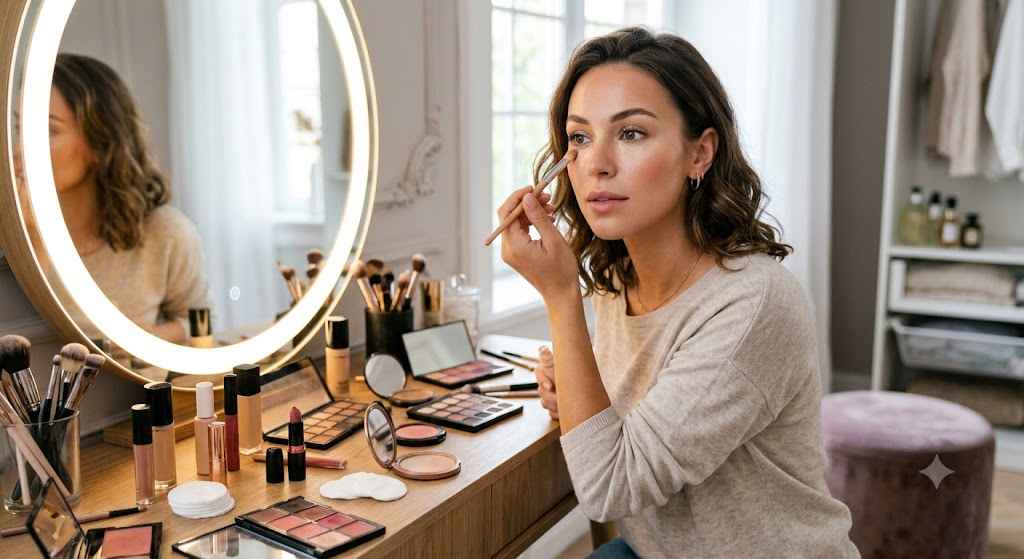
Beauty has been a fascinating part of human culture for centuries, with cosmetics evolving from ancient traditions into a global industry filled with creativity, trends, and innovation. From iconic lipstick shades and classic beauty rituals to surprising cosmetic facts, there is much more to discover than meets the eye.
These Makeup Trivia Questions and Answers explore cosmetics, beauty history, famous products, application techniques, and fascinating trends. Whether you are a makeup enthusiast, beauty lover, or simply enjoy challenging trivia, these questions offer an entertaining way to test your knowledge.
Discover interesting beauty facts, challenge your understanding of cosmetics, and see how many questions you can answer correctly in this fun and engaging makeup trivia collection!
Simple Makeup Trivia Questions and Answers
1. Which ancient civilization used kohl eyeliner?
A) Romans
B) Egyptians
C) Greeks
D) Persians
✅ Answer: B) Egyptians — Ancient Egyptians widely used kohl to line and define the eyes.
2. What was rouge traditionally made from in some historical cosmetics?
A) Beet juice
B) Crushed insects
C) Clay
D) Rose petals
✅ Answer: B) Crushed insects — Carmine, a red pigment derived from cochineal insects, was historically used to create vivid red cosmetic colors.
3. Which company is credited with popularizing modern mascara in the early 20th century?
A) Maybelline
B) Revlon
C) Max Factor
D) L’Oréal
✅ Answer: A) Maybelline — Maybelline became famous for its early mascara products, helping make eye makeup more accessible to consumers.
💄 Products & Tools
4. Which product is primarily used to even out skin tone?
A) Lipstick
B) Foundation
C) Eyeliner
D) Blush
✅ Answer: B) Foundation — Foundation creates a more even-looking base and can help minimize the appearance of discoloration.
5. What is the main purpose of primer?
A) Moisturize only
B) Smooth the skin and prepare it for makeup
C) Remove makeup
D) Add color
✅ Answer: B) Smooth the skin and prepare it for makeup — Primer helps create a smoother surface and can improve makeup’s longevity.
6. Which brush is commonly used to apply blush?
A) Flat foundation brush
B) Fan brush
C) Angled blush brush
D) Lip brush
✅ Answer: C) Angled blush brush — Its shape makes it useful for placing and blending blush along the cheekbones.
7. What does “matte” mean in makeup?
A) Shiny finish
B) Glitter finish
C) Non-shiny finish
D) Glossy finish
✅ Answer: C) Non-shiny finish — Matte products have little or no visible sheen and create a softer, flatter appearance.
👁 Eyes & Brows
8. Which product is used to darken and define eyelashes?
A) Eyeliner
B) Mascara
C) Brow gel
D) Lip gloss
✅ Answer: B) Mascara — Mascara coats the lashes to add definition, color, length, or volume.
9. What is the waterline in eye makeup?
A) Lash line
B) Inner rim of the eyelid
C) Eyebrow arch
D) Eyelid crease
✅ Answer: B) Inner rim of the eyelid — The waterline is the moist inner edge of the eyelid next to the lashes.
10. Which technique helps eyeshadow colors transition smoothly?
A) Baking
B) Contouring
C) Blending
D) Strobing
✅ Answer: C) Blending — Blending softens harsh edges and creates smoother transitions between eyeshadow shades.
11. Which eyebrow style became especially fashionable during the 1920s?
A) Thick natural brows
B) Thin, rounded brows
C) Straight, bold brows
D) Feathered brows
✅ Answer: B) Thin, rounded brows — Thin, highly shaped eyebrows were popular during the 1920s and were influenced by the glamorous looks of silent-film stars.
💋 Lips & Face
12. Which ingredient has historically been used to create red cosmetic pigment?
A) Beetroot
B) Carmine
C) Clay
D) Rose oil
✅ Answer: B) Carmine — Carmine is a vivid red pigment traditionally made from cochineal insects.
13. What is lip liner primarily used for?
A) Moisturizing lips
B) Defining the shape of the lips
C) Adding shine
D) Removing lipstick
✅ Answer: B) Defining the shape of the lips — Lip liner can define the lip border and help create a cleaner lipstick application.
14. Which makeup technique emphasizes facial features with highlighter?
A) Contouring
B) Strobing
C) Baking
D) Blending
✅ Answer: B) Strobing — Strobing focuses primarily on highlighting areas of the face to create a luminous appearance.
15. Which technique involves applying loose powder over concealer to help set it?
A) Baking
B) Strobing
C) Contouring
D) Blending
✅ Answer: A) Baking — Baking involves leaving a layer of loose powder on areas such as the under-eyes for several minutes before dusting away the excess.
🌟 Pop Culture & Trends
16. Which celebrity launched Fenty Beauty in 2017?
A) Beyoncé
B) Rihanna
C) Lady Gaga
D) Selena Gomez
✅ Answer: B) Rihanna — Rihanna founded Fenty Beauty, which became particularly recognized for its inclusive approach to foundation shades.
17. Which makeup trend became especially popular on TikTok around 2020?
A) Classic smoky eye
B) E-girl makeup
C) Traditional bridal makeup
D) Glitter lips
✅ Answer: B) E-girl makeup — E-girl makeup became a viral social-media trend featuring dramatic eyeliner, prominent blush, and bold youthful styling.
18. Which brand is known for its “Better Than Sex” mascara?
A) Too Faced
B) Urban Decay
C) MAC
D) Benefit
✅ Answer: A) Too Faced — “Better Than Sex” is one of Too Faced’s best-known mascara products.
19. Which makeup artist became famous for popularizing professional contouring techniques?
A) Kevyn Aucoin
B) Bobbi Brown
C) Pat McGrath
D) Charlotte Tilbury
✅ Answer: A) Kevyn Aucoin — Kevyn Aucoin’s celebrity work and influential beauty books helped bring sophisticated contouring techniques to a wider audience.
20. Which makeup and beauty brand uses the famous slogan “Because You’re Worth It”?
A) Maybelline
B) L’Oréal
C) Revlon
D) Estée Lauder
✅ Answer: B) L’Oréal — “Because You’re Worth It” became one of the most recognizable slogans in beauty advertising.
Read Also:278+ Plastic Surgery Trivia Questions and Answers
Makeup Trivia Questions and Answers PDF

1. Which ancient civilization is widely credited with some of the earliest known use of cosmetics, including eyeliner made from kohl?
A) Ancient Rome
B) Ancient Egypt
C) Ancient China
D) Ancient Greece
Answer: B) Ancient Egypt
Explanation: Ancient Egyptians used cosmetics extensively for beauty and practical purposes. Kohl eyeliner was commonly worn by both men and women.
2. What is the primary purpose of primer in a makeup routine?
A) To add color to the lips
B) To create a smooth base and help makeup last longer
C) To remove makeup
D) To replace foundation entirely
Answer: B) To create a smooth base and help makeup last longer
Explanation: Primer is applied before foundation to smooth the skin’s surface and help subsequent makeup products apply and wear more evenly.
3. Which makeup product is primarily used to enhance or darken the eyelashes?
A) Eyeliner
B) Mascara
C) Eyeshadow
D) Concealer
Answer: B) Mascara
Explanation: Mascara coats the eyelashes to darken, lengthen, thicken, or define them.
4. The popular makeup technique of “contouring” involves:
A) Only applying highlighter
B) Using darker and lighter shades to sculpt and define facial features
C) Removing all makeup
D) Applying one color over the entire face
Answer: B) Using darker and lighter shades to sculpt and define facial features
Explanation: Contouring uses strategic shadows and highlights to emphasize or reshape the appearance of facial features.
5. Which makeup brand is famous for the slogan “All ages, all races, all sexes”?
A) Revlon
B) MAC Cosmetics
C) CoverGirl
D) Maybelline
Answer: B) MAC Cosmetics
Explanation: MAC Cosmetics became known for its professional-quality products, extensive shade ranges, and inclusive approach to beauty.
6. What is “baking” in makeup?
A) Cooking with makeup products
B) Applying loose powder over cream products and allowing it to sit before brushing it away
C) Heating makeup before use
D) A type of foundation
Answer: B) Applying loose powder over cream products and allowing it to sit before brushing it away
Explanation: Baking is commonly used under the eyes and on other areas to help set concealer and create a bright, polished finish.
7. Which cosmetic pigment is derived from insects?
A) Beeswax
B) Carmine
C) Cocoa butter
D) Vitamin E
Answer: B) Carmine
Explanation: Carmine is a red pigment traditionally produced from cochineal insects and has been used in cosmetics to create red and pink shades.
8. What is Fenty Beauty particularly known for?
A) Selling only lipstick
B) Offering a notably wide range of foundation shades
C) Being the first makeup brand ever created
D) Focusing exclusively on men’s makeup
Answer: B) Offering a notably wide range of foundation shades
Explanation: Fenty Beauty launched in 2017 with an extensive foundation shade range that received widespread attention for its emphasis on serving diverse skin tones.
9. Concealer is typically used to:
A) Add shimmer to the eyelids
B) Cover blemishes, dark circles, and discoloration
C) Fill in eyebrows
D) Set powder
Answer: B) Cover blemishes, dark circles, and discoloration
Explanation: Concealer is a pigmented cosmetic designed to camouflage areas of discoloration and other imperfections.
10. Which classic beauty product became a major commercial category during the early 20th century?
A) Setting spray
B) Nail polish
C) Face primer
D) Brow gel
Answer: B) Nail polish
Explanation: Although nail coloring has existed for centuries, modern nail enamel became a major commercial beauty product during the 20th century.
11. A “cut crease” is a makeup technique primarily used on the:
A) Lips
B) Eyes
C) Cheeks
D) Nails
Answer: B) Eyes
Explanation: A cut crease creates a sharp, defined line in the eye crease, making the eyelid appear more structured and emphasizing the eyeshadow design.
12. Which statement best describes “clean beauty”?
A) Makeup that must be applied in a sterile room
B) Products marketed as avoiding certain ingredients, although definitions vary
C) Only water-based products
D) Makeup that never expires
Answer: B) Products marketed as avoiding certain ingredients, although definitions vary
Explanation: “Clean beauty” is largely a marketing term, and there is no single universally accepted definition of what qualifies as clean beauty.
13. What is the main difference between satin and matte lipstick finishes?
A) There is no difference
B) Satin has a soft sheen, while matte has little to no shine
C) Matte is always glossy
D) Satin only comes in red
Answer: B) Satin has a soft sheen, while matte has little to no shine
Explanation: Satin lipsticks generally have a subtle sheen and creamy feel, while matte lipsticks have a flatter appearance and often provide longer wear.
14. Which tool is most commonly used to blend eyeshadow seamlessly?
A) Lip brush
B) Fluffy blending brush
C) Spoolie only
D) Tweezers
Answer: B) Fluffy blending brush
Explanation: A fluffy blending brush helps soften harsh edges and smoothly transition between different eyeshadow shades.
15. A “dewy” makeup finish makes the skin appear:
A) Completely flat and powdery
B) Fresh, luminous, and hydrated
C) Extremely oily
D) Completely matte
Answer: B) Fresh, luminous, and hydrated
Explanation: Dewy makeup emphasizes a radiant, fresh-looking complexion with a soft reflective quality.
16. Which makeup brand became especially associated with professional makeup artists before expanding widely to consumers?
A) Bath & Body Works
B) MAC Cosmetics
C) Burt’s Bees
D) The Body Shop
Answer: B) MAC Cosmetics
Explanation: MAC began with a strong professional makeup focus and became popular among artists working in fashion, photography, film, and television.
17. Setting spray is generally used to:
A) Remove makeup
B) Help makeup stay in place and adjust its finish
C) Replace moisturizer
D) Act as foundation
Answer: B) Help makeup stay in place and adjust its finish
Explanation: Setting sprays can help makeup wear longer while providing a matte, natural, or luminous finish depending on the formula.
18. What is the purpose of color-correcting concealers?
A) To add random colors to the face
B) To neutralize unwanted discoloration using complementary colors
C) To replace blush
D) To create glitter effects only
Answer: B) To neutralize unwanted discoloration using complementary colors
Explanation: Color correctors can help neutralize tones before applying regular concealer. For example, green can counteract redness, while peach can help balance certain dark or bluish areas.
19. Which ingredients are commonly found in long-wear and waterproof mascaras?
A) Pure water only
B) Waxes and film-forming polymers
C) Sugar
D) Only natural oils
Answer: B) Waxes and film-forming polymers
Explanation: Waxes provide structure and help build volume, while film-forming ingredients help mascara resist smudging, moisture, and flaking.
20. The beauty term “glass skin” is strongly associated with which beauty culture?
A) French beauty
B) Korean beauty
C) Ancient Egyptian beauty
D) Victorian beauty
Answer: B) Korean beauty
Explanation: “Glass skin” describes an exceptionally smooth, hydrated, luminous complexion that reflects light and appears almost glass-like.
Read Also:287+ Paint Trivia Questions and Answers
Makeup Questions Quiz
1. What was one of the earliest known uses of makeup in ancient Egypt?
A) Nail polish only
B) Eye cosmetics such as kohl
C) Foundation made from plastic
D) Lip gloss
Answer: B) Eye cosmetics such as kohl
Explanation: Ancient Egyptians commonly used kohl around the eyes for cosmetic, cultural, and possibly protective purposes.
2. Which ingredient was historically used to create the red color in some lip cosmetics?
A) Carmine
B) Table salt
C) Baking soda
D) Charcoal
Answer: A) Carmine
Explanation: Carmine is a red pigment traditionally derived from cochineal insects and has been used in cosmetics for centuries.
3. What is foundation primarily used for?
A) Curling eyelashes
B) Evening out skin tone
C) Removing makeup
D) Shaping eyebrows
Answer: B) Evening out skin tone
Explanation: Foundation is designed to create a more even-looking complexion and can provide different levels of coverage.
4. Which makeup product is typically used to add color and definition to the cheeks?
A) Mascara
B) Blush
C) Eyeliner
D) Primer
Answer: B) Blush
Explanation: Blush adds color to the cheeks and can help create a fresh, more defined appearance.
5. What is mascara primarily designed to enhance?
A) Lips
B) Eyelashes
C) Cheekbones
D) Eyebrows only
Answer: B) Eyelashes
Explanation: Mascara can darken, lengthen, thicken, and define the appearance of eyelashes.
6. Which makeup product is commonly used to cover blemishes or dark circles?
A) Concealer
B) Highlighter
C) Bronzer
D) Lip liner
Answer: A) Concealer
Explanation: Concealer provides targeted coverage for areas such as blemishes, redness, and under-eye discoloration.
7. What does a makeup primer generally help with?
A) Removing sunscreen
B) Preparing the skin for makeup
C) Permanently changing skin color
D) Growing eyelashes
Answer: B) Preparing the skin for makeup
Explanation: Primer is applied before makeup to create a smoother base and can help makeup apply more evenly and last longer.
8. Which product is commonly used to give the face a sun-kissed appearance?
A) Bronzer
B) Setting spray
C) Concealer
D) Eyeliner
Answer: A) Bronzer
Explanation: Bronzer is typically used to add warmth and a sun-kissed effect to areas of the face.
9. What is a highlighter designed to do?
A) Add brightness to selected areas
B) Remove foundation
C) Darken the eyelashes
D) Clean makeup brushes
Answer: A) Add brightness to selected areas
Explanation: Highlighter is usually applied to areas such as the cheekbones, brow bones, or bridge of the nose to emphasize them with light.
10. Which makeup product is specifically designed to define the eyes?
A) Eyeliner
B) Foundation
C) Setting powder
D) Blush
Answer: A) Eyeliner
Explanation: Eyeliner is used along or around the eyes to create definition and a variety of looks.
11. What is eyeshadow primarily used for?
A) Coloring the lips
B) Adding color and dimension around the eyes
C) Moisturizing the hands
D) Removing mascara
Answer: B) Adding color and dimension around the eyes
Explanation: Eyeshadow can add color, depth, contrast, and definition to the eyelids and surrounding eye area.
12. Which cosmetic is used to define the shape of the lips before applying lipstick?
A) Brow gel
B) Lip liner
C) Setting powder
D) Primer spray
Answer: B) Lip liner
Explanation: Lip liner can outline and define the lips and may also help lipstick stay within the lip area.
13. Which ancient civilization was particularly famous for using cosmetics made from minerals and natural pigments?
A) Ancient Egyptians
B) Vikings
C) Aztecs only
D) Medieval English only
Answer: A) Ancient Egyptians
Explanation: Cosmetics played an important role in ancient Egyptian society, with mineral-based pigments used for eye and face cosmetics.
14. In makeup terminology, what does “matte” generally mean?
A) Highly glittery
B) Without a shiny or reflective finish
C) Completely transparent
D) Waterproof
Answer: B) Without a shiny or reflective finish
Explanation: Matte makeup has a low-shine finish, unlike glossy, metallic, or shimmer finishes.
15. What does “shimmer” usually describe in makeup?
A) A slightly reflective or sparkling finish
B) A completely invisible product
C) A makeup remover
D) A type of foundation brush
Answer: A) A slightly reflective or sparkling finish
Explanation: Shimmer products contain particles that reflect light, creating a luminous or sparkling appearance.
16. Which tool is commonly used to blend foundation or other face makeup?
A) Makeup sponge
B) Tweezers only
C) Nail file
D) Hairbrush
Answer: A) Makeup sponge
Explanation: Makeup sponges can blend liquid or cream products for a smooth, even finish.
17. Why is it important to clean makeup brushes regularly?
A) To make them heavier
B) To remove accumulated makeup, oil, and microorganisms
C) To change their color
D) To make makeup waterproof
Answer: B) To remove accumulated makeup, oil, and microorganisms
Explanation: Regular cleaning helps remove product buildup and contaminants, keeping brushes cleaner and helping makeup apply more effectively.
18. Which makeup style is associated with dramatically defined eyes and bold features?
A) Smoky eye
B) No-makeup look
C) Bare-face look
D) Minimal skincare
Answer: A) Smoky eye
Explanation: A smoky eye typically uses blended darker shades around the eyes to create a dramatic, soft-edged effect.
19. What is setting spray commonly used for?
A) Helping makeup last longer
B) Removing eyeliner
C) Coloring the eyebrows permanently
D) Exfoliating the skin
Answer: A) Helping makeup last longer
Explanation: Setting sprays are designed to be applied after makeup and can help the finished look stay in place.
20. Which beauty brand is famous for popularizing the “Little Black Dress” of makeup—the classic red lipstick look?
A) Chanel
B) NASA Beauty
C) LEGO Cosmetics
D) Kodak Beauty
Answer: A) Chanel
Explanation: Chanel has played a major role in beauty and fashion history, and its classic red lipstick shades have become iconic in cosmetics.
Read Also:276+ Skincare Trivia Questions and Answers
Easy Makeup Trivia Questions and Answers
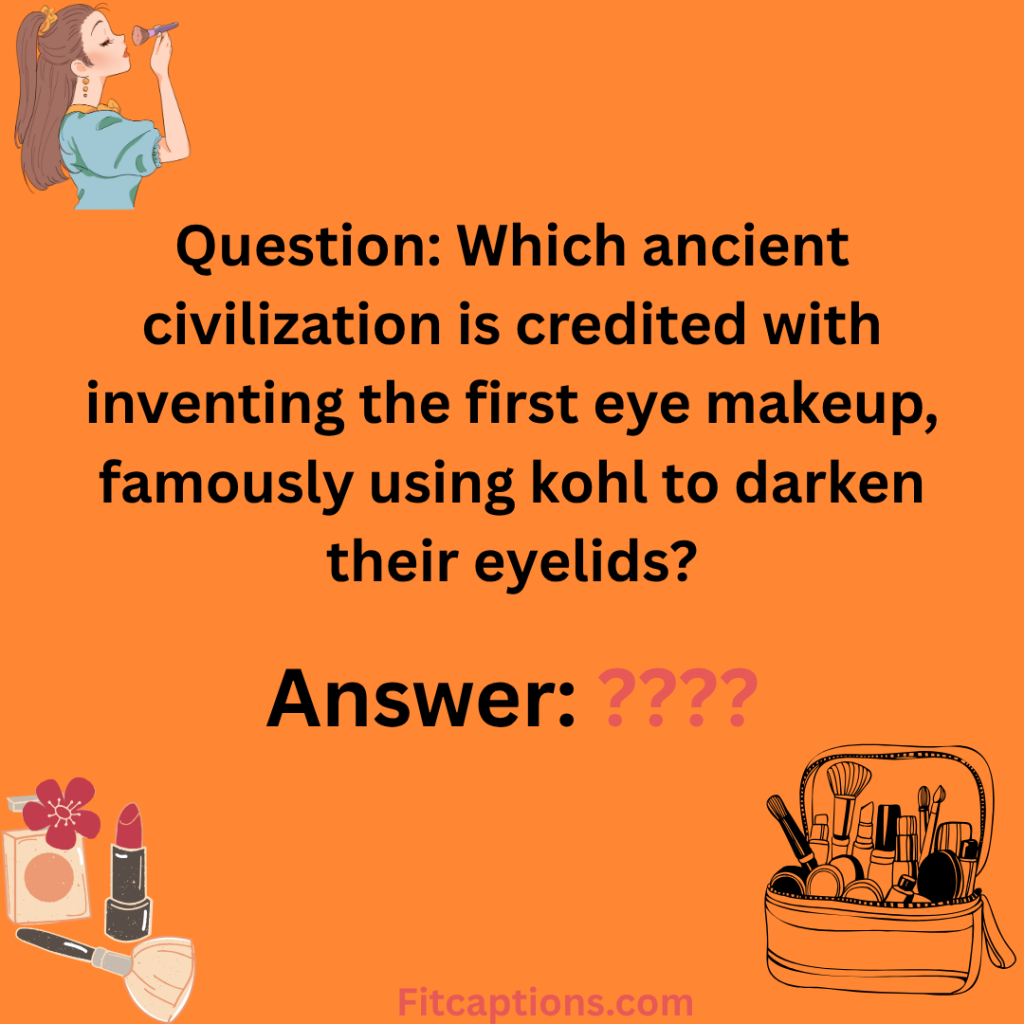
1. Question: Which Polish-Jewish cosmetician, known as the “father of modern makeup,” popularized the term “makeup” and invented flexible greasepaint for motion pictures?
Answer: Max Factor
Fun Fact: He even created a terrifying-looking measuring device called the “Beauty Micrometer” to measure Hollywood stars’ faces for perfect application! 📏
2. Question: Before the modern liquid formula, mascara was sold as a dry “cake.” Which beauty innovator launched the first modern mascara in a tube with a spiral-tip wand in 1957?
Answer: Helena Rubinstein
Fun Fact: Her “Mascara-Matic” was revolutionary! No more dipping a brush into a solid block like you were painting a watercolor!
3. Question: In Ancient Egypt, both men and women wore dark eyeliner called kohl. Which lead-based mineral was primarily used to make it?
Answer: Galena
Fun Fact: The lead in kohl may have actually helped prevent eye infections—beauty with benefits! ⚕️
4. Question: The Aztecs crushed which tiny insect to create vibrant red cochineal pigment for lipstick and textiles?
Answer: Cochineal Beetles
Fun Fact: About 70,000 bugs were needed for one pound of pigment. Bold lips required commitment! 🐞
5. Question: During which historical period did women wear decorative “mouches” or patches on their faces?
Answer: The Victorian Era (or 18th Century/Georgian Era)
Fun Fact: They started as a way to cover smallpox scars but quickly became a fashion statement—the original beauty mark!
6. Question: Which classic beauty balm, now in a blue jar, was originally used in early mascara formulas?
Answer: Vaseline (Petroleum Jelly)
Fun Fact: Coal dust + Vaseline = the OG mascara. Talk about resourceful glam! 🧴
7. Question: Which lipstick color saw a spike in sales during economic downturns, inspiring the “Lipstick Index”?
Answer: Red
Fun Fact: Affordable luxury! When wallets were tight, a bold lip kept spirits high. 💋
8. Question: Which ancient civilization used toxic cinnabar to create purplish-red lipstick?
Answer: Ancient Mesopotamia (or Sumerians)
Fun Fact: They were beautifying 5,000 years ago—maybe skip their recipe today!
9. Question: What simple tool to separate and emphasize eyelashes was patented in 1931 as “Kurlash”?
Answer: Eyelash Curler
Fun Fact: Applying mascara without one? Medieval. This little device is essential!
10. Question: What was the early, thick theatrical makeup called that Max Factor replaced with a lighter cream formula?
Answer: Greasepaint
Fun Fact: The old stuff cracked under lights—Factor’s flexible makeup saved actors’ faces (and dignity)!
11. Question: Using darker and lighter tones to highlight facial features is called what?
Answer: Contouring
Fun Fact: Stage performers and drag queens perfected it long before it hit Instagram fame! 🎭
12. Question: What natural clay did Ancient Egyptians mix with animal fat to make long-lasting blush?
Answer: Red Ochre
Fun Fact: Minimal ingredients, maximum flush—nature’s original blush!
13. Question: Which company created the first spill-proof liquid foundation in a circular pan in 1952?
Answer: Revlon
Fun Fact: Finally, a foundation safe for your purse! Pocket-friendly glam.
14. Question: Which toxic, lead-based white paint did Elizabethan women use for pale skin?
Answer: Ceruse
Fun Fact: Ghostly gorgeous but poisonous—makeup back then was high-risk fashion! 💀
15. Question: Which ingredient from fish scales gives eyeshadows and nail polish a pearly shimmer?
Answer: Guanine
Fun Fact: Pearlescent magic from fish—cosmetic glitter’s weirdly natural origin. ✨
16. Question: Maybelline was named by combining the founder’s sister’s name with which product?
Answer: Mabel + Vaseline
Fun Fact: Mabel + Vaseline = Maybelline! Family love behind every tube of Great Lash.
17. Question: Over-lining or darkening eyebrows in the late 1920s and 1930s was popular due to which actresses?
Answer: Silent Film Actresses
Fun Fact: Expressive faces were everything—think Clara Bow or Greta Garbo. 🎬
18. Question: Which teardrop-shaped tool for applying and blending makeup was invented in 2007 by Rea Ann Silva?
Answer: Beauty Blender (or Makeup Sponge)
Fun Fact: One of the most innovative 21st-century tools! Blend it like a pro.
19. Question: Which primer ingredient smooths pores and fine lines and is often listed as “Dimethicone”?
Answer: Silicone
Fun Fact: Spackle for your face—pore perfection achieved!
20. Question: In ancient Rome, women used toxic belladonna drops for what cosmetic effect?
Answer: To dilate pupils (make eyes appear larger)
Fun Fact: “Belladonna” means “beautiful lady,” but it was dangerously high-risk—poisonous beauty!
Fun Makeup Trivia Questions and Answers
1. Question: Before it was a billion-dollar industry, ancient Egyptians were already rocking eyeliner. What was their go-to ingredient?
Answer: Kohl (made from lead, soot, and other minerals)
Fun Fact: Cleopatra basically invented the smoky eye — and probably didn’t even need a ring light.
2. Question: Which makeup brand is famously named after the founder’s sister and a type of petroleum jelly?
Answer: Maybelline
Fun Fact: It started with a guy mixing Vaseline and coal dust for his sister Mabel. Sibling goals?
3. Question: Which beauty guru broke the internet with a viral video called “The Power of Makeup”?
Answer: NikkieTutorials (Nikkie de Jager)
Fun Fact: She did half her face with makeup to show it’s about expression, not hiding. Iconic.
4. Question: Which makeup product is typically used to “set” your look and keep it from sliding off by lunchtime?
Answer: Setting spray or setting powder
Fun Fact: It’s like hairspray for your face — minus the crunch.
5. Question: Which celebrity launched Fenty Beauty in 2017 and changed the game with 40 foundation shades?
Answer: Rihanna
Fun Fact: She didn’t just shine bright like a diamond — she made the whole industry sparkle with inclusivity.
6. Question: Which makeup item is known for giving your lashes a dramatic boost and sometimes ends up on your eyelid by accident?
Answer: Mascara
Fun Fact: It’s the one product that can make you feel like a Disney princess or a raccoon — depending on the weather.
7. Question: Which makeup technique involves using light and dark shades to sculpt and define your face?
Answer: Contouring
Fun Fact: Kim Kardashian didn’t invent it — drag queens have been contouring since forever. Respect.
8. Question: Which brand’s “Better Than Sex” mascara has a name that’s… well, pretty confident?
Answer: Too Faced
Fun Fact: Whether it lives up to the name is up to you — but the packaging is undeniably flirty.
9. Question: Which makeup product is often applied to the apples of your cheeks for a healthy, flushed look?
Answer: Blush
Fun Fact: It’s the OG makeup move — people used to pinch their cheeks before blush was invented. DIY beauty, 1800s-style.
10. Question: Which makeup item is used to cancel out dark circles, blemishes, and the evidence of staying up too late watching Netflix?
Answer: Concealer
Fun Fact: It’s basically Photoshop in a tube.
11. Question: Which makeup brand is known for its “Naked” eyeshadow palettes that became cult favorites?
Answer: Urban Decay
Fun Fact: The names are cheeky, the shades are versatile, and the hype was real.
12. Question: Which makeup tool is shaped like an egg and is used to blend foundation like a dream?
Answer: Beauty Blender
Fun Fact: It looks like a marshmallow but works like a magic wand.
13. Question: Which makeup trend involves glossy lips, dewy skin, and looking like you just stepped out of a skincare commercial?
Answer: Glass skin
Fun Fact: It started in Korea and made “glow” the new matte.
14. Question: Which makeup product is used to fill in, shape, and sometimes completely reinvent your eyebrows?
Answer: Brow pencil or pomade
Fun Fact: Brows have gone from pencil-thin to bold and bushy — it’s been a wild ride.
15. Question: Which makeup brand was founded by a tattoo artist and is known for its bold, edgy aesthetic?
Answer: KVD Beauty (formerly Kat Von D Beauty)
Fun Fact: Their eyeliner is so waterproof, it could survive a breakup and a rainstorm.
16. Question: Which makeup item is often used to add shimmer to the high points of your face — cheekbones, nose, cupid’s bow?
Answer: Highlighter
Fun Fact: It’s like turning your face into a glow stick — in the best way.
17. Question: Which makeup artist is known for the phrase “blend, blend, blend” and has worked with Beyoncé, Kim K, and more?
Answer: Mario Dedivanovic (a.k.a. Makeup by Mario)
Fun Fact: He turned blending into an Olympic sport — and we’re all better for it.
18. Question: Which makeup brand’s slogan is “Because You’re Worth It”?
Answer: L’Oréal
Fun Fact: It’s been empowering beauty lovers since the ’70s — and still slaps.
19. Question: Which makeup trend involves using bold, graphic lines and shapes around the eyes — think Euphoria vibes?
Answer: Graphic eyeliner
Fun Fact: It’s like doodling on your eyelids — but make it fashion.
20. Question: Which makeup product was once made with crushed beetles to achieve a rich red pigment?
Answer: Lipstick
Fun Fact: That red you love? It might’ve had a buggy past. (Don’t worry — most are beetle-free now.)
Makeup Trivia Questions and Answers for Adults

1. Question: Ancient Egyptians were makeup pioneers, rocking bold looks. What natural substance did they use to create dramatic black eyeliner?
Answer: Kohl
Fun Fact: Kohl was made from lead sulfide or charcoal, and Cleopatra herself was a fan. It wasn’t just beauty—it was believed to ward off evil spirits!
2. Question: Lipstick’s a modern must-have, but what animal-derived ingredient was commonly used in early lipsticks for its rich red color?
Answer: Carmine (from cochineal insects)
Fun Fact: Yup, crushed bugs gave lips that pop! Most brands now use synthetic dyes, so your pout’s bug-free.
3. Question: The 1920s brought makeup into the mainstream. Which brand, founded by a Polish immigrant, became a Hollywood go-to for mascara?
Answer: Max Factor
Fun Fact: Max Factor invented “mascara” as we know it, making lashes flutter like silent film stars. Thank him for your falsies’ ancestors!
4. Question: Foundation’s all about that flawless base. What’s the term for the liquid used to prep skin before applying makeup?
Answer: Primer
Fun Fact: Primer’s like the opening act for your face—it smooths, blurs, and makes your makeup stick longer than a clingy ex!
5. Question: Red lipstick’s iconic, but what shade did Queen Elizabeth I popularize in the 16th century, making it a royal must-have?
Answer: Bright red
Fun Fact: Liz I loved her red lips so much, she reportedly used toxic lead-based makeup. Talk about suffering for beauty—yikes!
6. Question: The smoky eye is a classic. Which 1990s supermodel made this sultry look a red-carpet staple?
Answer: Kate Moss
Fun Fact: Kate’s smudged, grunge-inspired eyes screamed “I woke up like this,” but it took serious artistry to nail that effortless vibe!
7. Question: Blush gives cheeks that rosy glow, but what was it called in the 18th century when it was a powdered must-have?
Answer: Rouge
Fun Fact: Rouge was often lead-based back then, so those glowing cheeks came with a side of danger. Modern blush? Much safer!
8. Question: Contouring’s a game-changer, but which reality star brought it to the masses in the 2010s?
Answer: Kim Kardashian
Fun Fact: Kim’s chiseled cheekbones, thanks to Mario Dedivanovic, sparked a contour craze. Sculpting, but for your face!
9. Question: Mascara makes lashes pop, but what’s the name of the wand’s spiky bristles that coat every lash?
Answer: Spoolie
Fun Fact: The spoolie’s design is genius—like a tiny hairbrush for your lashes. No clumps, just va-va-voom volume!
10. Question: Glitter’s having a moment, but what sparkly product, popularized in the 2000s, adds shine to lips?
Answer: Lip gloss
Fun Fact: Lip gloss was the Y2K queen, with Juicy Tubes ruling the scene. Sticky, shiny, and oh-so-nostalgic!
11. Question: Makeup’s got a cinematic side. In which 1960s film did Audrey Hepburn sport iconic winged eyeliner as Holly Golightly?
Answer: Breakfast at Tiffany’s
Fun Fact: Audrey’s cat-eye is still a makeup artist’s dream. Pair it with a tiara, and you’re Tiffany-ready!
12. Question: Setting spray keeps your makeup locked in. What’s the main ingredient in most sprays that helps it stick?
Answer: Water (with polymers or alcohol)
Fun Fact: Setting spray’s like hairspray for your face—it mists on and says, “You’re not going anywhere, foundation!”
13. Question: The 1980s were bold, baby! What vibrant makeup trend defined that decade’s eye looks?
Answer: Bright eyeshadow (like blue or pink)
Fun Fact: Think Madonna or Cyndi Lauper—those neon shadows screamed “Girls Just Wanna Have Fun” and probably glowed in the dark!
14. Question: Eyeliner’s a game-changer, but what tool, used since ancient times, sharpens kohl sticks to a point?
Answer: Sharpener (or knife in ancient times)
Fun Fact: Ancient folks carved their kohl with knives, but modern pencil sharpeners make it less Game of Thrones and more glam!
15. Question: Highlighter gives that dewy glow. What’s the term for the technique of applying it to cheekbones for a radiant look?
Answer: Strobing
Fun Fact: Strobing’s like telling the world, “My cheekbones are ready for their close-up!” It’s glowy goodness without a filter.
16. Question: Makeup brushes are key, but what animal hair was traditionally used for high-end brushes before synthetics took over?
Answer: Sable
Fun Fact: Sable brushes were the Rolls-Royce of makeup tools, but vegan synthetics now rule. No critters harmed, just faces slayed!
17. Question: Lip liner defines your pout, but which 1990s trend made bold, dark lip liner a must-have?
Answer: Grunge lip look
Fun Fact: Think TLC or Drew Barrymore—dark liner with nude lipstick was peak 90s. It’s back now, proving trends are the ultimate boomerang!
18. Question: Makeup’s got history. What ancient civilization used crushed malachite for green eyeshadow?
Answer: Egyptians
Fun Fact: Green shadow wasn’t just fashion—it symbolized fertility and protection. Cleopatra was basically the OG beauty influencer!
19. Question: The beauty blender changed the game. What’s the shape of this iconic pink sponge for flawless foundation?
Answer: Egg-shaped (or teardrop)
Fun Fact: Invented by Rea Ann Silva, this bouncy sponge blends like a dream. It’s the MVP of your makeup bag—sorry, mascara!
20. Question: Fenty Beauty shook up the industry with inclusive shades. Who’s the superstar founder behind this 2017 brand?
Answer: Rihanna
Fun Fact: Rihanna’s 40+ foundation shades made everyone feel seen. She’s basically the fairy godmother of makeup inclusivity!
Best Makeup Trivia Questions and Answers
1. Question: Which iconic 1960s makeup look features bold eyes, winged liner, and nude lips, famously worn by Twiggy?
Answer: Mod makeup
Fun Fact: Twiggy’s big lashes weren’t real—they were carefully painted on! Eyeliner as drama, lashes as art.
2. Question: The “cat-eye” eyeliner look is a staple. Which celebrity is credited with making it mainstream in the 1950s and ’60s?
Answer: Audrey Hepburn
Fun Fact: That flick of eyeliner made winged eyes timeless—still inspiring Pinterest tutorials today!
3. Question: Which makeup product’s main purpose is to hide blemishes and dark circles?
Answer: Concealer
Fun Fact: Essentially your “I woke up like this” magic potion—minus the Photoshop.
4. Question: What is the name of the fine powder used to set foundation and reduce shine?
Answer: Setting powder
Fun Fact: Think of it as a gentle, invisible veil keeping your face matte and flawless all day.
5. Question: Which makeup trend in the 1990s involved very thin, over-plucked eyebrows?
Answer: Pencil-thin brows
Fun Fact: Brows went from “gone with the wind” to “Instagram-worthy” over the decades—thank goodness for growth serums!
6. Question: Which makeup product, popular in the 2000s, gave lips a sticky, glossy shine?
Answer: Lip gloss
Fun Fact: Juicy Tubes were basically edible art for your lips—sweet, shiny, and slightly sticky.
7. Question: The term “baking” in makeup refers to what?
Answer: Letting translucent powder sit on the face to set foundation and highlight
Fun Fact: Not an oven trick! Just leave it, dust it off, and voila—your face now has zero creases.
8. Question: Which foundation finish gives skin a wet, luminous, or glowy effect?
Answer: Dewy finish
Fun Fact: Perfect for “I just left a spa” vibes, even if you’ve been at your desk for 12 hours.
9. Question: Which 1980s makeup trend featured neon eyeshadow, bright blush, and bold lips?
Answer: Bold color craze
Fun Fact: Madonna and Cyndi Lauper basically invented the era of “paint your face like a rainbow and own it.”
10. Question: What do you call the technique of filling in and shaping eyebrows with powder, pencil, or pomade?
Answer: Brow shaping
Fun Fact: Brows frame your face—think of them as the eyeliner for your forehead!
11. Question: Which Japanese-Korean-inspired skincare trend influenced makeup for its focus on clear, luminous skin?
Answer: Glass skin
Fun Fact: Dewy, reflective, and literally glowing—this look makes highlight jealous.
12. Question: Which celebrity is known for her bold makeup looks on stage and red carpet, often featuring glitter and bright colors?
Answer: Lady Gaga
Fun Fact: Gaga’s makeup is performance art—she makes eyeshadow and eyeliner into full-on storytelling.
13. Question: What makeup product is used to darken, define, or elongate eyelashes?
Answer: Mascara
Fun Fact: One swipe can make you look awake, glamorous, or like you just survived a tornado—versatile stuff.
14. Question: Which product is applied to eyelids to add color, depth, or shimmer?
Answer: Eyeshadow
Fun Fact: Eyeshadow’s like tiny canvases for your eyelids—wear it boldly or blend it stealthily.
15. Question: Which beauty tool is used for blending foundation, concealer, or cream products seamlessly into skin?
Answer: Makeup sponge
Fun Fact: The beauty blender revolutionized flawless base application. Bonus: you can bounce your stress away too.
16. Question: Which makeup brand is famous for its “All Nighter” setting spray?
Answer: Urban Decay
Fun Fact: Keeps your face from melting during sweaty concerts, weddings, or Netflix marathons.
17. Question: Which product can add shimmer to cheekbones, nose, brow bones, and cupid’s bow?
Answer: Highlighter
Fun Fact: Also known as “glow juice,” it turns your face into a subtle disco ball.
18. Question: Which 1990s beauty trend involved dark lips surrounded by nude skin?
Answer: Grunge lip
Fun Fact: Dark liner + neutral lipstick = the ultimate “I don’t care but look amazing” vibe.
19. Question: Which tool is essential for separating lashes and removing mascara clumps?
Answer: Spoolie brush
Fun Fact: Tiny bristles, big impact. Think of it as the toothbrush for your lashes.
20. Question: What is the primary purpose of a makeup primer?
Answer: To smooth skin, minimize pores, and help makeup last longer
Fun Fact: It’s the unsung hero of your routine—the stagehand making your face the star.
Conclusion
The world of cosmetics is filled with fascinating history, creative trends, iconic products, and surprising beauty facts. From ancient traditions to modern techniques, there is always something new to discover about the art of cosmetics.
We hope these Makeup Trivia Questions and Answers entertained you while putting your beauty knowledge to the test. Whether you answered every question correctly or discovered something new, this trivia collection is a fun way to appreciate the creativity and evolution of makeup.