
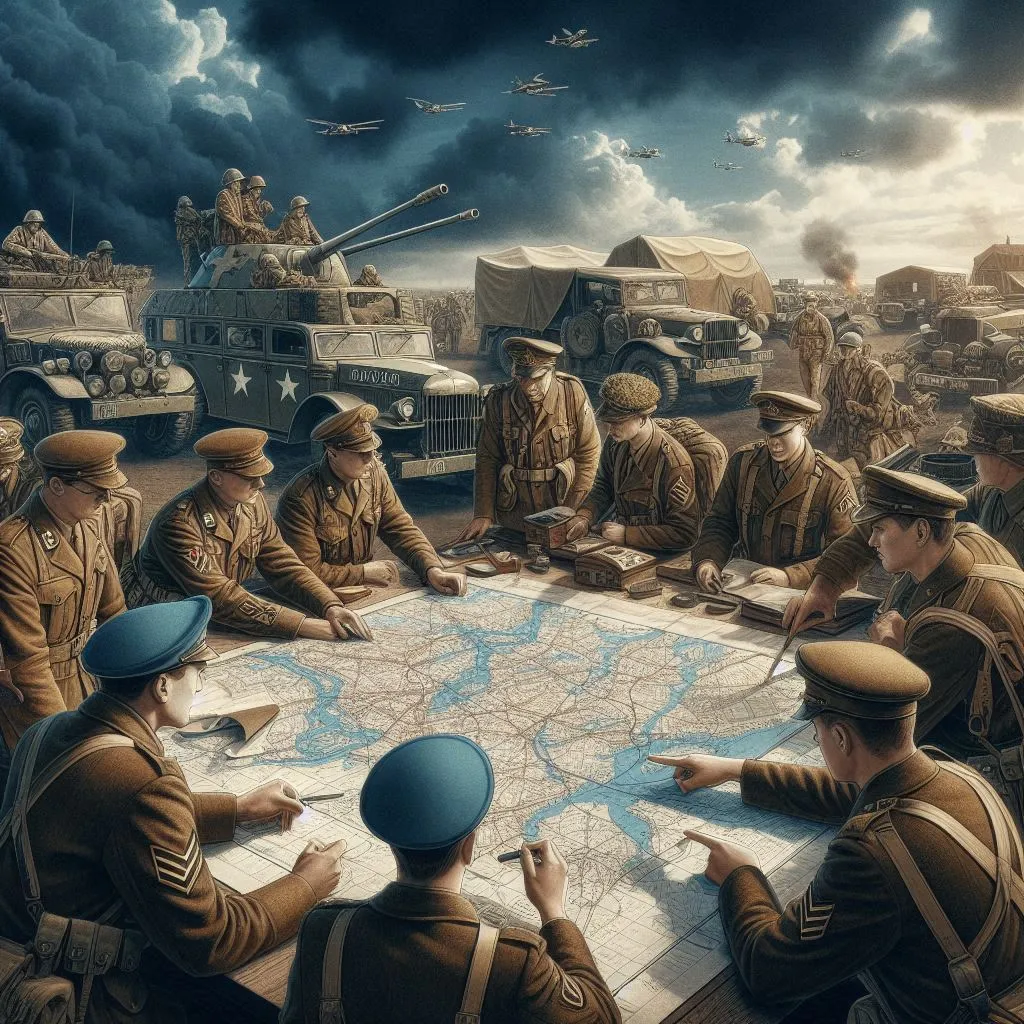
Looking for clear and reliable 2nd fact world war information? This content presents important facts about World War II in a simple and easy-to-read format.
From major events to global consequences, these facts help explain how the war began, how it unfolded, and why it changed the world forever.
Ideal for students, history readers, and quick learning, this 2nd fact world war guide focuses on clarity and accuracy.
Interesting 2nd World War Facts
1 The Second World War (1939–1945) was a global conflict that involved most of the world’s nations, divided into two major alliances: the Allies, including Britain, the Soviet Union, the United States, and China, and the Axis, primarily Germany, Italy, and Japan.
2 The war was triggered by Germany’s invasion of Poland on September 1, 1939, following Adolf Hitler’s aggressive expansionist policies, leading Britain and France to declare war on Germany two days later, officially starting the conflict in Europe.
3 Early in the war, Germany used its blitzkrieg tactics to quickly conquer Poland, Denmark, Norway, Belgium, the Netherlands, and France, demonstrating the devastating effectiveness of modern mechanized warfare.
4 In June 1941, Germany launched Operation Barbarossa, invading the Soviet Union, which opened the Eastern Front and became one of the largest and bloodiest theaters of war in history.
5 Meanwhile, in the Asia-Pacific region, Japan expanded aggressively, capturing Manchuria, China, and later attacking Southeast Asia and the Pacific Islands, culminating in the surprise attack on Pearl Harbor on December 7, 1941, which brought the United States into the war.
6 Major turning points in the European theater included the Battle of Stalingrad (1942–1943), where the Soviet Union decisively defeated Germany, and the Battle of El Alamein (1942), which halted Axis expansion in North Africa.
7 The D-Day invasion on June 6, 1944, saw Allied forces land in Normandy, France, opening a second front in Western Europe and beginning the liberation of German-occupied territories.
8 In the Pacific, significant battles such as the Battle of Midway (1942) and the island-hopping campaigns by the Allies gradually weakened Japanese control and brought the war closer to Japan’s home islands.
9 Germany surrendered on May 8, 1945 (V-E Day), following Hitler’s suicide and the Allied advance into Germany, while Japan surrendered on September 2, 1945 (V-J Day) after the atomic bombings of Hiroshima and Nagasaki.
10 The Second World War resulted in unprecedented destruction, with tens of millions killed, widespread devastation of cities and infrastructure, the Holocaust, and significant geopolitical changes, ultimately leading to the creation of the United Nations and the beginning of the Cold War.

Random World War 2 Facts
1 Germany invaded Poland on September 1, 1939, using blitzkrieg tactics, which led Britain and France to declare war on Germany, officially starting the Second World War.
2 The Battle of France in 1940 saw Germany quickly conquer France, Belgium, and the Netherlands, forcing the French government to surrender and leading to the German occupation of much of Western Europe.
3 The Battle of Britain (1940) was the first major military campaign fought entirely by air forces, where the Royal Air Force successfully defended Britain against the German Luftwaffe, preventing a German invasion.
4 Operation Barbarossa, launched in June 1941, was Germany’s invasion of the Soviet Union, opening the Eastern Front and becoming one of the largest and deadliest military operations in history.
5 The attack on Pearl Harbor on December 7, 1941, brought the United States into the war, as Japanese forces launched a surprise assault on the US naval base in Hawaii, crippling much of the Pacific Fleet.
6 The Battle of Stalingrad (1942–1943) marked a turning point on the Eastern Front, where Soviet forces encircled and defeated the German 6th Army, inflicting massive casualties and shifting momentum in favor of the Allies.
7 The North African Campaign, including the Battle of El Alamein (1942), saw Allied forces under Montgomery defeat Rommel’s Axis forces, eventually driving Germany and Italy out of North Africa.
8 The D-Day invasion on June 6, 1944, saw Allied troops land on the beaches of Normandy, France, opening a Western Front and beginning the liberation of German-occupied Western Europe.
9 The atomic bombings of Hiroshima and Nagasaki in August 1945 forced Japan to surrender, ending the war in the Pacific and marking the first and only use of nuclear weapons in warfare.
10 The unconditional surrender of Germany on May 8, 1945 (V-E Day) and Japan on September 2, 1945 (V-J Day) brought the Second World War to an end, reshaping global politics, creating the United Nations, and setting the stage for the Cold War.
Interesting facts about ww2
1 Germany invaded Poland on September 1, 1939, using blitzkrieg tactics, which led Britain and France to declare war on Germany, officially starting the Second World War.
2 The Battle of France in 1940 saw Germany quickly conquer France, Belgium, and the Netherlands, forcing the French government to surrender and leading to the German occupation of much of Western Europe.
3 The Battle of Britain (1940) was the first major military campaign fought entirely by air forces, where the Royal Air Force successfully defended Britain against the German Luftwaffe, preventing a German invasion.
4 Operation Barbarossa, launched in June 1941, was Germany’s invasion of the Soviet Union, opening the Eastern Front and becoming one of the largest and deadliest military operations in history.
5 The attack on Pearl Harbor on December 7, 1941, brought the United States into the war, as Japanese forces launched a surprise assault on the US naval base in Hawaii, crippling much of the Pacific Fleet.
6 The Battle of Stalingrad (1942–1943) marked a turning point on the Eastern Front, where Soviet forces encircled and defeated the German 6th Army, inflicting massive casualties and shifting momentum in favor of the Allies.
7 The North African Campaign, including the Battle of El Alamein (1942), saw Allied forces under Montgomery defeat Rommel’s Axis forces, eventually driving Germany and Italy out of North Africa.
8 The D-Day invasion on June 6, 1944, saw Allied troops land on the beaches of Normandy, France, opening a Western Front and beginning the liberation of German-occupied Western Europe.
9 The atomic bombings of Hiroshima and Nagasaki in August 1945 forced Japan to surrender, ending the war in the Pacific and marking the first and only use of nuclear weapons in warfare.
10 The unconditional surrender of Germany on May 8, 1945 (V-E Day) and Japan on September 2, 1945 (V-J Day) brought the Second World War to an end, reshaping global politics, creating the United Nations, and setting the stage for the Cold War.
World War 2 Quick Facts
1 Blitzkrieg, or “lightning war,” was Germany’s key strategy, combining fast-moving tanks, mechanized infantry, and concentrated air power to quickly overwhelm enemy forces, as seen in the invasions of Poland, France, and the Low Countries.
2 The Allied island-hopping strategy in the Pacific involved bypassing heavily fortified Japanese positions and capturing strategically important islands, allowing the Allies to gradually move closer to Japan while minimizing casualties and resource loss.
3 The use of combined arms tactics, integrating infantry, artillery, tanks, and air support, was a hallmark of modern warfare in World War II, particularly employed effectively by both German and Soviet forces on the Eastern Front.
4 Strategic bombing campaigns were used extensively by both Axis and Allied powers to destroy enemy industrial capacity, infrastructure, and morale, with campaigns such as the bombing of Dresden, Hamburg, and Tokyo demonstrating their devastating impact.
5 Amphibious assaults became a crucial military strategy, with large-scale landings such as D-Day in Normandy and the Pacific landings on Iwo Jima and Okinawa requiring precise coordination of naval, air, and ground forces.
6 Naval blockade and control of sea lanes were key strategies for Britain and the United States, aiming to cut off Axis supply lines, restrict the movement of enemy forces, and secure vital resources and trade routes.
7 The Soviets employed a strategy of deep defense and attrition on the Eastern Front, absorbing German advances and then counterattacking with massive numbers of troops, tanks, and artillery to wear down the enemy, as seen at Stalingrad and Kursk.
8 Intelligence and code-breaking, such as the Allied efforts at Bletchley Park to decipher German Enigma codes, became a critical strategic tool, allowing the Allies to anticipate enemy movements and plan operations with greater precision.
9 Guerrilla warfare and partisan operations were used behind enemy lines, particularly in occupied Europe and the Balkans, disrupting Axis supply lines, gathering intelligence, and supporting regular Allied military campaigns.
10 Total war mobilization was a strategy employed by all major powers, combining economic, industrial, and civilian resources to support the military effort, ensuring that armies could be supplied and reinforced continuously for prolonged global conflict.
10 Facts World War Two
1 Blitzkrieg, or “lightning war,” was Germany’s key strategy, combining fast-moving tanks, mechanized infantry, and concentrated air power to quickly overwhelm enemy forces, as seen in the invasions of Poland, France, and the Low Countries.
2 The Allied island-hopping strategy in the Pacific involved bypassing heavily fortified Japanese positions and capturing strategically important islands, allowing the Allies to gradually move closer to Japan while minimizing casualties and resource loss.
3 The use of combined arms tactics, integrating infantry, artillery, tanks, and air support, was a hallmark of modern warfare in World War II, particularly employed effectively by both German and Soviet forces on the Eastern Front.
4 Strategic bombing campaigns were used extensively by both Axis and Allied powers to destroy enemy industrial capacity, infrastructure, and morale, with campaigns such as the bombing of Dresden, Hamburg, and Tokyo demonstrating their devastating impact.
5 Amphibious assaults became a crucial military strategy, with large-scale landings such as D-Day in Normandy and the Pacific landings on Iwo Jima and Okinawa requiring precise coordination of naval, air, and ground forces.
6 Naval blockade and control of sea lanes were key strategies for Britain and the United States, aiming to cut off Axis supply lines, restrict the movement of enemy forces, and secure vital resources and trade routes.
7 The Soviets employed a strategy of deep defense and attrition on the Eastern Front, absorbing German advances and then counterattacking with massive numbers of troops, tanks, and artillery to wear down the enemy, as seen at Stalingrad and Kursk.
8 Intelligence and code-breaking, such as the Allied efforts at Bletchley Park to decipher German Enigma codes, became a critical strategic tool, allowing the Allies to anticipate enemy movements and plan operations with greater precision.
9 Guerrilla warfare and partisan operations were used behind enemy lines, particularly in occupied Europe and the Balkans, disrupting Axis supply lines, gathering intelligence, and supporting regular Allied military campaigns.
10 Total war mobilization was a strategy employed by all major powers, combining economic, industrial, and civilian resources to support the military effort, ensuring that armies could be supplied and reinforced continuously for prolonged global conflict.
Fun Facts About World War Two
1 Millions of civilians were killed during the war due to bombing raids, massacres, starvation, and forced labor, with entire cities like Hiroshima, Nagasaki, Dresden, and Tokyo suffering catastrophic destruction.
2 The Holocaust led to the systematic genocide of six million Jews, along with millions of Roma, disabled individuals, political prisoners, and others, representing one of the darkest impacts of the war on civilian populations.
3 Massive displacement occurred as refugees fled combat zones across Europe and Asia, creating humanitarian crises with millions living in temporary shelters, camps, or forced migration.
4 Civilians in occupied territories endured harsh conditions, including forced labor, confiscation of food, curfews, and restrictions imposed by Nazi Germany, Japan, and other occupying powers.
5 Food shortages and rationing affected both soldiers and civilians, with governments controlling the distribution of essential goods, leading to malnutrition, black markets, and widespread economic hardship.
6 Cities across Europe and Asia were heavily bombed in strategic campaigns, destroying homes, infrastructure, schools, and hospitals, forcing civilians to adapt to life in constant danger and displacement.
7 Women took on new roles in the workforce and military support services, working in factories, agriculture, and hospitals, which changed traditional social structures and gender roles in many countries.
8 The war caused severe psychological trauma for civilians, including anxiety, grief, and post-traumatic stress, due to the constant threat of air raids, loss of family members, and exposure to violence.
9 Education and social services were disrupted, as schools were closed, teachers and students were conscripted or displaced, and resources were diverted to the war effort, affecting generations of children.
10 The widespread destruction and economic disruption led to long-term consequences, including housing shortages, famine, disease outbreaks, and the need for massive postwar reconstruction programs in Europe and Asia.
Top 10 2nd World War Facts
1 Millions of civilians were killed during the war due to bombing raids, massacres, starvation, and forced labor, with entire cities like Hiroshima, Nagasaki, Dresden, and Tokyo suffering catastrophic destruction.
2 The Holocaust led to the systematic genocide of six million Jews, along with millions of Roma, disabled individuals, political prisoners, and others, representing one of the darkest impacts of the war on civilian populations.
3 Massive displacement occurred as refugees fled combat zones across Europe and Asia, creating humanitarian crises with millions living in temporary shelters, camps, or forced migration.
4 Civilians in occupied territories endured harsh conditions, including forced labor, confiscation of food, curfews, and restrictions imposed by Nazi Germany, Japan, and other occupying powers.
5 Food shortages and rationing affected both soldiers and civilians, with governments controlling the distribution of essential goods, leading to malnutrition, black markets, and widespread economic hardship.
6 Cities across Europe and Asia were heavily bombed in strategic campaigns, destroying homes, infrastructure, schools, and hospitals, forcing civilians to adapt to life in constant danger and displacement.
7 Women took on new roles in the workforce and military support services, working in factories, agriculture, and hospitals, which changed traditional social structures and gender roles in many countries.
8 The war caused severe psychological trauma for civilians, including anxiety, grief, and post-traumatic stress, due to the constant threat of air raids, loss of family members, and exposure to violence.
9 Education and social services were disrupted, as schools were closed, teachers and students were conscripted or displaced, and resources were diverted to the war effort, affecting generations of children.
10 The widespread destruction and economic disruption led to long-term consequences, including housing shortages, famine, disease outbreaks, and the need for massive postwar reconstruction programs in Europe and Asia.
Final Thoughts
The 2nd fact world war remains one of the most significant events in human history. Learning its key facts helps us understand modern politics, global relations, and the importance of peace.
By focusing on clear and essential information, this guide makes World War II easier to understand and remember.