
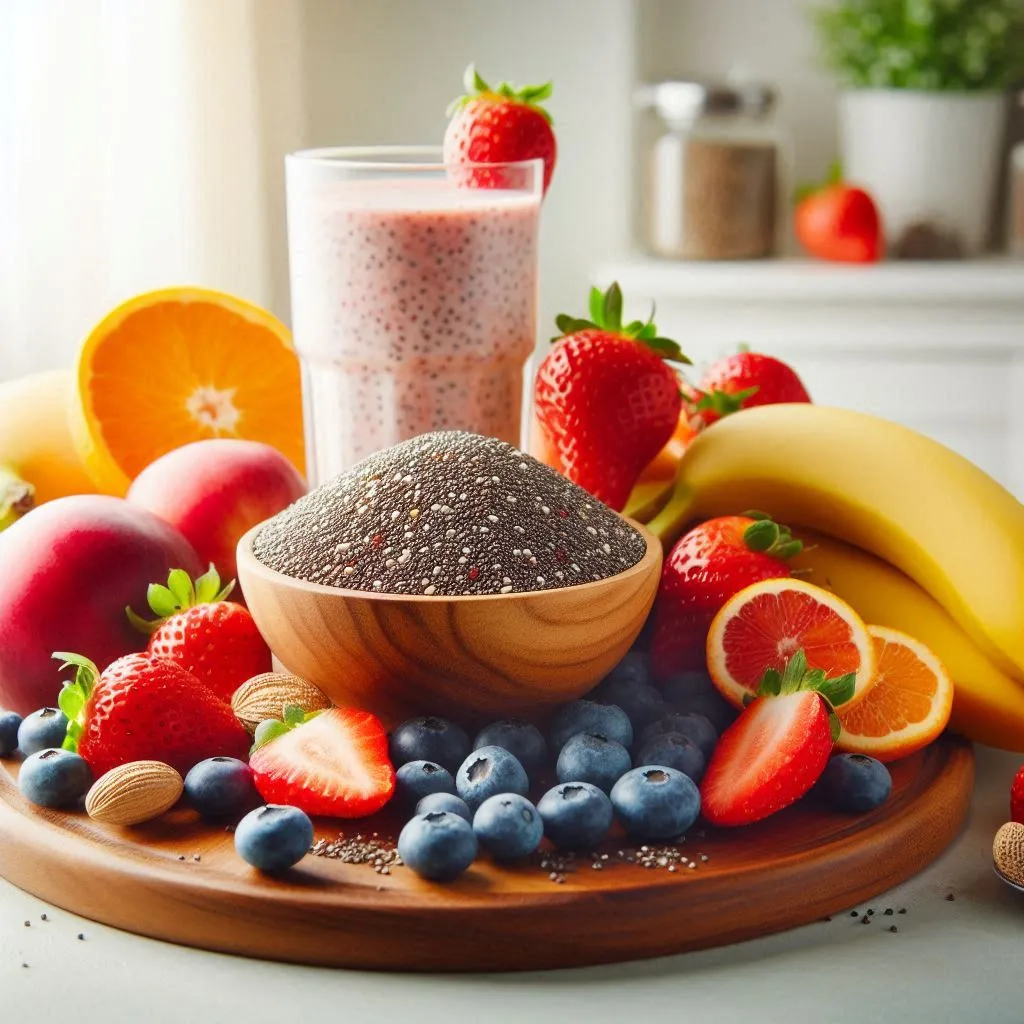
Chia seeds are tiny but packed with nutrients. These chia seed nutrition facts explain why chia seeds are considered a superfood.
From fiber and protein to omega-3 fatty acids, vitamins, and minerals, chia seeds provide essential nutrients that support digestion, heart health, and overall wellness.
This guide makes it easy to understand the nutritional value of chia seeds and how to include them in your diet.
Calories In Chia Seed Nutrition Facts
1 One tablespoon of chia seeds, about 12 grams, contains roughly 58 calories, making them a small but calorie-dense food due to their high fat and fiber content.
2 Most of the calories in chia seeds come from healthy fats, including omega-3 fatty acids, which provide long-lasting energy and support heart and brain health.
3 Chia seeds are rich in protein, contributing approximately 2 grams per tablespoon, which adds to the overall caloric content while supporting muscle repair and satiety.
4 A significant portion of chia seed calories comes from dietary fiber, about 5 grams per tablespoon, which slows digestion, stabilizes blood sugar, and contributes to a feeling of fullness.
5 Carbohydrates in chia seeds are minimal, around 5 grams per tablespoon, but the majority is fiber, so net carbs are very low, making chia seeds suitable for low-carb and ketogenic diets.
6 The combination of fats, protein, and fiber in chia seeds makes them highly nutrient-dense, providing a large proportion of calories in a small serving, which is efficient for energy and nutrition.
7 Chia seed calories are absorbed slowly due to their gel-forming fiber, which helps regulate blood sugar levels, maintain satiety, and support digestive health over time.
8 Because chia seeds expand when soaked in liquid, their calorie density per serving decreases slightly, making them an ideal addition to smoothies, puddings, and cereals without adding excessive calories.
9 Despite being calorie-dense, chia seeds provide essential micronutrients such as calcium, magnesium, phosphorus, and manganese, meaning their calories also deliver significant nutritional value.
10 Regular inclusion of chia seeds in the diet can support weight management, sustained energy, cardiovascular health, and digestive function, showing that their calories are nutrient-rich and functional, not “empty.”

Protein Content In Chia Seed Nutrition Facts
1 Chia seeds are rich in healthy fats, containing approximately 4 grams of total fat per tablespoon (12 grams), making them a concentrated source of energy and essential fatty acids.
2 A significant portion of chia seed fat is polyunsaturated, including alpha-linolenic acid (ALA), a plant-based omega-3 fatty acid that supports heart, brain, and joint health.
3 The omega-3 content in chia seeds is one of the highest among plant foods, with about 2.5 grams of ALA per tablespoon, which can help reduce inflammation and improve cardiovascular function.
4 Chia seed fat also includes monounsaturated fats, which contribute to healthy cholesterol levels, promote satiety, and provide a slow-release energy source.
5 Saturated fat in chia seeds is minimal, usually less than 0.5 grams per tablespoon, making them a heart-healthy fat source when incorporated into the diet.
6 The combination of omega-3 fats and fiber in chia seeds enhances fat absorption and promotes steady energy release, preventing rapid blood sugar spikes after meals.
7 Chia seeds can help balance the omega-6 to omega-3 ratio in the diet, as modern diets tend to be high in omega-6 fatty acids from processed oils, which can contribute to inflammation.
8 When chia seeds are soaked in water or milk, the gel-like structure slows the digestion of fats, allowing omega-3s to be absorbed gradually, supporting satiety and metabolic stability.
9 The ALA in chia seeds can be partially converted in the body to longer-chain omega-3 fatty acids like EPA and DHA, which are important for brain and cardiovascular health, although conversion efficiency is limited.
10 Regular consumption of chia seeds contributes to anti-inflammatory benefits, supports heart and brain health, and improves overall nutrient intake, demonstrating that the fats they contain are both functional and essential rather than empty calories.

Fat And Omega-3 Facts In Chia Seed Nutrition Facts
1 Chia seeds are rich in healthy fats, containing approximately 4 grams of total fat per tablespoon (12 grams), making them a concentrated source of energy and essential fatty acids.
2 A significant portion of chia seed fat is polyunsaturated, including alpha-linolenic acid (ALA), a plant-based omega-3 fatty acid that supports heart, brain, and joint health.
3 The omega-3 content in chia seeds is one of the highest among plant foods, with about 2.5 grams of ALA per tablespoon, which can help reduce inflammation and improve cardiovascular function.
4 Chia seed fat also includes monounsaturated fats, which contribute to healthy cholesterol levels, promote satiety, and provide a slow-release energy source.
5 Saturated fat in chia seeds is minimal, usually less than 0.5 grams per tablespoon, making them a heart-healthy fat source when incorporated into the diet.
6 The combination of omega-3 fats and fiber in chia seeds enhances fat absorption and promotes steady energy release, preventing rapid blood sugar spikes after meals.
7 Chia seeds can help balance the omega-6 to omega-3 ratio in the diet, as modern diets tend to be high in omega-6 fatty acids from processed oils, which can contribute to inflammation.
8 When chia seeds are soaked in water or milk, the gel-like structure slows the digestion of fats, allowing omega-3s to be absorbed gradually, supporting satiety and metabolic stability.
9 The ALA in chia seeds can be partially converted in the body to longer-chain omega-3 fatty acids like EPA and DHA, which are important for brain and cardiovascular health, although conversion efficiency is limited.
10 Regular consumption of chia seeds contributes to anti-inflammatory benefits, supports heart and brain health, and improves overall nutrient intake, demonstrating that the fats they contain are both functional and essential rather than empty calories.

Fiber Content In Chia Seed Nutrition Facts
1 One tablespoon of chia seeds, about 12 grams, contains roughly 5 grams of dietary fiber, making them one of the richest plant-based sources of fiber for their size.
2 The fiber in chia seeds is a combination of soluble and insoluble types, with soluble fiber forming a gel-like substance that slows digestion and promotes a feeling of fullness.
3 Insoluble fiber in chia seeds adds bulk to the stool and supports regular bowel movements, helping prevent constipation and promoting digestive health.
4 Chia seed fiber helps stabilize blood sugar levels by slowing the absorption of carbohydrates, which can reduce spikes in glucose after meals and support metabolic health.
5 Soluble fiber in chia seeds binds to cholesterol in the digestive tract, helping lower LDL (“bad”) cholesterol and promoting overall heart health.
6 The high fiber content in chia seeds makes them ideal for weight management, as the gel-forming property increases satiety and reduces overall calorie intake.
7 Fiber in chia seeds also acts as a prebiotic, feeding beneficial gut bacteria and supporting a healthy microbiome, which is linked to improved digestion, immunity, and metabolism.
8 Because chia seeds absorb liquid and expand up to 10–12 times their size, the fiber helps create a viscous gel that slows nutrient absorption and promotes prolonged energy release.
9 Incorporating chia seeds into meals such as smoothies, oatmeal, or yogurt allows you to boost fiber intake without significantly increasing calories, carbohydrates, or sugar.
10 Regular consumption of chia seeds can improve digestive regularity, support heart and metabolic health, stabilize blood sugar, and enhance gut microbiota due to their dense fiber content and functional properties.
Carbohydrate And Sugar Facts In Chia Seed Nutrition Facts
1 One tablespoon of chia seeds, about 12 grams, contains roughly 5 grams of dietary fiber, making them one of the richest plant-based sources of fiber for their size.
2 The fiber in chia seeds is a combination of soluble and insoluble types, with soluble fiber forming a gel-like substance that slows digestion and promotes a feeling of fullness.
3 Insoluble fiber in chia seeds adds bulk to the stool and supports regular bowel movements, helping prevent constipation and promoting digestive health.
4 Chia seed fiber helps stabilize blood sugar levels by slowing the absorption of carbohydrates, which can reduce spikes in glucose after meals and support metabolic health.
5 Soluble fiber in chia seeds binds to cholesterol in the digestive tract, helping lower LDL (“bad”) cholesterol and promoting overall heart health.
6 The high fiber content in chia seeds makes them ideal for weight management, as the gel-forming property increases satiety and reduces overall calorie intake.
7 Fiber in chia seeds also acts as a prebiotic, feeding beneficial gut bacteria and supporting a healthy microbiome, which is linked to improved digestion, immunity, and metabolism.
8 Because chia seeds absorb liquid and expand up to 10–12 times their size, the fiber helps create a viscous gel that slows nutrient absorption and promotes prolonged energy release.
9 Incorporating chia seeds into meals such as smoothies, oatmeal, or yogurt allows you to boost fiber intake without significantly increasing calories, carbohydrates, or sugar.
10 Regular consumption of chia seeds can improve digestive regularity, support heart and metabolic health, stabilize blood sugar, and enhance gut microbiota due to their dense fiber content and functional properties.
Vitamins And Minerals In Chia Seed Nutrition Facts
1 Calcium is abundant in chia seeds, providing about 76 mg per tablespoon (12 grams), which supports strong bones and teeth, aids in nerve signaling, and contributes to muscle function.
2 Phosphorus is present in significant amounts, working closely with calcium to maintain bone density, support cellular energy production, and promote DNA and RNA synthesis.
3 Magnesium in chia seeds helps regulate muscle and nerve function, supports energy metabolism, and contributes to cardiovascular health, making it essential for overall body function.
4 Potassium is found in chia seeds, assisting in fluid balance, proper nerve signaling, and maintaining healthy blood pressure, while also helping muscles contract efficiently.
5 Iron is present in chia seeds in plant-based (non-heme) form, supporting red blood cell production, oxygen transport, and energy levels, although absorption can be improved when paired with vitamin C-rich foods.
6 Zinc in chia seeds supports immune system function, wound healing, DNA synthesis, and protein metabolism, contributing to overall growth, repair, and cellular health.
7 Manganese is a trace mineral in chia seeds that acts as a cofactor for antioxidant enzymes, supports bone development, and aids in carbohydrate, amino acid, and cholesterol metabolism.
8 Copper, found in chia seeds, is essential for iron absorption, formation of connective tissue, proper functioning of the nervous system, and maintaining healthy cardiovascular health.
9 Selenium is present in small amounts and functions as a powerful antioxidant, protecting cells from oxidative stress and supporting thyroid hormone metabolism and immune health.
10 Chia seeds also provide trace amounts of B vitamins, including niacin (B3), riboflavin (B2), and thiamine (B1), which assist in energy metabolism, nervous system function, and converting macronutrients into usable energy.
Health Benefits From Chia Seed Nutrition Facts
1 Calcium is abundant in chia seeds, providing about 76 mg per tablespoon (12 grams), which supports strong bones and teeth, aids in nerve signaling, and contributes to muscle function.
2 Phosphorus is present in significant amounts, working closely with calcium to maintain bone density, support cellular energy production, and promote DNA and RNA synthesis.
3 Magnesium in chia seeds helps regulate muscle and nerve function, supports energy metabolism, and contributes to cardiovascular health, making it essential for overall body function.
4 Potassium is found in chia seeds, assisting in fluid balance, proper nerve signaling, and maintaining healthy blood pressure, while also helping muscles contract efficiently.
5 Iron is present in chia seeds in plant-based (non-heme) form, supporting red blood cell production, oxygen transport, and energy levels, although absorption can be improved when paired with vitamin C-rich foods.
6 Zinc in chia seeds supports immune system function, wound healing, DNA synthesis, and protein metabolism, contributing to overall growth, repair, and cellular health.
7 Manganese is a trace mineral in chia seeds that acts as a cofactor for antioxidant enzymes, supports bone development, and aids in carbohydrate, amino acid, and cholesterol metabolism.
8 Copper, found in chia seeds, is essential for iron absorption, formation of connective tissue, proper functioning of the nervous system, and maintaining healthy cardiovascular health.
9 Selenium is present in small amounts and functions as a powerful antioxidant, protecting cells from oxidative stress and supporting thyroid hormone metabolism and immune health.
10 Chia seeds also provide trace amounts of B vitamins, including niacin (B3), riboflavin (B2), and thiamine (B1), which assist in energy metabolism, nervous system function, and converting macronutrients into usable energy.
Final Thoughts
Chia seeds are more than just a trendy food — their chia seed nutrition facts show why they are a nutritional powerhouse.
Rich in fiber, healthy fats, protein, and essential vitamins and minerals, chia seeds support digestion, heart health, and overall wellness.
Adding chia seeds to your diet is a simple and delicious way to boost your nutrition every day.