
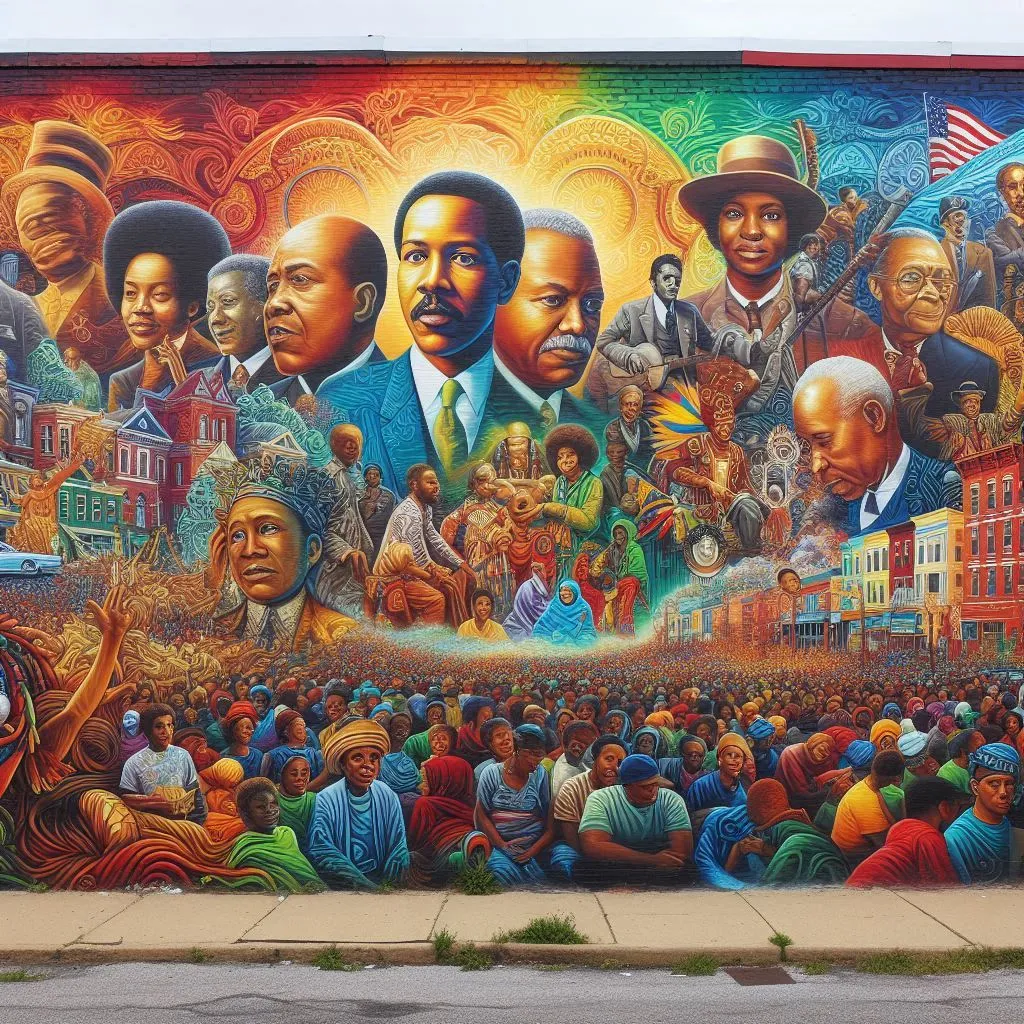
Learning about Black history helps us understand the struggles, achievements, and contributions of Black people throughout the world.
These black history facts highlight important events, influential figures, cultural milestones, and inspiring achievements that shaped history.
Perfect for students, educators, and anyone looking to expand their knowledge, this guide provides fascinating, educational, and easy-to-understand facts about Black history.
Important Figures In Black History Facts
1 Martin Luther King Jr. was a pivotal civil rights leader who advocated for nonviolent protest and delivered the iconic “I Have a Dream” speech, helping lead the movement to end racial segregation in the United States.
2 Harriet Tubman escaped slavery and became a leading abolitionist, famously guiding hundreds of enslaved people to freedom through the Underground Railroad, risking her life repeatedly to save others.
3 Malcolm X was a powerful activist and spokesperson for the Nation of Islam who advocated for Black empowerment, self-defense, and the recognition of systemic racial injustices in the United States.
4 Rosa Parks, known as the “Mother of the Civil Rights Movement,” refused to give up her seat on a segregated bus, sparking the Montgomery Bus Boycott and becoming a symbol of resistance to racial oppression.
5 Frederick Douglass, born into slavery, became an influential abolitionist, writer, and orator, using his eloquence and personal experience to fight for the emancipation of enslaved African Americans.
6 Sojourner Truth was an abolitionist and women’s rights activist who delivered powerful speeches advocating for the freedom of enslaved people and the rights of women, famously declaring, “Ain’t I a Woman?”
7 W.E.B. Du Bois was a scholar, activist, and co-founder of the NAACP who worked tirelessly to advance civil rights, promote higher education, and challenge racial discrimination in America.
8 Thurgood Marshall was the first African American Supreme Court Justice, known for his legal work in landmark cases like Brown v. Board of Education, which helped dismantle racial segregation in public schools.
9 Maya Angelou, a renowned poet, author, and civil rights activist, used her writing and performances to highlight the African American experience and advocate for equality, resilience, and social justice.
10 Barack Obama made history as the first African American President of the United States, serving two terms, and symbolized progress in racial equality while addressing major domestic and international challenges.

Historical Events In Black History Facts
1 The Transatlantic Slave Trade, spanning from the 16th to the 19th century, forcibly transported millions of Africans to the Americas, creating a lasting legacy of racial injustice, oppression, and cultural displacement.
2 The Emancipation Proclamation, issued by President Abraham Lincoln in 1863, declared freedom for enslaved people in Confederate states, marking a critical turning point in the fight against slavery in the United States.
3 The founding of the NAACP (National Association for the Advancement of Colored People) in 1909 provided a platform for organized legal, political, and social advocacy to combat racial discrimination and promote civil rights.
4 The Harlem Renaissance of the 1920s and 1930s was a cultural, artistic, and intellectual movement that celebrated Black identity, producing influential works in literature, music, and visual arts that shaped American culture.
5 The Montgomery Bus Boycott in 1955–1956, sparked by Rosa Parks’ arrest, became a pivotal civil rights protest, leading to the Supreme Court ruling that segregation on public buses was unconstitutional.
6 The March on Washington for Jobs and Freedom in 1963 was a monumental gathering of over 250,000 people advocating for civil and economic rights, highlighted by Martin Luther King Jr.’s iconic “I Have a Dream” speech.
7 The Civil Rights Act of 1964 outlawed discrimination based on race, color, religion, sex, or national origin, ending legal segregation in public spaces and establishing a foundation for equality under U.S. law.
8 The Voting Rights Act of 1965 prohibited discriminatory voting practices such as literacy tests and poll taxes, significantly increasing African American political participation and representation.
9 The election of Barack Obama in 2008 as the first African American President of the United States represented a historic milestone in political representation and progress toward racial equality.
10 The Black Lives Matter movement, founded in 2013, emerged as a global campaign against systemic racism and police brutality, raising awareness and advocating for justice and equality for Black communities worldwide.

Civil Rights Achievements In Black History Facts
1. The 13th Amendment (1865) abolished slavery in the United States, officially ending centuries of forced labor for African Americans. Although freedom was granted by law, formerly enslaved people continued to face discrimination, violence, and economic hardship, making this amendment a crucial first step toward civil rights.
2. The 14th Amendment (1868) granted citizenship to all people born or naturalized in the United States and promised equal protection under the law. This amendment became the legal foundation for challenging segregation and racial discrimination in later civil rights cases.
3. The 15th Amendment (1870) gave Black men the legal right to vote by prohibiting racial discrimination in voting. Despite this, many states used poll taxes, literacy tests, and intimidation to prevent African Americans from voting for decades.
4. In 1954, the Supreme Court’s decision in Brown v. Board of Education declared racial segregation in public schools unconstitutional. This ruling overturned the “separate but equal” doctrine and helped spark nationwide efforts to end segregation.
5. The Montgomery Bus Boycott (1955–1956) began after Rosa Parks was arrested for refusing to give up her seat to a white passenger. The year-long protest led to the desegregation of public buses and showed the power of nonviolent resistance.
6. The Civil Rights Act of 1964 outlawed discrimination based on race, color, religion, sex, or national origin. It ended segregation in public places and made employment discrimination illegal, marking a major victory for the Civil Rights Movement.
7. The Voting Rights Act of 1965 strengthened voting protections by banning literacy tests and allowing federal oversight in states with a history of voter suppression. This law greatly increased Black voter registration and political participation.
8. The Fair Housing Act of 1968 prohibited discrimination in the sale, rental, and financing of housing. It aimed to reduce racial segregation in neighborhoods and improve access to equal housing opportunities.
9. In 2008, Barack Obama was elected the first Black president of the United States. His election represented a historic moment in political representation and reflected the long-term impact of civil rights struggles.
10. Modern civil rights movements, such as Black Lives Matter, have raised awareness about systemic racism, police brutality, and inequality. These efforts have influenced policy changes, public discussions, and renewed activism in the 21st century.

Cultural Contributions In Black History Facts
1. The 13th Amendment (1865) abolished slavery in the United States, officially ending centuries of forced labor for African Americans. Although freedom was granted by law, formerly enslaved people continued to face discrimination, violence, and economic hardship, making this amendment a crucial first step toward civil rights.
2. The 14th Amendment (1868) granted citizenship to all people born or naturalized in the United States and promised equal protection under the law. This amendment became the legal foundation for challenging segregation and racial discrimination in later civil rights cases.
3. The 15th Amendment (1870) gave Black men the legal right to vote by prohibiting racial discrimination in voting. Despite this, many states used poll taxes, literacy tests, and intimidation to prevent African Americans from voting for decades.
4. In 1954, the Supreme Court’s decision in Brown v. Board of Education declared racial segregation in public schools unconstitutional. This ruling overturned the “separate but equal” doctrine and helped spark nationwide efforts to end segregation.
5. The Montgomery Bus Boycott (1955–1956) began after Rosa Parks was arrested for refusing to give up her seat to a white passenger. The year-long protest led to the desegregation of public buses and showed the power of nonviolent resistance.
6. The Civil Rights Act of 1964 outlawed discrimination based on race, color, religion, sex, or national origin. It ended segregation in public places and made employment discrimination illegal, marking a major victory for the Civil Rights Movement.
7. The Voting Rights Act of 1965 strengthened voting protections by banning literacy tests and allowing federal oversight in states with a history of voter suppression. This law greatly increased Black voter registration and political participation.
8. The Fair Housing Act of 1968 prohibited discrimination in the sale, rental, and financing of housing. It aimed to reduce racial segregation in neighborhoods and improve access to equal housing opportunities.
9. In 2008, Barack Obama was elected the first Black president of the United States. His election represented a historic moment in political representation and reflected the long-term impact of civil rights struggles.
10. Modern civil rights movements, such as Black Lives Matter, have raised awareness about systemic racism, police brutality, and inequality. These efforts have influenced policy changes, public discussions, and renewed activism in the 21st century.
Scientific And Academic Facts In Black History Facts
1. Benjamin Banneker, a self-taught African American mathematician and astronomer in the 1700s, accurately predicted solar and lunar eclipses and helped survey the land that became Washington, D.C. His scientific work challenged widespread beliefs that Black people were intellectually inferior.
2. George Washington Carver revolutionized agricultural science through his research on crop rotation and soil conservation. He developed hundreds of products from peanuts, sweet potatoes, and other crops, helping improve the economy and education of Southern farmers.
3. Dr. Charles Drew developed groundbreaking methods for blood storage and large-scale blood banks during World War II. His research saved countless lives and became the foundation for modern blood transfusion systems still used today.
4. In 1862, Mary Jane Patterson became the first Black woman in the United States to earn a bachelor’s degree. Her achievement opened doors for Black women in higher education at a time when access to universities was extremely limited.
5. W.E.B. Du Bois was one of the first scholars to apply scientific research methods to the study of sociology. His academic work at Atlanta University used data, surveys, and statistics to challenge racist theories and study the social conditions of African Americans.
6. Dr. Marie Maynard Daly was the first Black woman to earn a PhD in chemistry in 1947. Her research helped establish the link between cholesterol and heart disease, contributing to modern medical understanding of cardiovascular health.
7. Katherine Johnson, a brilliant mathematician at NASA, calculated flight paths and orbital mechanics for early space missions. Her work was essential to the success of the first American spaceflights and the Apollo moon missions.
8. Historically Black Colleges and Universities (HBCUs) have played a critical role in advancing Black education and research. Despite limited funding, HBCUs have produced a significant percentage of Black scientists, engineers, doctors, and scholars in the United States.
9. Dr. Shirley Ann Jackson became the first Black woman to earn a doctorate in theoretical physics from MIT. Her scientific leadership and research contributed to advancements in telecommunications, including technologies used in caller ID and fiber optics.
10. Modern Black scientists and scholars continue to make major contributions in fields such as medicine, engineering, computer science, and education. Their work builds on a long legacy of overcoming barriers to expand knowledge, innovation, and academic excellence.
Sports And Entertainment Facts In Black History Facts
1. The Black Lives Matter movement, founded in 2013, has had a global impact by bringing attention to police brutality, racial injustice, and systemic racism. It influenced public policy discussions, corporate diversity commitments, and international protests demanding racial equity.
2. Black political representation has significantly increased in the 21st century, with more African Americans elected to Congress, mayoral offices, and local governments. This growth has strengthened advocacy for voting rights, criminal justice reform, and economic equality.
3. Black entrepreneurs have reshaped modern business and culture through leadership in technology, fashion, entertainment, and finance. Their success has helped close opportunity gaps while creating jobs and promoting economic empowerment in underserved communities.
4. Black artists, musicians, and filmmakers have had a profound influence on global culture by shaping genres such as hip-hop, R&B, film, and digital media. Their work has amplified Black voices, challenged stereotypes, and sparked conversations about identity and social justice.
5. Black scholars and educators have expanded academic conversations on race, history, and inequality. Fields such as African American studies and critical race theory have influenced education, law, and public policy discussions across the nation.
6. Black athletes have used their platforms to advocate for social justice, addressing issues such as racial discrimination, police violence, and voter suppression. Their activism has reshaped expectations of athletes as leaders beyond sports.
7. Advances in Black-led healthcare advocacy have raised awareness about racial disparities in medical treatment and outcomes. Black doctors, researchers, and activists have pushed for reforms to improve maternal health, mental health access, and community-based care.
8. Black influence in technology and digital innovation continues to grow, with leaders contributing to artificial intelligence, cybersecurity, and social media development. These contributions are helping address bias in technology and expand access to digital resources.
9. Modern Black activism has driven the removal of Confederate monuments and the renaming of institutions tied to slavery and segregation. These actions reflect broader efforts to confront historical injustice and reshape public memory.
10. Black voters and grassroots organizers have played a critical role in modern elections by increasing voter turnout and civic engagement. Their efforts have influenced major political outcomes and reinforced the importance of democratic participation.
Modern Impact In Black History Facts
1. The Black Lives Matter movement, founded in 2013, has had a global impact by bringing attention to police brutality, racial injustice, and systemic racism. It influenced public policy discussions, corporate diversity commitments, and international protests demanding racial equity.
2. Black political representation has significantly increased in the 21st century, with more African Americans elected to Congress, mayoral offices, and local governments. This growth has strengthened advocacy for voting rights, criminal justice reform, and economic equality.
3. Black entrepreneurs have reshaped modern business and culture through leadership in technology, fashion, entertainment, and finance. Their success has helped close opportunity gaps while creating jobs and promoting economic empowerment in underserved communities.
4. Black artists, musicians, and filmmakers have had a profound influence on global culture by shaping genres such as hip-hop, R&B, film, and digital media. Their work has amplified Black voices, challenged stereotypes, and sparked conversations about identity and social justice.
5. Black scholars and educators have expanded academic conversations on race, history, and inequality. Fields such as African American studies and critical race theory have influenced education, law, and public policy discussions across the nation.
6. Black athletes have used their platforms to advocate for social justice, addressing issues such as racial discrimination, police violence, and voter suppression. Their activism has reshaped expectations of athletes as leaders beyond sports.
7. Advances in Black-led healthcare advocacy have raised awareness about racial disparities in medical treatment and outcomes. Black doctors, researchers, and activists have pushed for reforms to improve maternal health, mental health access, and community-based care.
8. Black influence in technology and digital innovation continues to grow, with leaders contributing to artificial intelligence, cybersecurity, and social media development. These contributions are helping address bias in technology and expand access to digital resources.
9. Modern Black activism has driven the removal of Confederate monuments and the renaming of institutions tied to slavery and segregation. These actions reflect broader efforts to confront historical injustice and reshape public memory.
10. Black voters and grassroots organizers have played a critical role in modern elections by increasing voter turnout and civic engagement. Their efforts have influenced major political outcomes and reinforced the importance of democratic participation.
Final Thoughts
Black history is full of courage, innovation, and resilience. These black history facts show the remarkable contributions and achievements of Black individuals and communities around the world.
By learning and sharing these facts, we honor the past, celebrate accomplishments, and inspire future generations.