
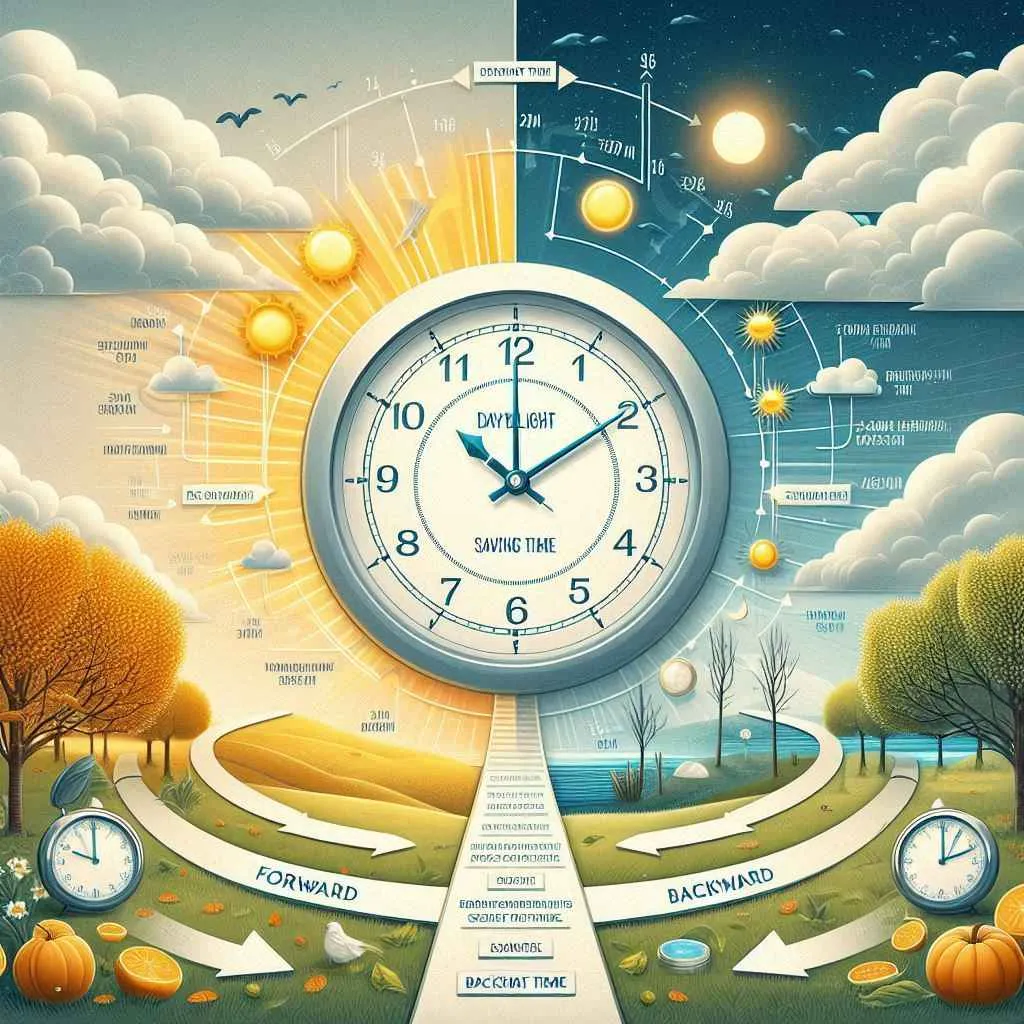
Discover surprising Daylight Saving Time fun facts, including its history, purpose, global impact, and quirky time-change trivia you probably didn’t know! Perfect for curious minds.
Every year, millions of people around the world adjust their clocks forward or backward as Daylight Saving Time begins or ends. While many of us simply notice losing or gaining an hour of sleep, the story behind Daylight Saving Time is far more fascinating than most people realize.
In this collection of Daylight Saving Time fun facts, you’ll discover how and why the idea started, which countries actually follow it, and some quirky truths that might completely change the way you think about time itself.
Daylight Saving Time Fun Facts In English
1. Daylight Saving Time is singular—it’s “saving,” not “savings” time.
2. A New Zealand bug collector, George Vernon Hudson, invented DST in 1895 to extend summer evenings for insect hunting.
3. Benjamin Franklin jokingly proposed early rising in 1784 to save candle wax, but wasn’t serious about clock changes.
4. British builder William Willett campaigned for DST in 1907 after noticing drawn blinds on summer mornings.
5. During WWI, a 35-mile U.S. bus ride crossed seven time zones due to chaotic local DST decisions.
6. Candy makers lobbied for Halloween DST extensions, even placing candy pumpkins on senators’ chairs.
7. DST starts at 2 a.m. to avoid disrupting Saturday night partiers, Sunday church, and early shift worker.
8. Studies show SAT scores drop about 2% when tests fall right after the spring time change.
9. Germany was first to adopt DST in 1916 during WWI to save coal for the war effort.
10. Minneapolis and St. Paul once ran on different clocks, confusing cross-city commuters.
11. Farmers actually opposed DST—their cows couldn’t adjust milking schedules to clock changes.
12. Arizona (except Navajo Nation) and Hawaii refuse DST year-round
13. DST was extended in 2007 so kids could trick-or-treat in more daylight.
14. During WWII, “War Time” meant year-round DST across the U.S.
15. Some research shows DST may increase heart attacks the week after springing forward.
16. Russia tried permanent DST (2011-2014) but abandoned it due to farming and health complaints.
17. Golfers love DST—extra evening daylight reportedly boosts their industry by $400 million annually.
18. The European Union votes yearly on whether to end DST but can’t agree.
19. FDR called it “Daylight Saving Time” in 1942; the name stuck despite grammar debates.
20. Willett’s grandson’s grandson? Coldplay’s Chris Martin—making him DST royalty!
Read More: 139+ Side-Splitting Daylight Saving Time Jokes
Daylight Saving Time Fun Facts For Kids

1. Daylight Saving Time is when we move our clocks forward one hour in the spring and back one hour in the fall. It’s like giving ourselves an extra hour of sunshine in the evening .
2. The correct name is Daylight “Saving” Time, not Daylight “Savings” Time. There’s no “S” at the end of saving, even though lots of people say it wrong .
3. In many countries around the world, Daylight Saving Time is called “Summer Time.” That makes sense because it happens during the summer months .
4. A bug scientist (an entomologist) from New Zealand named George Hudson first came up with the modern idea in 1895. He wanted more daylight after work so he could go hunt for insects .
5. Germany was the first country to officially start Daylight Saving Time on April 30, 1916, during World War I. They wanted to save coal and fuel for the war .
6. Benjamin Franklin joked about the idea of moving clocks in 1784, but he didn’t seriously propose it. He suggested Parisians could save candles by waking up earlier .
7. When we “spring forward” in March, we lose one hour of sleep. But when we “fall back” in November, we gain an extra hour. That means 25 hours in one day .
8. Not all places follow Daylight Saving Time. Arizona, Hawaii, Puerto Rico, and the U.S. Virgin Islands don’t change their clocks at all .
9. Countries near the equator don’t need Daylight Saving Time because they get about the same amount of daylight all year round. The sun rises and sets at similar times every day .
10. The clocks are always changed at 2 o’clock in the morning. This time was chosen because no trains were leaving stations at 2 a.m. back when the practice started, so it wouldn’t cause confusion .
11. Indiana didn’t start observing Daylight Saving Time until 2006. Before that, different parts of the state did different things with their clocks .
12. In 2005, the country of Kazakhstan decided to stop using Daylight Saving Time because more than half of their population said it made them feel bad .
13. About 70 countries around the world still use Daylight Saving Time. That’s less than half of all countries .
14. Some studies show that car accidents decrease during Daylight Saving Time because there’s more light in the evening when people are driving home .
15. In the Southern Hemisphere, like Australia and parts of South America, the seasons are opposite. So when we’re falling back, they’re springing forward .
16. Farmers actually didn’t start Daylight Saving Time. This is a common myth! Farmers follow the sun and their animals, not the clock .
17. Your pets notice the time change too! Dogs and cats get confused when their meal times suddenly shift by an hour because they follow their internal clocks .
18. In 2007, the United States changed the rules and made Daylight Saving Time longer. Now it starts in March and ends in November instead of April and October .
19. Russia used to have permanent Daylight Saving Time all year, but they stopped in 2014 because people didn’t like waking up in the dark during winter .
20. Daylight Saving Time is a great reminder to do something helpful, like changing the batteries in your smoke detectors. Many families use this twice-a-year tradition as a safety check .
Read More: 139+ Hilarious Full Moon Jokes
Daylight Saving Time Fun Facts 2026
1. It’s officially “daylight saving time” (singular), not “daylight savings time”—the extra “s” is a common mix-up, like saying “maths” instead of “math”!
2. Benjamin Franklin gets credit for the idea, but his 1784 suggestion was half-joking satire: Parisians should wake earlier to save on candles, not actually change clocks.
3. The modern version was proposed in 1895 by New Zealand bug collector George Hudson, who wanted more evening light to hunt insects after work.
4. In 2022, the U.S. Senate passed the Sunshine Protection Act to make DST permanent year-round—no more falling back—but it stalled in the House and never became law.
5. About 70 countries used DST around 2022, but most near the equator skip it since daylight hours barely change year-round.
6. Neither China nor Japan observed DST in 2022 (or now)—China hasn’t since 1991, and Japan ditched it after WWII.
7. Hawaii and most of Arizona (except the Navajo Nation) opt out of DST entirely, sticking to standard time year-round.
8. DST was first widely adopted during WWI (starting with Germany in 1916) to save coal and energy for the war effort.
9. In the U.S., DST was extended in 2007 under the Energy Policy Act of 2005, shifting the start to the second Sunday in March and end to the first Sunday in November.
10. Farmers actually hated early DST versions—cows don’t adjust schedules, so milking and market times got thrown off!
11. In 2022, DST ran for about 8 months (34 weeks), leaving standard time as the shorter period—some called it “permanent DST in disguise.”
12. Studies show a spike in heart attacks, car accidents, and workplace injuries right after the spring forward change due to lost sleep.
13. The candy industry quietly loves the fall-back: extra evening light around Halloween means more trick-or-treating and candy sales.
14. Retailers and golf courses pushed hard for DST extensions—more daylight after work = more shopping and tee times.
15. In 1974, the U.S. tried year-round DST during the energy crisis—it lasted 10 months but was repealed after complaints about dark winter mornings (kids going to school in the dark).
16. Some places got creative: a Madagascar resort once created its own mini-DST so lemurs would join guests for “5 o’clock tea” on time.
17. The phrase “spring forward, fall back” helps people remember: spring ahead one hour, fall back one hour.
18. Around 2022, polls showed most Americans wanted to ditch the biannual switch—about 60-70% preferred permanent standard time or DST.
19. DST might actually increase energy use today (more AC in evenings, heating in mornings) compared to the old coal-saving days.
20. In 2022, Mexico ended its DST practice permanently, switching to year-round standard time—making it one of the latest countries to drop the clock changes.
Read More: 139+ Funny March Jokes
Funny Daylight Saving Time Fun Facts
1. Daylight Saving Time was once suggested to give people more time to hunt bugs—Benjamin Franklin thought it was brilliant.
2. Arizona said “no thanks” to Daylight Saving Time, proving they’re too cool to lose sleep.
3. Hawaii also skips Daylight Saving Time—because when you live in paradise, who needs extra daylight?
4. Studies show productivity drops after the clock change… probably because everyone is too busy complaining.
5. Daylight Saving Time has been blamed for more car accidents—apparently yawning drivers aren’t great at steering.
6. Farmers actually hate Daylight Saving Time—it messes with their schedules and their cows don’t care about clocks.
7. The Monday after the spring forward is nicknamed “Sleepy Monday”—and coffee sales skyrocket.
8. Some research suggests crime drops during Daylight Saving Time—criminals don’t like working overtime in daylight.
9. Daylight Saving Time was once used to save energy, but now it mostly just wastes our patience.
10. People are more likely to have heart attacks right after the spring forward—proof that losing an hour is literally bad for your heart.
11. Fall back gives you an extra hour of sleep… unless you’re a parent, then your kids wake up earlier.
12. Daylight Saving Time has inspired countless memes—mostly about how nobody understands why we still do it.
13. Some countries tried Daylight Saving Time and gave up—because changing clocks twice a year is too much drama.
14. Your phone automatically updates the time, but your microwave clock will haunt you for weeks.
15. Daylight Saving Time is the only time travel most of us will ever experience.
16. Pets don’t care about Daylight Saving Time—they still expect breakfast at the same time.
17. Daylight Saving Time has been called “the world’s worst jet lag.”
18. Some people use the fall back hour to party longer—others just use it to sleep harder.
19. Daylight Saving Time is the only holiday where you lose an hour and nobody gives you cake.
20. Every year, millions of people ask the same question: “Wait… is it spring forward or fall back?”
Best Daylight Saving Time Fun Facts
1. Daylight Saving Time was not created for farmers. In fact, many farmers originally opposed changing the clocks.
2. Benjamin Franklin first mentioned the idea in 1784 as a humorous suggestion to save candle usage.
3. Germany became the first country to officially adopt Daylight Saving Time in 1916.
4. Daylight Saving Time started during World War I to conserve fuel and energy resources.
5. More than half of the countries in the world do not observe Daylight Saving Time at all.
6. Countries near the equator usually don’t use DST because daylight hours stay nearly the same year-round.
7. Before 1966, different cities in the United States followed different time-change schedules, causing major confusion.
8. People typically lose sleep when clocks move forward in spring.
9. Some regions tried Daylight Saving Time but later canceled it due to public dissatisfaction.
10. The popular reminder phrase is: “Spring forward, fall back.”
11. Studies suggest extended evening daylight may help reduce certain types of crime.
12. Modern research shows energy savings from DST are smaller than originally expected.
13. Airlines and transportation systems carefully adjust schedules during time changes.
14. Smartphones and digital devices now automatically update clocks for DST.
15. Different countries begin and end Daylight Saving Time on different dates.
16. The spring time change can temporarily affect people’s health and sleep cycles.
17. Sunsets suddenly appear about one hour later after DST begins.
18. Some countries have experimented with permanent Daylight Saving Time but later reversed the decision.
19. International meeting times can briefly shift when countries change clocks on different weeks.
20. Daylight Saving Time remains one of the most debated time policies around the world.
Daylight Saving Time Fun Facts For Adults
1. DST was first proposed by Benjamin Franklin in 1784.
2. Germany was the first country to implement Daylight Saving Time in 1916.
3. Daylight Saving Time can save up to about 1% of energy consumption.
4. Not all countries observe DST, including Japan and India.
5. Daylight Saving Time was originally called “Summer Time.”
6. The United States adopted DST in 1918 to help save energy.
7. DST can affect sleep patterns and overall productivity.
8. Some countries observe Daylight Saving Time for only part of the year.
9. Studies suggest the time change can lead to a small loss in productivity.
10. The clock change may influence health and mood temporarily.
11. Daylight Saving Time is observed in more than 70 countries worldwide.
12. The idea behind DST was partly inspired by making better use of daylight hours.
13. DST has been estimated to save billions of kilowatt-hours of electricity in some years.
14. Some cities, such as Phoenix and Tucson in Arizona, do not observe DST.
15. Daylight Saving Time can affect wildlife behavior and ecosystems.
16. The time change can impact sports schedules and broadcasting times.
17. Farmers were among the groups that initially opposed Daylight Saving Time.
18. The United States modified DST rules in 2007 to extend energy-saving efforts.
19. DST can create confusion for international travelers and global businesses.
20. Some studies suggest Daylight Saving Time may help reduce certain crime rates and accidents.
Clean Daylight Saving Time Fun Facts
1. Daylight Saving Time is the practice of moving clocks forward one hour in spring and back one hour in fall to make better use of natural daylight during evenings.
2. The correct term is Daylight “Saving” Time, not Daylight “Savings” Time. There is no “s” at the end of saving, even though many people add one.
3. Benjamin Franklin first suggested the idea in 1784, but it was meant as a joke. He wrote an essay suggesting Parisians could save candles by waking up earlier.
4. A New Zealand entomologist named George Hudson proposed the modern version in 1895 because he wanted more daylight after work to go bug hunting.
5. Germany was the first country to officially adopt Daylight Saving Time on April 30, 1916, during World War I to save fuel and energy.
6. The United States first used Daylight Saving Time in 1918 but repealed it after the war ended because farmers and many citizens disliked it.
7. During World War II, President Franklin Roosevelt reinstated Daylight Saving Time year-round. It was called “War Time” and lasted from 1942 to 1945.
8. Not every U.S. state observes Daylight Saving Time. Hawaii and most of Arizona do not change their clocks at all, along with Puerto Rico and Guam.
9. The U.S. territories of American Samoa, Guam, the Northern Mariana Islands, Puerto Rico, and the Virgin Islands all stay on standard time year-round.
10. The clocks always change at 2:00 a.m. on a Sunday. This time was chosen because it minimized disruption for trains and public transportation.
11. When clocks “spring forward” in March, we lose one hour of sleep. When they “fall back” in November, we gain an extra hour, giving us a 25-hour day.
12. Studies have shown that the extra evening daylight reduces traffic accidents and pedestrian fatalities because more people drive home in daylight.
13. Countries near the equator do not observe Daylight Saving Time because their daylight hours stay roughly the same all year long.
14. About 70 countries around the world still use Daylight Saving Time, which is less than half of all nations on Earth.
15. In the Southern Hemisphere, Daylight Saving Time runs from October to April because their seasons are opposite of those in the Northern Hemisphere.
16. Russia used to have permanent Daylight Saving Time but abolished it in 2014 after studies showed people struggled with waking up in darkness during winter.
17. Indiana had a complicated history with Daylight Saving Time. Until 2006, some counties observed it while others did not, causing confusion for residents.
18. The Energy Policy Act of 2005 extended Daylight Saving Time in the United States by about four weeks. It now begins in March and ends in November.
19. Some researchers believe that the time change disrupts our circadian rhythms, which is why many people feel tired for several days after springing forward.
20. The twice-yearly clock change is a perfect reminder to replace batteries in smoke detectors and carbon monoxide alarms to keep your home safe.
FAQS
What is a fun fact about the clock?
A fun fact: The famous clock Big Ben is so accurate that its time can be adjusted by adding or removing old coins on its pendulum!
What was the most surprising or interesting thing you learned about daylight saving time?
A surprising fact is that Daylight Saving Time was originally promoted to save energy, but studies show it doesn’t always reduce electricity use as much as people expected.
What is the only state that doesn’t do daylight savings?
The only U.S. state that does not observe Daylight Saving Time statewide is Arizona.
Final Thoughts
Daylight Saving Time is much more than simply changing our clocks twice a year—it’s a tradition filled with history, debate, and plenty of surprising stories. From its unexpected origins to the different ways countries around the world observe it, Daylight Saving Time continues to shape how people manage their daily routines and make the most of daylight hours.
These fun facts show that something as simple as time can have a fascinating background and global impact. The next time you reset your clock, you’ll know there’s a lot more behind that single hour than meets the eye.