
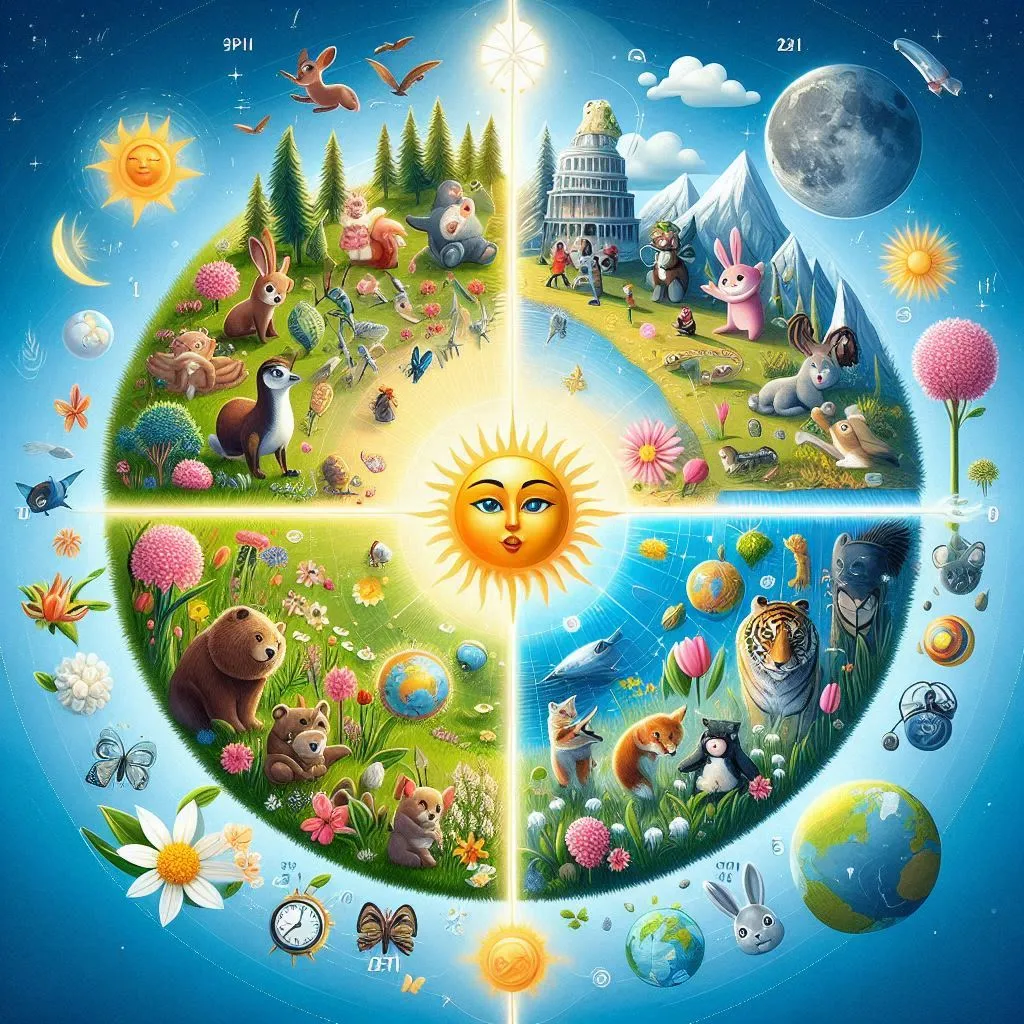
Curious about the first day of spring? Discover fun and surprising Vernal Equinox facts about nature, astronomy, and seasonal change.
The Vernal Equinox marks the official start of spring and is one of the most fascinating astronomical events of the year. On this day, day and night are nearly equal in length, creating a perfect balance of light and dark.
Beyond the science, the equinox has inspired traditions, festivals, and celebrations around the world for centuries.
From nature’s awakening to cultural rituals, these Vernal Equinox fun facts reveal the wonder, mystery, and beauty of this special seasonal moment. Whether you’re a science enthusiast or just love learning quirky seasonal trivia, these facts are sure to surprise and delight!
Vernal Equinox Fun Facts In English
1. Vernal Equinox means “spring arrival” when day and night balance at 12 hours each.
2. It happens around March 20-21 as Earth tilts toward the sun.
3. Eggs balance on their end more easily—thanks to steady gravity vibes.
4. Chichen Itza’s pyramid casts a serpent shadow down the stairs.
5. Persians celebrate Nowruz with tables of seven symbolic sprouts.
6. Stonehenge aligns perfectly for equinox sunrise rituals.
7. Japanese honor ancestors with Shunbun no Hi grave visits.
8. Thais splash water everywhere for Songkran New Year fun.
9. Poles drown winter effigies to welcome spring warmth.
10. Bulgarians swap martenitsa bracelets for blossoms on trees.
11. It’s the astrological start of Aries, the ram zodiac.
12. Persephone returns from underworld in Greek spring myth.
13. Ostara goddess inspires Easter eggs and bunny lore.
14. Sun rises exactly due east and sets due west.
15. Flowers like crocuses burst open right on cue.
16. Animals wake from hibernation: bears, frogs, and bees buzz.
17. Incas once danced for Inti Raymi sun god return.
18. Maryland sailors “burn the socks” for warmer bays.
19. Equator gets a straight terminator line of light-dark.
20. It’s autumn start down south—flip the seasons!
Read More: 138+ Interesting March Fun Facts
Funny Vernal Equinox Fun Facts
1. The word “equinox” comes from Latin words meaning “equal night,” but don’t worry—your sleep schedule is still a mess regardless.
2. On the vernal equinox, day and night are almost exactly 12 hours each. It’s the universe’s way of testing if we notice balance. We don’t.
3. The equinox is the only time of year you can balance an egg on its end. Or so internet rumors say. Try it and report back.
4. Ancient Persians celebrated the vernal equinox as Nowruz, the Persian New Year, which has been going on for over 3,000 years. That’s a lot of resolved New Year’s resolutions.
5. At the exact moment of the equinox, the sun crosses the celestial equator. This sounds fancy but basically means the sun is directly above the equator, showing off.
6. The vernal equinox marks the first day of spring in the Northern Hemisphere, but in the Southern Hemisphere, they’re celebrating the first day of autumn. Show-offs with their opposite seasons.
7. Some people believe you can stand an egg on its end only during the equinox. Scientists say you can do it any day if you’re patient and have good balance. But where’s the fun in that?
8. The Mayans built a pyramid at Chichén Itzá that creates a snake-shaped shadow during the equinox. Meanwhile, we struggle to take a decent selfie.
9. During the equinox, the sun rises due east and sets due west everywhere on Earth except at the poles. At the poles, they’re just confused about what day it is anyway.
10. The vernal equinox doesn’t always fall on March 20th. Sometimes it’s March 19th or 21st, because the universe doesn’t respect our calendar commitments.
11. In Japan, the vernal equinox is a national holiday called Shunbun no Hi, when families visit graves and honor ancestors. Meanwhile, we’re just happy it’s not snowing.
12. The word “vernal” comes from Latin “vernalis” meaning “of spring.” So vernal equinox literally means “spring equal night.” Latin speakers were very literal people.
13. At the exact moment of the equinox, the Earth’s axis is tilted neither toward nor away from the sun. It’s the one time of year the Earth isn’t being dramatic about its position.
14. Some ancient cultures believed the equinox was the only day the dead could return to visit. Now they just visit as memories and mild regrets.
15. The equinox is celebrated at Stonehenge by druids, pagans, and tourists with cameras. Everyone’s just there for the vibes and the photos.
16. In Babylonian times, the vernal equinox marked the start of the new year with a 12-day festival called Akitu. Babylonians knew how to party longer than we do.
17. During the equinox, the terminator—the line between day and night—runs through both poles, making Earth look like it’s been perfectly sliced in half. Very satisfying geometry.
18. The vernal equinox is the only day you can reliably find your way using the sun because it rises exactly east and sets exactly west. Perfect for people who still use paper maps.
19. Some people celebrate the equinox by doing spring cleaning, which is just a fancy way of saying “finding things you lost last fall.”
20. The vernal equinox has been celebrated by humans for thousands of years, proving that no matter the era, we all just want an excuse to party when the weather gets nice.
Recommended: 138+ March Trivia Questions And Answers For Kids
Vernal Equinox Fun Facts For Adults
1. The word “equinox” means “equal night” — day and night are almost exactly 12 hours long.
2. On the vernal equinox, the Sun rises due east and sets due west everywhere on Earth.
3. The tilt of Earth is exactly balanced toward the Sun, so both hemispheres get equal sunlight.
4. The vernal equinox marks the official start of spring in the Northern Hemisphere.
5. In the Southern Hemisphere, the same moment is the start of autumn.
6. The Sun crosses the celestial equator on this day — the imaginary line above Earth’s equator.
7. Many ancient cultures built monuments aligned with the equinox sunrise (like Stonehenge and Chichen Itza).
8. At the equator, the Sun is directly overhead at noon on the equinox — no shadow from a vertical stick!
9. The vernal equinox is when the Northern Hemisphere starts tilting more toward the Sun, making days longer.
10. In Japan, the vernal equinox is a national holiday called Shunbun no Hi — a day to honor ancestors.
11. Farmers in many cultures used the equinox to know when to plant spring crops.
12. The exact time of the equinox changes slightly each year — it can fall on March 19, 20, or 21.
13. Penguins in Antarctica experience their first “sunrise” after months of darkness around this time.

14. The vernal equinox is one of only two days a year when the Sun rises and sets exactly east-west.
15. Some people balance an egg on its end on equinox day — it’s possible any day, but fun to try!
16. In Iran and many Persian cultures, the equinox is celebrated as Nowruz — the Persian New Year.
17. The word “vernal” comes from Latin “ver” meaning spring — so “vernal equinox” = spring equal-night.
18. After the vernal equinox, daylight increases by about 2–3 minutes per day in most places.
19. The equinox happens at the same instant worldwide, but time zones make it March 20 or 21 depending on location.
20. In many traditions, the vernal equinox is a time to set new intentions and celebrate renewal — like spring cleaning for your life!
Vernal Equinox Fun Facts Short
1. The vernal equinox usually occurs on March 20 or 21 in the Northern Hemisphere.
2. On this day, day and night are nearly equal in length across the globe.
3. The word equinox comes from Latin, meaning “equal night.”
4. The sun is positioned directly above the equator during the equinox.
5. In the Southern Hemisphere, the March equinox marks the start of autumn.
6. Ancient civilizations used the equinox to plan farming and planting seasons.
7. Astronomers use the equinox as a reference point for celestial coordinates.
8. Easter’s date is determined by the first Sunday after the full moon following the equinox.
9. The Persian New Year, Nowruz, begins on the vernal equinox.
10. At Chichen Itza in Mexico, the equinox creates a shadow serpent on the pyramid of El Castillo.
11. Stonehenge in England aligns with the sunrise on the equinox.
12. Japan celebrates Shunbun no Hi, a national holiday on the equinox.
13. Many traditions see the equinox as a symbol of balance and renewal.
14. The equinox happens twice a year—once in March and once in September.
15. Some cultures believed the equinox was a time when spirits could cross between worlds.
16. The equinox has been used for centuries to calibrate calendars.
17. On the equinox, the sun rises exactly in the east and sets exactly in the west.
18. Earth’s tilt of 23.5° is the reason equinoxes and seasons exist.
19. Some yoga traditions celebrate the equinox with 108 sun salutations.
20. Across cultures, the equinox inspires festivals, myths, and rituals of renewal.
Best Vernal Equinox Fun Facts
1. The Vernal Equinox marks the first day of spring in the Northern Hemisphere and the first day of autumn in places like Australia.
2. The word “equinox” comes from Latin meaning “equal night,” because day and night are nearly the same length.
3. It usually happens around March 19, 20, or 21, depending on the year and time zone.
4. At the exact moment of the equinox, the Sun is directly above Earth’s equator.
5. The equinox happens at the same instant worldwide, even though local clocks show different times.
6. Ancient civilizations built monuments aligned with the equinox sunrise or sunset.
7. At Chichén Itzá, sunlight creates a shadow that looks like a serpent slithering down the pyramid during the equinox.
8. The Vernal Equinox marks Nowruz, the Persian New Year, celebrated in Iran and several other countries.
9. Day and night are not perfectly equal because Earth’s atmosphere bends sunlight slightly.
10. You can balance an egg on the equinox — but you can actually do it any day of the year.
11. Many animals use the increasing daylight as a signal to begin migration.
12. Plants respond to longer daylight hours, which helps trigger spring blooming.
13. The equinox is one of only two times each year when the Sun rises due east and sets due west for nearly everyone on Earth.
14. The other equinox happens in September and marks the start of autumn in the Northern Hemisphere.
15. People gather at Stonehenge in England to watch the sunrise during seasonal transitions.
16. The equinox has nothing to do with how close Earth is to the Sun; seasons are caused by Earth’s tilt.
17. On the equinox, the line dividing day and night runs almost straight from the North Pole to the South Pole.
18. After the March equinox, the North Pole begins about six months of continuous daylight.
19. Many cultures see the equinox as a symbol of balance, renewal, and new beginnings.
20. In Washington, D.C., cherry blossoms usually begin blooming shortly after the Vernal Equinox, signaling that spring has truly arrived.
Vernal Equinox Fun Facts For Kids
1. The Vernal Equinox is spring’s official start—around March 20!
2. Day and night last exactly 12 hours each—perfect balance!
3. You can try balancing a raw egg on its tip—equinox magic!
4. At Chichen Itza, a snake shadow slithers down a giant pyramid.
5. Persians set up tables with green sprouts for Nowruz New Year.
6. Stonehenge sunrise lines up just right for the big day.
7. Japanese kids visit family graves with flowers for spring hello.
8. Thais have huge water fights to splash away winter.
9. Polish kids help toss winter dolls into rivers—bye cold!
10. Bulgarians trade fuzzy red bracelets for tree flowers.
11. It’s when Aries the ram kicks off the zodiac party.
12. Persephone pops up from underground to make flowers grow.
13. Ostara bunny lady hides eggs—Easter’s spring friend!
14. Sun pops up due east, like a compass adventure.
15. Crocuses and daffodils burst out—flower power time!
16. Sleepy bears and frogs wake up for equinox fun.
17. Ancient Incas danced to wake the sun god Inti.
18. Maryland boats burn old socks—smelly spring send-off!
19. Earth gets split right down the middle by light.
20. Southern kids start fall while we cheer spring—flip-flop seasons!
FAQS
What is a fun fact about the first day of spring?
On the first day of spring (the vernal equinox), day and night are almost exactly the same length worldwide 🌎
What are some interesting facts about the equinox?
1. Day and night are almost equal in length.
2. The Sun is directly over the equator.
3. The Sun rises due east and sets due west.
4. It happens twice a year (March and September).
What are the facts about the vernal equinox?
1. It marks the beginning of spring in the Northern Hemisphere.
2. Day and night are nearly equal in length (about 12 hours each).
3. The Sun is positioned directly above the Earth’s equator.
4. The Sun rises almost exactly due east and sets due west worldwide.
5. It usually occurs around March 19–21 each year.
6. It happens because Earth’s tilt is neither toward nor away from the Sun at that moment.
7. Many cultures celebrate it as a time of renewal and new beginnings.
8. It signals the opposite season (autumn) in the Southern Hemisphere.
9. At Chichén Itzá, sunlight creates a serpent-like shadow on the pyramid during the equinox.
10. The word “equinox” comes from Latin meaning “equal night.”
Final Thoughts
In conclusion, the vernal equinox is more than just the first day of spring — it is a remarkable astronomical event that highlights the perfect balance between day and night.
From the Sun shining directly over the equator to ancient celebrations at places like Stonehenge and El Castillo, this special day connects science, history, and culture. The fun facts about the vernal equinox remind us of nature’s balance and the beauty of new beginnings as longer, brighter days lie ahead.