
Taking care of your heart starts with understanding how it works and what keeps it healthy. That’s why healthy heart quiz questions and answers are a fun and effective way to test your knowledge about heart health, nutrition, exercise, and lifestyle habits.
Whether you’re a student, health enthusiast, or simply looking to improve your well-being, these quiz questions can help you learn important facts about maintaining a strong and healthy heart.
From identifying heart-friendly foods to recognizing risk factors for heart disease, this quiz will challenge your knowledge while helping you make smarter health choices.
Healthy Heart Quiz Questions And Answers In English
1. Which organ pumps blood throughout the body?
A) Lungs
B) Liver
C) Heart
D) Brain
Answer: C) Heart
Explanation: The heart is a muscular organ that pumps oxygen‑rich blood to the body and brings back oxygen‑poor blood.
2. What is the normal resting heart rate for most healthy adults?
A) 30–50 beats per minute
B) 60–100 beats per minute
C) 120–150 beats per minute
D) 200 beats per minute
Answer: B) 60–100 beats per minute
Explanation: A resting heart rate between about 60 and 100 beats per minute is usually considered normal for adults.
3. Which type of fats are generally better for heart health?
A) Saturated fats
B) Trans fats
C) Unsaturated fats
D) Hydrogenated fats
Answer: C) Unsaturated fats
Explanation: Unsaturated fats (found in oils like olive oil, nuts, and fish) support healthier cholesterol levels and blood vessels.
4. Which of these is a major risk factor for heart disease?
A) Eating fruits and vegetables
B) Regular exercise
C) High blood pressure
D) Drinking plenty of water
Answer: C) High blood pressure
Explanation: High blood pressure makes the heart work harder and can damage blood vessels over time.
5. What does “HDL” cholesterol commonly stand for?
A) High‑damage lipid
B) High‑density lipoprotein
C) High‑dose lactose
D) High‑diet liquid
Answer: B) High‑density lipoprotein
Explanation: HDL is often called “good” cholesterol because it helps remove other cholesterol from the bloodstream.
6. How many minutes of moderate physical activity per week are recommended for heart health?
A) 30 minutes
B) 60 minutes
C) 150 minutes
D) 300 minutes
Answer: C) 150 minutes
Explanation: Most guidelines recommend at least 150 minutes of moderate‑intensity exercise per week for a healthy heart.
7. Which of these foods is usually high in heart‑healthy fiber?
A) White bread
B) Cookies
C) Oatmeal
D) Candy bars
Answer: C) Oatmeal
Explanation: Oatmeal contains soluble fiber, which can help lower LDL (“bad”) cholesterol levels.
8. What does “LDL” cholesterol commonly stand for?
A) Low‑density lipoprotein
B) Light‑duty lipase
C) Low‑density liquid
D) Long‑duration lipid
Answer: A) Low‑density lipoprotein
Explanation: LDL is often called “bad” cholesterol because high levels can lead to plaque buildup in arteries.
9. Which lifestyle habit is strongly linked to a higher risk of heart disease?
A) Daily walking
B) Drinking green tea
C) Smoking
D) Eating fish
Answer: C) Smoking
Explanation: Smoking damages blood vessels, raises blood pressure, and greatly increases the risk of heart attacks.
10. What is one benefit of regular aerobic exercise for the heart?
A) Slows the heartbeat all the time
B) Makes the heart larger and weaker
C) Helps the heart pump more efficiently
D) Makes the heart skip beats
Answer: C) Helps the heart pump more efficiently
Explanation: Aerobic exercise strengthens the heart muscle and improves blood flow and oxygen delivery.
11. Which mineral, when eaten in excess, can raise blood pressure and harm the heart?
A) Calcium
B) Magnesium
C) Sodium
D) Potassium
Answer: C) Sodium
Explanation: Too much sodium (often from salt) can increase blood pressure and strain the heart.
12. Which food group is frequently recommended for heart health because it provides healthy fats and protein?
A) Red meat only
B) Sugary drinks
C) Nuts and seeds
D) Candy
Answer: C) Nuts and seeds
Explanation: Nuts and seeds contain healthy unsaturated fats, protein, and fiber that support heart health.
13. What is a common symptom of a heart attack in adults?
A) Mild headache
B) Chest pain or pressure
C) Itchy skin
D) Dry eyes
Answer: B) Chest pain or pressure
Explanation: Chest pain, tightness, or pressure is a classic sign of a heart attack and needs immediate medical attention.
14. Which type of exercise includes walking, jogging, swimming, and cycling and is great for the heart?
A) Strength training only
B) Stretching only
C) Aerobic exercise
D) Weight lifting only
Answer: C) Aerobic exercise
Explanation: Aerobic (cardio) exercise improves heart, lung, and blood‑vessel health when done regularly.
15. What is one way excess body weight affects the heart?
A) It makes the heart smaller
B) It lowers heart rate
C) It forces the heart to work harder
D) It stops blood flow
Answer: C) It forces the heart to work harder
Explanation: Extra weight often raises blood pressure and cholesterol, making the heart pump under more strain.
16. Which drink is usually better for heart health than sugary soda?
A) Regular soda
B) Energy drinks
C) Water
D) Sweetened fruit juice
Answer: C) Water
Explanation: Water has no sugar or calories and helps maintain normal blood pressure and circulation.
17. What is one benefit of eating fish rich in omega‑3 fatty acids (like salmon)?
A) Slows the heart too much
B) Increases bad cholesterol
C) Supports heart rhythm and blood vessel health
D) Causes high blood sugar
Answer: C) Supports heart rhythm and blood vessel health
Explanation: Omega‑3 fatty acids in fish can help reduce inflammation and lower the risk of heart disease.
18. Which of these is a simple way to reduce added sugars in the diet and protect the heart?
A) Drinking more soda daily
B) Eating more candy bars
C) Choosing fresh fruit instead of sugary desserts
D) Skipping meals
Answer: C) Choosing fresh fruit instead of sugary desserts
Explanation: Fresh fruit adds natural sugar plus fiber and nutrients, while desserts often add only empty calories.
19. What is the medical term for a “heart attack”?
A) Arrhythmia
B) Stroke
C) Myocardial infarction
D) Hypertension
Answer: C) Myocardial infarction
Explanation: A myocardial infarction occurs when blood flow to part of the heart muscle is blocked, usually by a clot.
20. Which of these is a heart‑healthy habit?
A) Staying on the couch all day
B) Eating mostly fried foods
C) Getting enough sleep and managing stress
D) Smoking and drinking heavily
Answer: C) Getting enough sleep and managing stress
Explanation: Good sleep and stress control help keep blood pressure and heart rate in a healthier range.
Related : 123+ Croissant Trivia Questions and Answers
Funny Healthy Heart Quiz Questions And Answers
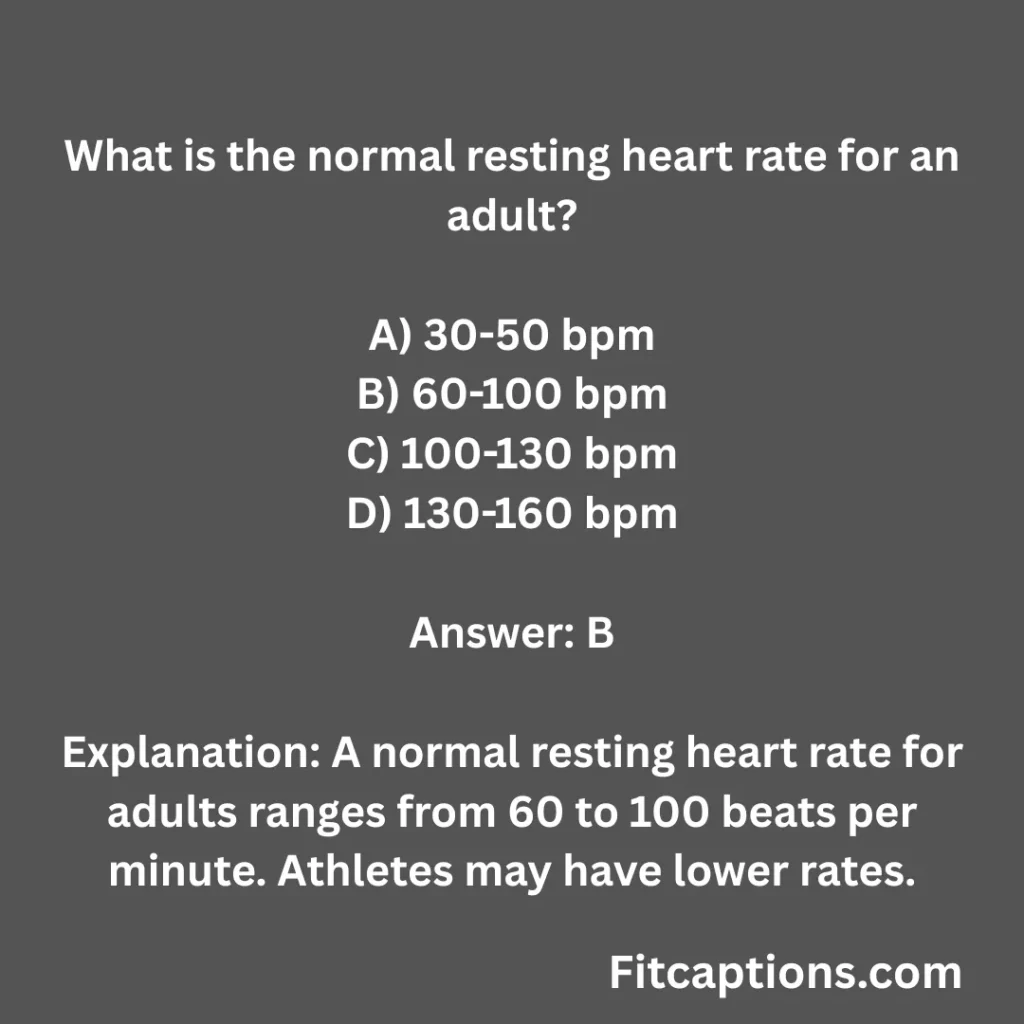
1. What is the normal resting heart rate for an adult?
A) 30-50 bpm
B) 60-100 bpm
C) 100-130 bpm
D) 130-160 bpm
Answer: B
Explanation: A normal resting heart rate for adults ranges from 60 to 100 beats per minute. Athletes may have lower rates.
2. Which type of fat is considered most harmful to heart health?
A) Unsaturated fat
B) Monounsaturated fat
C) Trans fat
D) Polyunsaturated fat
Answer: C
Explanation: Trans fats raise bad cholesterol (LDL) and lower good cholesterol (HDL), increasing heart disease risk.
3. How much moderate-intensity exercise is recommended per week for heart health?
A) 30 minutes total
B) 75 minutes
C) 150 minutes
D) 300 minutes
Answer: C
Explanation: The American Heart Association recommends at least 150 minutes of moderate exercise or 75 minutes of vigorous exercise weekly.
4. Which blood pressure reading is considered “normal”?
A) 140/90
B) 130/85
C) 120/80
D) 150/95
Answer: C
Explanation: A normal blood pressure reading is around 120/80 mm Hg. Higher readings may indicate hypertension.
5. What does HDL cholesterol stand for?
A) High-density lipoprotein
B) High-level lipid
C) Heavy-density lipoprotein
D) Healthy dietary lipid
Answer: A
Explanation: HDL is “good” cholesterol because it helps remove excess cholesterol from the bloodstream.
6. Which food is best for heart health?
A) Fried chicken
B) Oily fish (salmon, mackerel)
C) Butter
D) Processed cheese
Answer: B
Explanation: Oily fish are rich in omega-3 fatty acids, which reduce inflammation and lower heart disease risk.
7. What is the leading cause of death worldwide?
A) Cancer
B) Diabetes
C) Heart disease
D) Stroke
Answer: C
Explanation: Heart disease (cardiovascular disease) is the number one cause of death globally, according to WHO.
8. Which of these is a symptom of a heart attack?
A) Chest pain or discomfort
B) Shortness of breath
C) Pain in arms, back, neck, or jaw
D) All of the above
Answer: D
Explanation: Heart attack symptoms vary but often include chest pressure, radiating pain, and breathing difficulty.
9. How much sodium (salt) should an adult consume daily at most?
A) 1,500 mg
B) 2,300 mg
C) 3,500 mg
D) 5,000 mg
Answer: B
Explanation: The AHA recommends no more than 2,300 mg of sodium per day, with an ideal limit of 1,500 mg for most adults.
10. Which activity is best for strengthening the heart muscle?
A) Weightlifting
B) Stretching
C) Aerobic exercise (walking, running, swimming)
D) Sitting
Answer: C
Explanation: Aerobic exercise makes the heart pump more efficiently and improves cardiovascular endurance.
11. What is a healthy waist circumference for women to reduce heart risk?
A) Under 25 inches
B) Under 35 inches
C) Under 45 inches
D) Under 55 inches
Answer: B
Explanation: For women, a waist measurement under 35 inches (88 cm) is associated with lower heart disease risk.
12. Which of these raises your risk of heart disease?
A) Smoking
B) High blood pressure
C) High cholesterol
D) All of the above
Answer: D
Explanation: Smoking, hypertension, and high cholesterol are major modifiable risk factors for heart disease.
13. What does “systolic” blood pressure measure?
A) Pressure when the heart relaxes
B) Pressure when the heart beats
C) Average pressure over time
D) Pressure in the veins
Answer: B
Explanation: Systolic pressure (top number) measures artery pressure when the heart contracts and pumps blood.
14. How many hours of sleep per night are recommended for heart health?
A) 4-5 hours
B) 6-7 hours
C) 7-9 hours
D) 10-12 hours
Answer: C
Explanation: Adults should aim for 7-9 hours of quality sleep; too little or too much can increase heart risks.
15. Which beverage, in moderation, may benefit heart health?
A) Soda
B) Red wine
C) Energy drinks
D) Sweet tea
Answer: B
Explanation: Moderate red wine consumption (one drink/day for women, two for men) has been linked to heart benefits due to antioxidants.
16. Which of these is a whole grain good for your heart?
A) White bread
B) Oatmeal
C) White rice
D) Pasta
Answer: B
Explanation: Whole grains like oatmeal, brown rice, and quinoa contain fiber that helps lower cholesterol.
17. What is a normal LDL (“bad”) cholesterol level for most adults?
A) Below 50 mg/dL
B) Below 100 mg/dL
C) Below 200 mg/dL
D) Below 300 mg/dL
Answer: B
Explanation: Optimal LDL cholesterol is less than 100 mg/dL. Levels above 160-190 are considered high.
18. Which of these is a sign of a stroke, not a heart attack?
A) Sudden numbness on one side of the body
B) Chest pain
C) Nausea
D) Shortness of breath
Answer: A
Explanation: Sudden facial drooping, arm weakness, or speech difficulty are classic stroke signs (FAST).
19. What is the main function of the heart?
A) To filter blood
B) To pump blood throughout the body
C) To produce red blood cells
D) To store oxygen
Answer: B
Explanation: The heart is a muscular pump that circulates blood, delivering oxygen and nutrients to tissues.
20. Which of these is a heart-healthy cooking oil?
A) Coconut oil
B) Palm oil
C) Olive oil
D) Butter
Answer: C
Explanation: Olive oil is rich in monounsaturated fats and antioxidants, which support heart health.
Related : 119+ Iconic 90s & 2000s Movies Trivia Questions And Answers
Healthy Heart Quiz Questions And Answers General Knowledge
1. Which mineral is essential for regulating heartbeat?
A) Calcium • B) Iron • C) Potassium • D) Zinc
Answer: C) Potassium — helps maintain normal heart rhythm.
2. Which type of cholesterol is considered “bad”?
A) HDL • B) LDL • C) VLDL • D) All cholesterol
Answer: B) LDL — high levels can clog arteries.
3. Which exercise is best for heart health?
A) Weightlifting • B) Walking • C) Yoga • D) Stretching
Answer: B) Walking — simple cardio keeps the heart strong.
4. Which vitamin supports heart and blood vessel health?
A) Vitamin C • B) Vitamin D • C) Vitamin E • D) Vitamin K
Answer: C) Vitamin E — acts as an antioxidant.
5. Which food is best for lowering cholesterol?
A) Oily fish • B) White bread • C) Red meat • D) Butter
Answer: A) Oily fish — rich in omega‑3 fatty acids.
6. What is the normal resting heart rate for adults?
A) 40–60 bpm • B) 60–100 bpm • C) 100–120 bpm • D) 120+ bpm
Answer: B) 60–100 bpm — healthy range for most adults.
7. Which habit increases risk of heart disease most?
A) Smoking • B) Reading • C) Sleeping • D) Walking
Answer: A) Smoking — damages blood vessels and heart tissue.
8. Which type of fat is healthiest for the heart?
A) Trans fat • B) Saturated fat • C) Unsaturated fat • D) No fat
Answer: C) Unsaturated fat — found in nuts, seeds, and olive oil.
9. Which test measures electrical activity of the heart?
A) MRI • B) ECG • C) X‑ray • D) CT scan
Answer: B) ECG — records heart rhythm and activity.
10. Which fruit is nicknamed “heart‑healthy”?
A) Apple • B) Banana • C) Blueberry • D) Avocado
Answer: D) Avocado — packed with healthy fats and potassium.
11. Which condition is called “silent killer”?
A) Diabetes • B) High blood pressure • C) Asthma • D) Flu
Answer: B) High blood pressure — often no symptoms but dangerous.
12. Which beverage is best for heart hydration?
A) Soda • B) Water • C) Coffee • D) Energy drinks
Answer: B) Water — keeps circulation smooth.
13. Which nut is especially good for heart health?
A) Almonds • B) Walnuts • C) Cashews • D) Peanuts
Answer: B) Walnuts — rich in omega‑3 and antioxidants.
14. Which lifestyle factor lowers heart disease risk?
A) Stress • B) Exercise • C) Smoking • D) Junk food
Answer: B) Exercise — strengthens cardiovascular system.
15. Which grain is best for heart health?
A) White rice • B) Whole oats • C) White bread • D) Cornflakes
Answer: B) Whole oats — soluble fiber lowers cholesterol.
16. Which fish is most recommended for heart health?
A) Salmon • B) Tuna • C) Cod • D) Sardines
Answer: A) Salmon — high in omega‑3 fatty acids.
17. Which blood pressure reading is considered normal?
A) 140/90 • B) 120/80 • C) 160/100 • D) 100/60
Answer: B) 120/80 — standard healthy level.
18. Which leafy green is best for heart health?
A) Spinach • B) Lettuce • C) Kale • D) Cabbage
Answer: C) Kale — loaded with vitamins and fiber.
19. Which activity reduces stress and supports heart health?
A) Meditation • B) Smoking • C) Overeating • D) Drinking alcohol
Answer: A) Meditation — calms the mind and lowers blood pressure.
20. Which oil is considered heart‑friendly?
A) Coconut oil • B) Olive oil • C) Palm oil • D) Butter
Answer: B) Olive oil — rich in monounsaturated fats.
Related : 123+ Tightrope Trivia Questions And Answers
Short Healthy Heart Quiz Questions And Answers
1. What does the heart love most for exercise?
A) Sitting on the couch eating chips
B) 30 minutes of brisk walking or dancing
C) Watching other people exercise
D) Lifting the TV remote
Answer: B) 30 minutes of brisk walking or dancing
Explanation: Regular movement keeps your heart strong and happy — it’s basically cardio flirting!
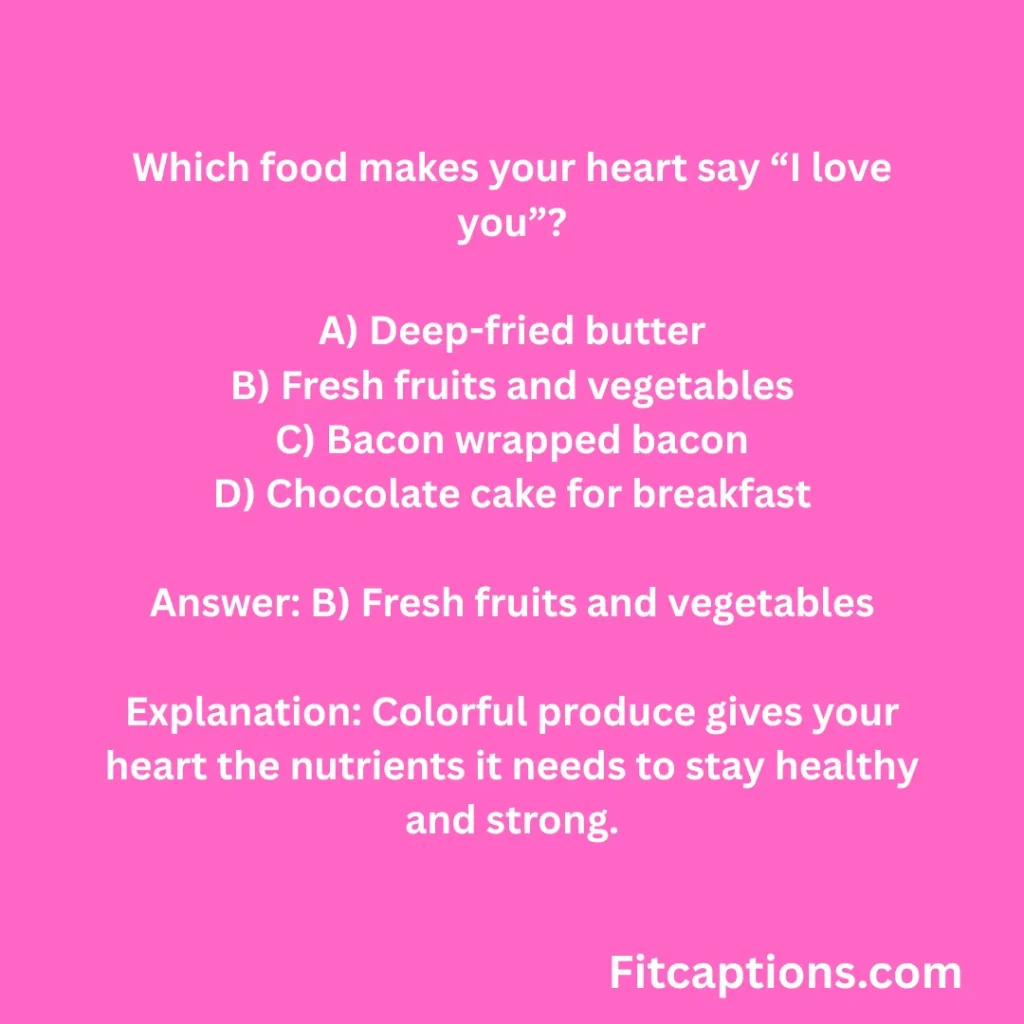
2. Which food makes your heart say “I love you”?
A) Deep-fried butter
B) Fresh fruits and vegetables
C) Bacon wrapped bacon
D) Chocolate cake for breakfast
Answer: B) Fresh fruits and vegetables
Explanation: Colorful produce gives your heart the nutrients it needs to stay healthy and strong.
3. What is the best way to reduce stress for a healthy heart?
A) Yelling at your printer
B) Deep breathing, meditation or laughing
C) Eating an entire pizza
D) Checking work emails at 2 AM
Answer: B) Deep breathing, meditation or laughing
Explanation: Laughter and calm breathing are free medicine for your heart.
4. How much sleep does your heart want every night?
A) 3–4 hours
B) 7–9 hours
C) 12 hours like a cat
D) Sleep? What’s that?
Answer: B) 7–9 hours
Explanation: Good sleep helps your heart rest and repair itself overnight.
5. What does smoking do to your heart?
A) Gives it a nice warm hug
B) Makes it work much harder and increases risk
C) Turns it into a superhero
D) Makes it dance better
Answer: B) Makes it work much harder and increases risk
Explanation: Quitting smoking is one of the best gifts you can give your heart.
6. Which drink is the heart’s favorite?
A) Sugary soda
B) Plain water
C) Energy drinks with 500% sugar
D) Melted ice cream
Answer: B) Plain water
Explanation: Staying hydrated keeps blood flowing smoothly for your hardworking heart.
7. What is a “funny” sign your heart might need attention?
A) Your chest doing the cha-cha
B) Feeling unusually tired or dizzy
C) Sudden craving for kale
D) Wanting to run a marathon
Answer: B) Feeling unusually tired or dizzy
Explanation: Listen to your body — unusual tiredness can be a heart’s cry for help.
8. How often should you check your blood pressure?
A) Only when the doctor forces you
B) Regularly as advised by your doctor
C) Every time you eat fries
D) Never, ignorance is bliss
Answer: B) Regularly as advised by your doctor
Explanation: Knowing your numbers helps keep your heart happy and healthy.
9. What exercise does your heart enjoy most?
A) Scrolling on your phone
B) Aerobic activities like swimming or cycling
C) Competitive napping
D) Finger exercises on video games
Answer: B) Aerobic activities like swimming or cycling
Explanation: Anything that makes your heart beat faster in a good way strengthens it.
10. Which fat is actually good for your heart?
A) Trans fat from fast food
B) Healthy fats from nuts, avocado and fish
C) Butter on everything
D) Cake frosting
Answer: B) Healthy fats from nuts, avocado and fish
Explanation: Good fats like omega-3s help protect your heart.
11. Why does the heart love gratitude?
A) It sounds fancy
B) Being thankful reduces stress and blood pressure
C) It’s trendy on social media
D) It makes the heart bigger
Answer: B) Being thankful reduces stress and blood pressure
Explanation: A grateful heart is literally a healthier heart.
12. What is the funniest way to control cholesterol?
A) Ignoring it completely
B) Eating oats, beans, and exercising
C) Drinking magic potions
D) Only eating food that starts with “C”
Answer: B) Eating oats, beans, and exercising
Explanation: Soluble fiber and movement are natural cholesterol fighters.
13. How much salt should your heart prefer?
A) As much as possible
B) In moderation
C) One teaspoon per meal
D) Licking salt lamps
Answer: B) In moderation
Explanation: Too much salt can raise blood pressure and stress your heart.
14. What does “cardio” actually mean?
A) Playing cards
B) Exercise that makes your heart stronger
C) Fancy way of saying tired
D) Heart-shaped cookies
Answer: B) Exercise that makes your heart stronger
Explanation: Cardio is love language for your heart.
15. Which emotion is surprisingly good for the heart?
A) Constant anger
B) Love and social connection
C) Jealousy
D) Holding grudges forever
Answer: B) Love and social connection
Explanation: Strong relationships and love support heart health.
16. What should you do if your heart skips a beat?
A) Panic and eat ice cream
B) Stay calm and consult a doctor if it happens often
C) Challenge it to a dance-off
D) Ignore it completely
Answer: B) Stay calm and consult a doctor if it happens often
Explanation: Occasional skips can be normal, but frequent ones need checking.
17. What is the heart’s favorite type of music?
A) Heavy metal at full volume
B) Anything that makes you want to move and dance
C) Only sad songs
D) Silence
Answer: B) Anything that makes you want to move and dance
Explanation: Music that gets you moving is great for heart health.
18. Why is maintaining a healthy weight good for your heart?
A) It looks better in photos
B) It reduces strain on your heart
C) It makes clothes shopping easier
D) All of the above
Answer: B) It reduces strain on your heart
Explanation: Healthy weight means less pressure on your heart every day.
19. What is one silly way to remember to move more?
A) Set an alarm called “Hey Lazy, Get Up!”
B) Dance while brushing your teeth
C) Both A and B
D) Wait for motivation to magically appear
Answer: C) Both A and B
Explanation: Making movement fun helps you stay consistent for heart health.
20. What is the best Valentine’s gift for your own heart?
A) A box of chocolates
B) A promise to take better care of it every day
C) Fried chicken
D) Doing nothing
Answer: B) A promise to take better care of it every day
Explanation: Loving your heart with healthy habits is the sweetest gift.
Healthy Heart Quiz Questions And Answers For Students
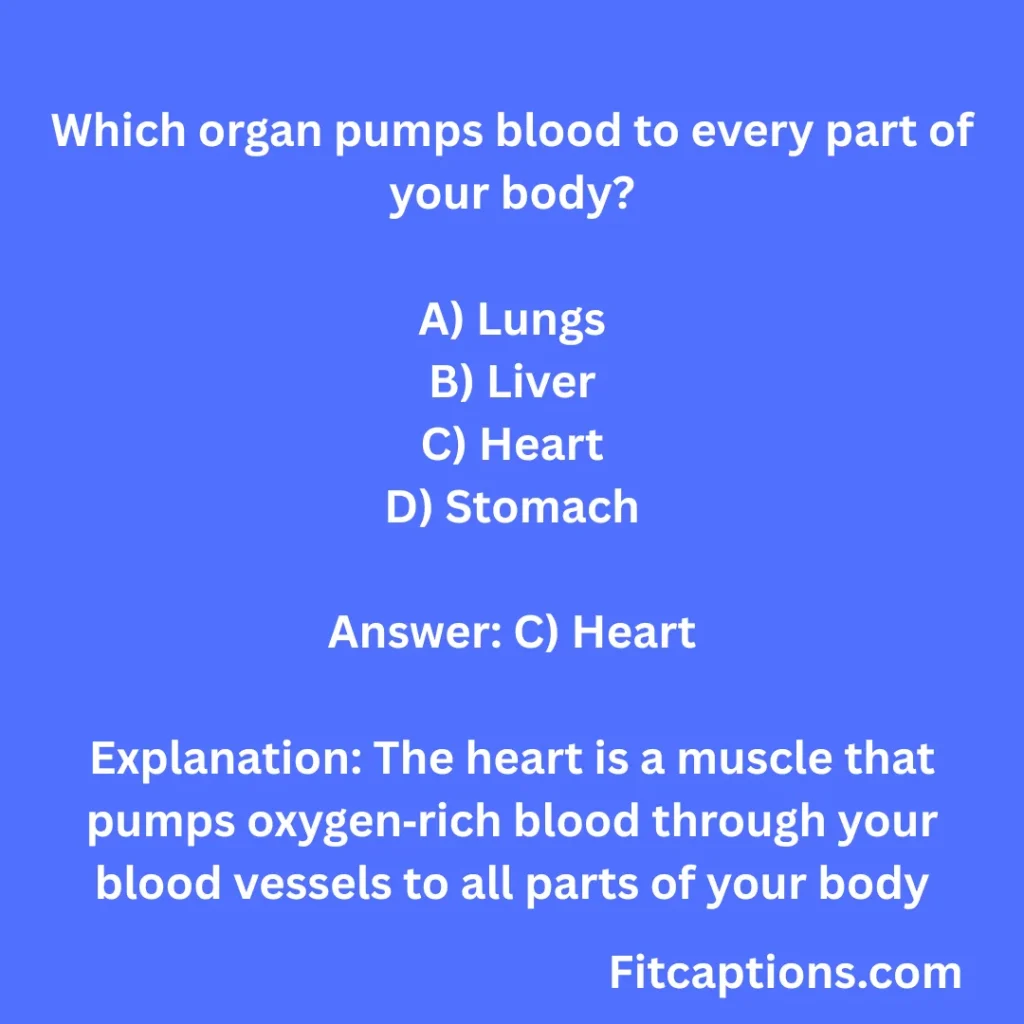
1. Which organ pumps blood to every part of your body?
A) Lungs
B) Liver
C) Heart
D) Stomach
Answer: C) Heart
Explanation: The heart is a muscle that pumps oxygen‑rich blood through your blood vessels to all parts of your body.
2. How many chambers does the human heart have?
A) 1
B) 2
C) 3
D) 4
Answer: D) 4
Explanation: The heart has four chambers: two upper atria and two lower ventricles that help move blood in and out.
3. Which type of blood vessel carries blood away from the heart?
A) Veins
B) Arteries
C) Capillaries
D) Nerves
Answer: B) Arteries
Explanation: Arteries carry oxygen‑rich blood away from the heart to the body (except the pulmonary artery, which carries blood to the lungs).
4. What is a good resting heart rate for most healthy teenagers and adults?
A) 10–30 beats per minute
B) 60–100 beats per minute
C) 130–150 beats per minute
D) 200 beats per minute
Answer: B) 60–100 beats per minute
Explanation: A resting heart rate around 60–100 bpm is usually healthy; very fit people may be slightly lower.
5. Which kind of fat is better for your heart?
A) Saturated fat
B) Trans fat
C) Unsaturated fat
D) Hydrogenated fat
Answer: C) Unsaturated fat
Explanation: Unsaturated fats (like in olive oil, nuts, and fish) help support healthy cholesterol and blood vessels.
6. Which of these is a major lifestyle risk for heart disease?
A) Eating lots of fruit and vegetables
B) Regular exercise
C) Smoking
D) Drinking water
Answer: C) Smoking
Explanation: Smoking damages blood vessels, raises blood pressure, and greatly increases heart attack risk.
7. How many minutes of moderate exercise are recommended each week for a healthy heart?
A) 30 minutes
B) 60 minutes
C) 150 minutes
D) 300 minutes
Answer: C) 150 minutes
Explanation: Health experts suggest at least 150 minutes of moderate activity (like brisk walking) per week.
8. Which food is a good source of fiber that helps lower bad cholesterol?
A) Candy
B) Oatmeal
C) Fries
D) Soda
Answer: B) Oatmeal
Explanation: Oatmeal has soluble fiber, which can help reduce LDL (bad) cholesterol and protect the heart.
9. What mineral, when eaten too much, can raise blood pressure and hurt the heart?
A) Calcium
B) Sodium
C) Magnesium
D) Iron
Answer: B) Sodium
Explanation: Too much sodium (salt) can increase blood pressure and make the heart work harder.
10. Which of these is good for heart health?
A) Daily walking or biking
B) Sitting all day playing video games
C) Eating mostly fried food
D) Drinking lots of soda
Answer: A) Daily walking or biking
Explanation: Regular physical activity keeps the heart strong and improves blood flow.
11. Which type of exercise is great for the heart because it raises your breathing and heart rate?
A) Stretching only
B) Lifting very heavy weights alone
C) Aerobic exercise
D) Sleeping
Answer: C) Aerobic exercise
Explanation: Aerobic activities like walking, running, or swimming improve heart, lung, and blood‑vessel health.
12. Which food group often provides heart‑healthy fats and protein?
A) Candies and cakes
B) Sugary drinks
C) Nuts and seeds
D) Soda
Answer: C) Nuts and seeds
Explanation: Nuts and seeds contain healthy fats, protein, and fiber that support a healthy heart.
13. Which fish is known for being rich in heart‑healthy omega‑3 fatty acids?
A) Tilapia
B) Salmon
C) Catfish
D) Cod
Answer: B) Salmon
Explanation: Salmon and some other fatty fish contain omega‑3 fats that help reduce inflammation and support blood‑vessel health.
14. Which habit can help keep your heart healthy?
A) Watching TV for hours without moving
B) Choosing water instead of soda
C) Eating fast food every day
D) Staying up all night often
Answer: B) Choosing water instead of soda
Explanation: Drinking water instead of sugary drinks prevents extra sugar and calories, which helps the heart and overall health.
15. What is one warning sign of a serious heart problem?
A) Mild headache
B) Chest pain or pressure
C) Dry skin
D) Itchy nose
Answer: B) Chest pain or pressure
Explanation: Chest pain, tightness, or pressure, especially with shortness of breath, can signal a heart problem and needs quick medical help.
16. Which of these is a good way to protect your heart as a student?
A) Only sleeping 2–3 hours a night
B) Getting regular physical activity and sleep
C) Eating junk food every day
D) Never walking outside
Answer: B) Getting regular physical activity and sleep
Explanation: Exercise and enough sleep help maintain normal blood pressure, heart rate, and stress levels.
17. What does “HDL” cholesterol mean?
A) High‑damage lipid
B) High‑dose liquid
C) High‑density lipoprotein
D) High‑diet lactose
Answer: C) High‑density lipoprotein
Explanation: HDL (“good” cholesterol) helps carry cholesterol away from arteries and back to the liver.
18. What does “LDL” cholesterol mean?
A) Low‑dose liquid
B) Low‑density lipoprotein
C) Light‑duty lipid
D) Long‑duration lipase
Answer: B) Low‑density lipoprotein
Explanation: LDL (“bad” cholesterol) can build up in arteries if levels are too high, raising heart‑disease risk.
19. Which of these is a heart‑healthy habit for students?
A) Deep‑frying everything
B) Eating lots of fried chips
C) Choosing fruits and vegetables as snacks
D) Drinking only sugary energy drinks
Answer: C) Choosing fruits and vegetables as snacks
Explanation: Fruits and vegetables are low in unhealthy fats and sugars and rich in vitamins and fiber that support the heart.
20. Why is it important to avoid smoking for heart health?
A) It helps the heart relax too much
B) It makes the heart smaller
C) It damages blood vessels and raises blood pressure
D) It stops blood flow immediately
Answer: C) It damages blood vessels and raises blood pressure
Explanation: Smoking tightens and damages arteries, making the heart work harder and greatly increasing the risk of heart disease and heart attacks.
Final Thoughts
Learning about heart health doesn’t have to be complicated, and these healthy heart quiz questions and answers make it easier to understand essential habits for a healthier life.
By testing your knowledge, you can become more aware of the daily choices that impact your cardiovascular health. Remember, a healthy heart is the key to overall wellness, and staying informed is the first step toward prevention. Keep exploring, learning, and making heart-smart decisions to support a healthier future for yourself and your loved ones.
Recommended:
119+ National Nutrition Month Fun Facts