
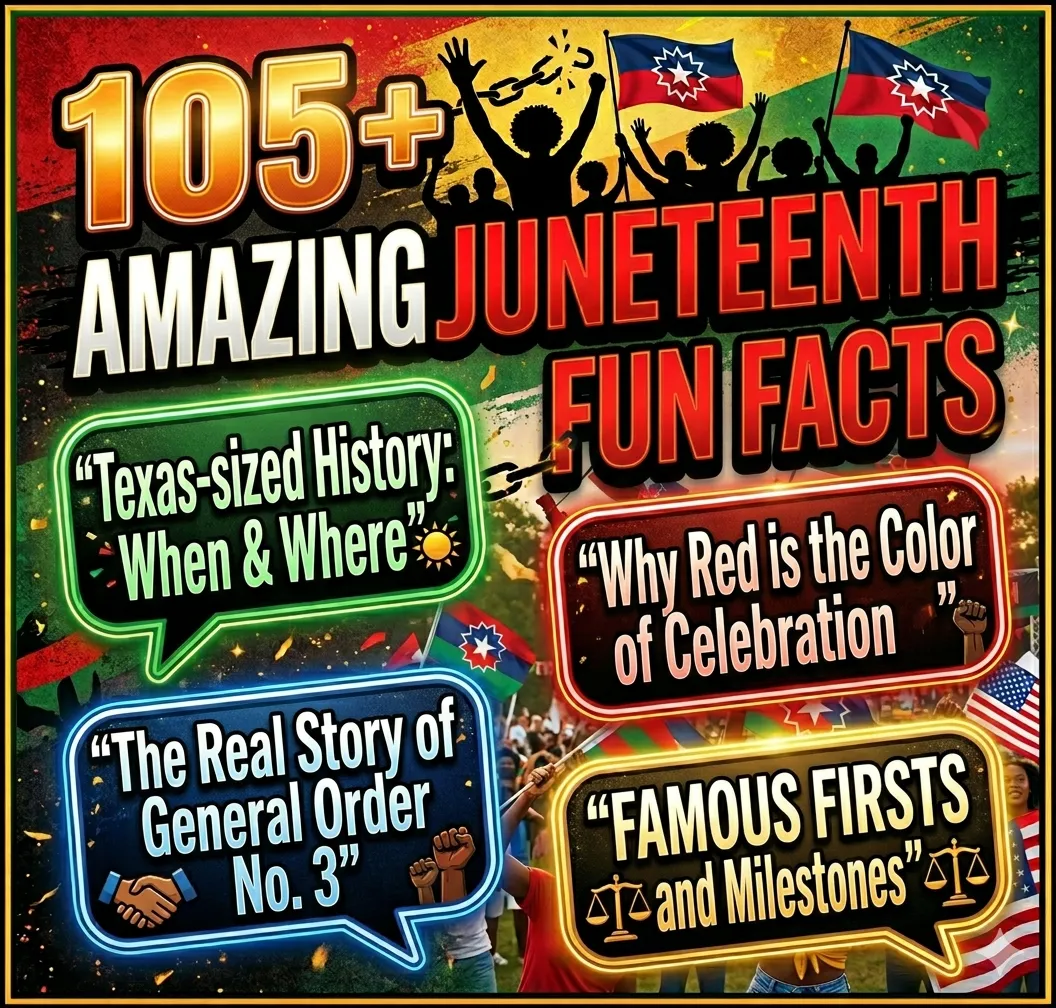
Juneteenth is an important historical celebration that marks the end of slavery in the United States and represents freedom, resilience, and cultural heritage. Over the years, it has grown into a widely recognized holiday filled with traditions, education, and community gatherings.
Exploring “Juneteenth Fun Facts” is a great way to learn more about the history behind the day while discovering interesting and lesser-known details. From its origins in Texas to the unique ways people celebrate today, these fun facts make learning both engaging and memorable.
Whether you’re a student, educator, or simply curious, this collection of fun facts offers a meaningful yet enjoyable way to understand the significance of Juneteenth. It combines education with entertainment, helping readers connect with history in a simple and interesting way.
Juneteenth Fun Facts for Kids
1. Juneteenth is celebrated every year on June 19.
2. It marks the day in 1865 when enslaved people in Texas finally learned they were free.
3. The name “Juneteenth” comes from combining “June” and “nineteenth.”
4. It is also known as Freedom Day and Emancipation Day.
5. Juneteenth became a federal holiday in the United States in 2021.
6. The news of freedom came more than two years after the Emancipation Proclamation.
7. Abraham Lincoln was the president who signed the Emancipation Proclamation.
8. The first Juneteenth celebrations began in Texas in 1866.
9. People celebrate with parades, music, and family gatherings.
10. Red foods and drinks are popular because they symbolize strength and resilience.
11. The Juneteenth flag has a star that represents freedom for all Americans.
12. The curved line on the flag shows a new horizon and a fresh start.
13. Many people read stories and learn about history on this day.
14. Juneteenth teaches the importance of freedom and equality.
15. Kids often join fun activities like games, crafts, and storytelling.
16. Some communities hold festivals with dancing and live performances.
17. It’s a great day to learn about African American culture and history.
18. Families often have picnics and barbecues to celebrate together.
19. Juneteenth reminds everyone that freedom is something to cherish.
20. It encourages people to stand up for fairness and kindness every day.
Recommended: 101+ Short Juneteenth Quotes
Juneteenth Fun Facts for Adults
The True Timeline & History
1. It didn’t mark the end of slavery everywhere: While Juneteenth celebrates the end of slavery in the United States, Major General Gordon Granger’s order on June 19, 1865, only enforced the Emancipation Proclamation in Texas. Enslaved people in border states like Delaware and Kentucky weren’t officially freed until the ratification of the 13th Amendment six months later in December 1865.
2. A two-and-a-half-year delay: President Abraham Lincoln signed the Emancipation Proclamation on January 1, 1863. It took 900 days for that decree to actually be enforced in Galveston, Texas, due to a minimal Union army presence and Texas acting as a safe haven for slaveholders.
3. General Order No. 3’s striking language: General Granger’s famous announcement didn’t just declare freedom; it explicitly noted that the relationship between former masters and slaves became one between “employer and hired labor.” It also advised the newly freed people to remain quietly at their present homes and work for wages.
4. Texas was the trailblazer: Texas became the first state to make Juneteenth an official state holiday in 1980. It took more than 40 years for the federal government to follow suit.
5. The ultimate grassroots land purchase: In 1872, a group of formerly enslaved people led by a minister raised $800 to purchase 10 acres of land in Houston, Texas. They named it Emancipation Park, specifically to have a safe, private place to celebrate Juneteenth annually, as segregation laws banned them from public parks.
Symbols, Flags & Traditions
6. The flag’s deep symbolism: The Juneteenth flag, created in 1997 by Ben Haith, features a bursting star in the center that represents Texas, but also the dawn of a new freedom for Black Americans. The curved horizon line separating the red and blue represents a new horizon of promise.
7. Red, white, and blue: The colors of the Juneteenth flag are intentionally the same as the American flag. This serves as a powerful reminder that the formerly enslaved and their descendants are, and always were, full American citizens.
8. The significance of red food and drink: Traditional Juneteenth menus heavily feature red items (strawberry soda, red velvet cake, hibiscus tea, barbecued meats). This tradition is tied to the cultural heritage of the Yoruba and Kongo peoples, for whom the color red symbolized life, spiritual transition, and resilience.
9. Hibiscus tea’s historic roots: The red drinks common at celebrations trace back to two West African plants: the kola nut and the hibiscus flower. Enslaved people brought these traditions with them, brewing red drinks for special occasions.
10. Wardrobe upgrades as resistance: Under chattel slavery, strict “sumptuary laws” often dictated what enslaved people could wear, restricting them to coarse, rough fabrics. Early Juneteenth celebrations saw a massive emphasis on dressing in fine, fashionable attire as an immediate assertion of dignity and liberty.
Culture, Economics & Names
11. It goes by many names: While “Juneteenth” (a portmanteau of June and Nineteenth) is the most famous, the holiday is also historically referred to as Freedom Day, Jubilee Day, Cel-Liberation Day, and Second Independence Day.
12. The oldest known celebration: Juneteenth is recognized as the country’s oldest continuously observed African American holiday.
13. A global reach: While uniquely American, Juneteenth is celebrated worldwide. Cities with historic ties to American military bases or expatriate communities, from Paris to parts of West Africa, host annual Juneteenth events.
14. The “Grandmother of Juneteenth”: The federal holiday exists largely thanks to Opal Lee, an activist who, at the age of 89, campaigned by walking 1,400 miles from Fort Worth, Texas, to Washington, D.C., to advocate for its national recognition.
15. Signed into federal law swiftly: In June 2021, the bill to make Juneteenth a federal holiday passed the U.S. Senate unanimously and passed the House with a massive majority (415–14), being signed into law by President Joe Biden on June 17, 2021.
The Legacy & Modern Reflection
16. The Emancipation Proclamation was read aloud: A core tradition of early celebrations was the public, dramatic reading of the Emancipation Proclamation or General Order No. 3, ensuring the history was never forgotten by subsequent generations.
17. Barbecue as a community pillar: Authentic Juneteenth barbecue isn’t just about the food; it historically required digging a large pit in the ground to slow-cook meat overnight, a process that inherently required communities to gather, talk, and bond for hours before the feast.
18. Boosting Black-owned businesses: Modern Juneteenth celebrations have evolved into major economic drivers, with a heavy emphasis on supporting and buying exclusively from Black-owned businesses, creators, and vendors during the holiday weekend.
19. Ralph Ellison’s unfinished masterpiece: Acclaimed author Ralph Ellison (writer of Invisible Man) wrote a brilliant, sprawling novel titled Juneteenth that used the holiday as a central metaphor for American identity and racial mythologies. It was published posthumously in 1999.
20. A day for both celebration and inventory: Historically and today, adults use the holiday not just for festivals, but as a day of “national inventory”—a time to measure how far the country has come regarding civil rights, equity, and justice, and how much work remains.
Recommended: 105+ Famous Juneteenth Sayings
Juneteenth Fun Facts for Students
1. Juneteenth means “June Nineteenth”, the day in 1865 when enslaved people in Texas learned they were free.
2. It is also called “Freedom Day”, “Emancipation Day,” and “Jubilee Day.”
3. The Emancipation Proclamation was issued in 1863, but Texas enslaved people didn’t hear the news until 2 years later.
4. Union General Gordon Granger announced freedom in Galveston, Texas, on June 19, 1865.
5. The first Juneteenth celebration happened in 1866.
6. Texas was the first state to make Juneteenth a holiday in 1980.
7. Juneteenth became a U.S. federal holiday in 2021.
8. The Juneteenth flag has a star representing Texas and freedom bursting outward.
9. Emancipation Park in Houston was bought in 1872 by formerly enslaved people to celebrate Juneteenth.
10. Juneteenth celebrations often include food, music, and dance.
11. Red foods like strawberry soda and red velvet cake are traditional, symbolizing resilience and joy.
12. Juneteenth celebrations declined during the Great Depression but revived during the Civil Rights Movement.
13. Martin Luther King Jr. linked Juneteenth to his Poor People’s Campaign in 1968.
14. Juneteenth is celebrated outside the U.S. in countries recognizing freedom and African American culture.
15. Juneteenth is the first new U.S. holiday since MLK Day in 1983.
16. Juneteenth is a day of reflection and education for students and communities.
17. Parades and festivals are common ways to celebrate Juneteenth.
18. Juneteenth reminds us freedom took time to reach everyone.
19. Juneteenth is about unity and healing.
20. Learning Juneteenth helps students understand history and the importance of equality.
Recommended: 101+ Powerful Juneteenth Messages
Juneteenth Fun Facts In English

1. Juneteenth is celebrated every year on June 19.
2. It marks the day in 1865 when enslaved people in Texas were finally told they were free.
3. The name “Juneteenth” is a mix of the words “June” and “nineteenth.”
4. It is also called Freedom Day and Emancipation Day.
5. Juneteenth became an official U.S. federal holiday in 2021.
6. The announcement of freedom came more than two years after slavery was declared ended.
7. The first celebrations of Juneteenth began in Texas in 1866.
8. Many people celebrate with parades, music, and cultural events.
9. Red-colored foods and drinks are popular during Juneteenth celebrations.
10. The color red symbolizes strength, resilience, and joy.
11. The Juneteenth flag features a bright star in the center.
12. The star represents freedom for all African Americans.
13. A curved line on the flag shows a new horizon and hope for the future.
14. Families often gather for picnics and barbecues.
15. Storytelling and learning about history are important parts of the day.
16. Juneteenth teaches the value of freedom and equality.
17. Many communities host festivals with music and dancing.
18. It is a day to honor African American culture and achievements.
19. Schools and organizations use this day to educate people about history.
20. Juneteenth reminds everyone to stand for justice, kindness, and unity.
Funny Juneteenth Fun Facts

1. The name is a portmanteau masterpiece: “Juneteenth” is just “June” + “nineteenth” smashed together like your aunt combining leftovers. Efficient and iconic.
2. Freedom arrived fashionably late: The Emancipation Proclamation was signed in 1863, but Texas got the memo in 1865. Slavery in Texas was basically on airplane mode—delayed but eventually delivered.
3. Texas was the last holdout: Enslaved people in Texas were among the final ones informed. It’s like the group chat where everyone else already knew the plan except you.
4. They celebrated immediately with style: Newly freed people broke out in prayer, song, dance, and—most importantly—new clothes to symbolize their freedom. Nothing says “I’m free” like fresh drip.
5. Red food and drinks are non-negotiable: Strawberry soda, red velvet cake, hibiscus tea, and watermelon dominate. Red symbolizes resilience and the blood of ancestors—but mostly it just stains everything deliciously.
6. Black Texans bought their own party spot: In 1872, freedmen pooled $800 to buy 10 acres in Houston for Emancipation Park—the only public park and pool open to Black people for decades. DIY freedom real estate at its finest.
7. It has its own flag: Designed in 1997 (refined later), the Juneteenth flag features a bursting star on red, white, and blue. Texas gets a shoutout while reminding everyone this is American history too.
8. Texas made it official first: In 1980, Texas became the first state to recognize Juneteenth as a holiday. Everyone else showed up late… again.
9. It’s America’s “second Independence Day”: Some call it that because July 4th was complicated for many. Juneteenth is the freedom party that actually applied to everyone eventually.
10. The “Scatter” happened after: Many freed people left Texas right away to find family or start new lives. Basically the biggest group exodus since… well, ever.
11. Rodeos are part of the tradition (in some places): Freedom + horses + barbecue. Southwest celebrations turned it into a full rodeo vibe. Yeehaw meets hallelujah.
12. Some enslavers hid the news: A few waited until after the harvest to tell people. Classic “one more shift” boss behavior, but make it historical.
13. It went international: Descendants in Mexico (the Black Seminoles/Mascogos) still celebrate it. Freedom crossed borders like a good rumor.
14. Became a federal holiday in 2021: Thanks to activists like Opal Lee. It only took 156 years for the whole country to get the invite to the cookout.
15. BBQ is sacred: Cookouts, family reunions, and street fairs are standard. Your uncle arguing over the grill is basically a historical reenactment.
16. “Jubilee Day” was an early name: Biblical vibes for the day of freedom. Way more celebratory than most modern holidays.
17. Parades and Miss Juneteenth contests: Celebrations include everything from historical readings to beauty pageants. Freedom looks good on a crown.
18. Potato salad judgment is real: As one meme put it, ancestors are watching… and they’re judging your potato salad (and your seasoning game).
19. It’s the longest-running African American holiday: Celebrated since 1866 in communities. While others were figuring it out, this party was already in year 155+.
20. Why is Juneteenth the best day for a BBQ? Because everyone’s free that day! (Classic dad joke energy that still lands.)
Final Thoughts
Learning about Juneteenth through fun facts offers a meaningful way to connect with an important moment in history while keeping the experience engaging and easy to understand. These insights highlight not only the origins of the celebration but also the cultural traditions and values that continue to shape it today.
By exploring these facts, readers gain a deeper appreciation for the significance of freedom, resilience, and progress. It also encourages ongoing learning and reflection, making the history behind Juneteenth more accessible to people of all ages.
In the end, taking time to understand and share these facts helps keep the spirit of Juneteenth alive, honoring the past while inspiring awareness and unity for the future.