
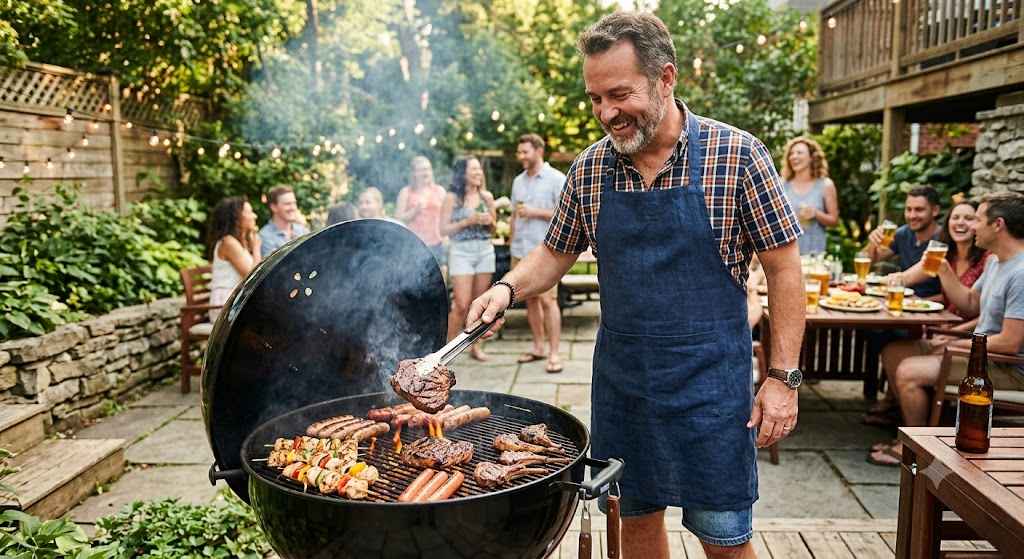
Cooking over an open flame has brought people together for generations, creating delicious meals, memorable gatherings, and exciting outdoor experiences. From backyard cookouts and barbecue traditions to grilling techniques, famous dishes, and flavorful ingredients, the world of outdoor cooking is filled with fascinating facts to discover. Whether you’re a barbecue enthusiast, a food lover, or simply enjoy a good meal, grilling trivia is a fun way to test your knowledge.
This collection of grilling trivia questions and answers covers a wide range of topics, including grilling history, cooking methods, popular foods, barbecue styles, tools, famous dishes, and interesting facts. With a mix of easy, medium, and challenging questions, there’s something for home cooks, grill masters, food enthusiasts, and trivia lovers alike.
Get ready to challenge yourself, uncover tasty facts, and explore the exciting world of grilling. Perfect for cookouts, family gatherings, food events, quiz nights, or casual fun with friends, these grilling trivia questions and answers provide an entertaining and educational experience for everyone.
Grilling Trivia Questions and Answers
1. What is the primary difference between grilling and barbecuing?
A) There is no difference
B) Grilling uses high, direct heat for shorter times; barbecuing uses low, indirect heat for longer times
C) Barbecuing always requires charcoal
D) Grilling can only be done indoors
Answer: B
Explanation: Grilling is usually quick cooking over high heat for foods like burgers and steaks, while traditional barbecue uses low heat and smoke over several hours for meats like brisket and ribs.
2. The Maillard reaction, responsible for the savory browned crust on grilled meat, occurs best at temperatures around:
A) 100°F (38°C)
B) 300–500°F (150–260°C)
C) Below freezing
D) Above 1,000°F only
Answer: B
Explanation: The Maillard reaction happens when proteins and sugars react under heat, creating the delicious brown color and complex flavors found in grilled foods.
3. Which type of grill is generally easiest for beginners to control temperature?
A) Charcoal kettle grill
B) Gas grill
C) Open campfire
D) Clay tandoor
Answer: B
Explanation: Gas grills allow users to adjust heat quickly with control knobs, making temperature management easier for beginners.
4. A chimney starter is mainly used to:
A) Clean grill grates
B) Light charcoal evenly and quickly without lighter fluid
C) Measure food temperature
D) Smoke cheese
Answer: B
Explanation: A chimney starter helps charcoal ignite evenly by allowing airflow from underneath, usually preparing coals within about 15–20 minutes.
5. What does the grilling term “sear” mean?
A) Cooking food slowly at low temperature
B) Quickly browning the surface of food over high heat
C) Boiling meat before grilling
D) Freezing meat before cooking
Answer: B
Explanation: Searing creates a flavorful crust through the Maillard reaction and adds color and taste to grilled foods.
6. Which wood is commonly used for smoking brisket in Texas-style barbecue?
A) Applewood only
B) Mesquite or oak
C) Pine
D) Cedar
Answer: B
Explanation: Oak provides a balanced smoke flavor, while mesquite creates a stronger taste often associated with Texas barbecue.
7. The “smoke ring” found on some smoked meats is caused by:
A) Food coloring
B) A reaction between smoke compounds and myoglobin in meat
C) Undercooking
D) Adding red wine
Answer: B
Explanation: The pink smoke ring forms when nitrogen compounds from smoke react with myoglobin, a protein in meat.
8. What is the safe minimum internal temperature for grilled chicken?
A) 120°F (49°C)
B) 145°F (63°C)
C) 165°F (74°C)
D) 100°F (38°C)
Answer: C
Explanation: Chicken should reach 165°F internally to help eliminate harmful bacteria and ensure safe consumption.
9. Why should grilled meat rest after cooking?
A) To cool completely
B) To allow juices to redistribute throughout the meat
C) To make it tougher
D) Only for appearance
Answer: B
Explanation: Resting allows juices to settle inside the meat, making it more tender and flavorful when sliced.
10. Kansas City-style barbecue is famous for:
A) Being completely sauce-free
B) Thick, sweet, tomato-based sauce and smoked meats
C) Only seafood dishes
D) Electric grilling only
Answer: B
Explanation: Kansas City barbecue is known for its rich, sweet sauce and variety of smoked meats, including ribs and burnt ends.
11. Direct heat grilling is best for:
A) Large tough cuts needing hours of cooking
B) Thin or tender foods that cook quickly
C) Only desserts
D) Cold smoking
Answer: B
Explanation: Direct heat places food directly over flames or coals, making it ideal for burgers, steaks, vegetables, and hot dogs.
12. What helps prevent food from sticking to grill grates?
A) Spraying water continuously
B) Cleaning and lightly oiling the grates
C) Covering food in flour
D) Avoiding heat
Answer: B
Explanation: Clean, hot, lightly oiled grates create a better cooking surface and reduce sticking.
13. Carolina-style barbecue is known for:
A) Thick sweet ketchup sauce only
B) Vinegar-based or mustard-based sauces with pulled pork
C) No sauce
D) Peanut butter sauce
Answer: B
Explanation: Carolina barbecue often features pork with vinegar-pepper sauces in North Carolina or mustard-based sauces in South Carolina.
14. What is a “two-zone fire” on a grill?
A) Cooking only with the lid closed
B) Creating a hot side for searing and a cooler side for indirect cooking
C) Using two meats
D) Grilling at two different times
Answer: B
Explanation: A two-zone setup gives grillers more control by allowing food to move between direct and indirect heat areas.
15. Which food is a classic low-and-slow barbecue cut?
A) Hamburger patties
B) Beef brisket
C) Hot dogs
D) Shrimp skewers
Answer: B
Explanation: Brisket contains connective tissue that becomes tender after many hours of slow cooking with smoke.
16. Pellet grills are different because they:
A) Use only propane
B) Automatically feed wood pellets and often have digital controls
C) Cannot produce smoke
D) Are only for indoor use
Answer: B
Explanation: Pellet grills combine wood-fired flavor with automated temperature control by feeding pellets into a fire pot.
17. What does “carryover cooking” mean?
A) Taking food from grill to table
B) Food continues cooking after being removed from heat
C) Cooking leftovers
D) Microwave cooking after grilling
Answer: B
Explanation: Heat trapped inside food continues raising its temperature for several minutes after removal from the grill.
18. Which country is credited with popularizing the modern kettle-style charcoal grill?
A) Germany
B) United States
C) Japan
D) Argentina
Answer: B
Explanation: George Stephen created the famous Weber kettle grill in the United States during the 1950s.
19. In Argentine asado tradition, the person responsible for grilling is called:
A) Pitmaster
B) Asador
C) Grillmeister
D) Saucier
Answer: B
Explanation: An asador is the grill master who manages the fire and prepares the meat during traditional Argentine barbecue gatherings.
20. Why do many grillers clean the grates while the grill is still warm?
A) It looks impressive
B) Food residue is easier to remove
C) It cools the grill faster
D) It is required by law
Answer: B
Explanation: Heat loosens stuck-on food particles, making grill cleaning easier and helping maintain the grill for future cooking.
Read Also:100+ Dad Jokes
Funny Grilling Trivia Questions and Answers
1. What is the primary difference between grilling and barbecuing?
A) They are exactly the same
B) Grilling uses high direct heat while barbecuing uses low indirect heat for longer cooking
C) Barbecuing only uses gas grills
D) Grilling is only done outdoors
Answer: B) Grilling uses high direct heat while barbecuing uses low indirect heat for longer cooking
Explanation: Grilling is usually quick cooking over high heat, while traditional barbecue involves slow cooking with smoke over several hours.
2. Which cooking reaction creates the flavorful brown crust on grilled foods?
A) Fermentation reaction
B) Maillard reaction
C) Freezing reaction
D) Caramel cooling
Answer: B) Maillard reaction
Explanation: The Maillard reaction happens when proteins and sugars react under heat, creating the delicious flavors and browning found on grilled meats.
3. Which type of grill is usually easiest for beginners to control?
A) Charcoal grill
B) Gas grill
C) Open fire pit
D) Wood-only grill
Answer: B) Gas grill
Explanation: Gas grills allow cooks to adjust temperatures easily with control knobs and heat up quickly.
4. What is the purpose of a chimney starter?
A) Measuring meat temperature
B) Cleaning grill grates
C) Lighting charcoal evenly
D) Adding smoke flavor
Answer: C) Lighting charcoal evenly
Explanation: A chimney starter helps charcoal burn evenly without needing lighter fluid.
5. What does “searing” mean in grilling?
A) Cooking meat in water
B) Quickly browning food over high heat
C) Freezing meat before cooking
D) Cooking only with smoke
Answer: B) Quickly browning food over high heat
Explanation: Searing creates a flavorful crust by exposing food to intense heat.
6. Which wood is commonly used for smoking barbecue meats?
A) Pine
B) Oak
C) Plastic
D) Rubberwood
Answer: B) Oak
Explanation: Oak provides a balanced smoke flavor and is widely used for smoking different types of meat.
7. What is the purpose of letting grilled meat rest after cooking?
A) To make it colder
B) To allow juices to redistribute
C) To remove flavor
D) To dry the meat
Answer: B) To allow juices to redistribute
Explanation: Resting helps keep meat juicy because the internal juices spread throughout the meat before slicing.
8. What is the safe internal temperature for cooked chicken?
A) 120°F (49°C)
B) 145°F (63°C)
C) 165°F (74°C)
D) 200°F (93°C)
Answer: C) 165°F (74°C)
Explanation: Chicken should reach 165°F to reduce the risk of harmful bacteria.
9. Which cut of beef is famous for low-and-slow barbecue cooking?
A) Brisket
B) Filet mignon
C) Tenderloin
D) Sirloin tip
Answer: A) Brisket
Explanation: Brisket contains connective tissue that becomes tender after many hours of slow cooking.
10. Kansas City barbecue is known for its:
A) No sauce
B) Sweet tomato-based sauce
C) Only seafood dishes
D) Raw meat dishes
Answer: B) Sweet tomato-based sauce
Explanation: Kansas City-style barbecue is famous for thick, sweet, tomato-based sauces and smoked meats.
11. What is a two-zone grill setup?
A) Using two grills at once
B) Creating a hot side and a cooler side for cooking
C) Cooking only with the lid open
D) Using two types of sauces
Answer: B) Creating a hot side and a cooler side for cooking
Explanation: A two-zone setup allows food to be seared over direct heat and finished over indirect heat.
12. Which tool is best for flipping food on a grill?
A) Fork
B) Tongs
C) Spoon
D) Knife
Answer: B) Tongs
Explanation: Tongs help turn food without piercing it and losing flavorful juices.
13. What does “BBQ” stand for?
A) Best Beef Quality
B) Barbecue
C) Burn Before Quick
D) Big Backyard Queen
Answer: B) Barbecue
Explanation: BBQ is a common abbreviation for barbecue, a cooking style involving grilling or slow smoking.
14. Which country is famous for the traditional barbecue style called “asado”?
A) Argentina
B) Japan
C) France
D) India
Answer: A) Argentina
Explanation: Asado is a popular Argentine grilling tradition featuring meats cooked over fire.
15. What is a grill grate made to do?
A) Freeze food
B) Hold food above heat while allowing airflow
C) Add sugar flavor
D) Store cooking tools
Answer: B) Hold food above heat while allowing airflow
Explanation: Grill grates support food and create the heat contact needed for cooking and grill marks.
16. Which food is commonly cooked on a grill?
A) Steak
B) Burgers
C) Vegetables
D) All of the above
Answer: D) All of the above
Explanation: Grills are used for many foods, including meats, seafood, vegetables, and even fruits.
17. What is the purpose of marinating meat before grilling?
A) To freeze it
B) To add flavor and improve tenderness
C) To remove all moisture
D) To make it raw
Answer: B) To add flavor and improve tenderness
Explanation: Marinades use ingredients like herbs, spices, oils, and acids to enhance taste and texture.
18. Which type of grill uses wood pellets as fuel?
A) Gas grill
B) Pellet grill
C) Electric grill
D) Solar grill
Answer: B) Pellet grill
Explanation: Pellet grills burn compressed wood pellets and often provide digital temperature control.
19. What is the name for cooking food with smoke at low temperatures for many hours?
A) Smoking
B) Boiling
C) Frying
D) Steaming
Answer: A) Smoking
Explanation: Smoking slowly cooks food while adding a distinct smoky flavor from burning wood.
20. Why should grill grates be cleaned regularly?
A) To improve food safety and prevent sticking
B) To change the grill color
C) To reduce cooking time to zero
D) To make food colder
Answer: A) To improve food safety and prevent sticking
Explanation: Clean grates remove leftover food residue, reduce flare-ups, and help food cook better.
Read Also:127+ Best Jokes About Baths
Easy Grilling Trivia Questions and Answers
20 Grilling Trivia Questions (Multiple Choice) with Answers & Explanations
1. Which type of meat is most commonly associated with traditional American grilling?
A) Lamb
B) Beef
C) Fish
D) Turkey
Answer: B) Beef
Explanation: Beef, especially burgers and steaks, is one of the most popular foods cooked on American grills and is a classic choice for backyard barbecues.
2. What is the main purpose of marinating meat before grilling?
A) To make it heavier
B) To add flavor and help tenderize it
C) To remove all moisture
D) To cook it completely
Answer: B) To add flavor and help tenderize it
Explanation: Marinades typically contain ingredients like oil, acids, herbs, and spices that enhance flavor and can help soften meat fibers.
3. Which cooking method involves grilling food slowly over indirect heat with smoke?
A) Boiling
B) Smoking
C) Frying
D) Steaming
Answer: B) Smoking
Explanation: Smoking uses low temperatures and wood smoke to slowly cook food while adding a distinctive smoky flavor.
4. Which type of wood is commonly used for smoking barbecue because of its sweet flavor?
A) Applewood
B) Pine
C) Cedar
D) Birch
Answer: A) Applewood
Explanation: Applewood is popular for smoking because it provides a mild, sweet, fruity flavor that pairs well with many meats.
5. What is the purpose of preheating a grill before cooking?
A) To cool the food faster
B) To ensure even cooking and create better searing
C) To prevent smoke
D) To reduce flavor
Answer: B) To ensure even cooking and create better searing
Explanation: A properly heated grill helps create grill marks, locks in flavor, and reduces the chance of food sticking.
6. Which meat is traditionally used to make pulled pork?
A) Pork shoulder
B) Pork ribs
C) Pork belly
D) Pork chops
Answer: A) Pork shoulder
Explanation: Pork shoulder is ideal for pulled pork because its fat and connective tissue break down during slow cooking, creating tender meat.
7. What does the term “grill marks” refer to?
A) Seasoning patterns on food
B) Dark seared lines from the grill grates
C) Cracks in the grill surface
D) Burnt food pieces
Answer: B) Dark seared lines from the grill grates
Explanation: Grill marks are created when food contacts hot metal grates, producing caramelized lines and added flavor.
8. Which sauce is especially famous for Kansas City-style barbecue?
A) Tomato-based sweet barbecue sauce
B) Cream sauce
C) Soy sauce
D) Mustard-free sauce only
Answer: A) Tomato-based sweet barbecue sauce
Explanation: Kansas City barbecue is known for thick, sweet, tomato-based sauces often used on ribs and other smoked meats.
9. What type of grill uses charcoal as its fuel source?
A) Gas grill
B) Electric grill
C) Charcoal grill
D) Solar grill
Answer: C) Charcoal grill
Explanation: Charcoal grills use burning charcoal briquettes or lump charcoal to provide heat and a smoky flavor.
10. Which grilling tool is commonly used to flip burgers and steaks?
A) Whisk
B) Spatula
C) Rolling pin
D) Ladle
Answer: B) Spatula
Explanation: A grilling spatula helps safely turn and handle foods without breaking them apart.
11. What is the Maillard reaction responsible for during grilling?
A) Freezing food
B) Browning and developing rich flavors
C) Removing salt
D) Making food raw
Answer: B) Browning and developing rich flavors
Explanation: The Maillard reaction occurs when heat causes proteins and sugars to react, creating browned surfaces and complex flavors.
12. Which vegetable is commonly grilled on skewers?
A) Lettuce
B) Bell pepper
C) Celery
D) Spinach
Answer: B) Bell pepper
Explanation: Bell peppers are popular for grilling because they become sweeter and develop a smoky flavor when cooked over heat.
13. What is a “BBQ rub”?
A) A cleaning product
B) A mixture of spices applied to meat before cooking
C) A type of grill brush
D) A cooking temperature
Answer: B) A mixture of spices applied to meat before cooking
Explanation: Dry rubs combine spices, herbs, salt, and sugar to season meat and create a flavorful crust during grilling.
14. Which country is famous for developing the tradition of Korean barbecue?
A) Japan
B) Korea
C) Mexico
D) Italy
Answer: B) Korea
Explanation: Korean barbecue, known as “gogi-gui,” involves grilling marinated meats, often at the table.
15. What is the safest way to check if grilled meat is fully cooked?
A) Guess by color only
B) Use a meat thermometer
C) Smell it
D) Press it with a spoon
Answer: B) Use a meat thermometer
Explanation: A thermometer provides the most accurate way to confirm meat has reached a safe internal temperature.
16. Which cut of beef is often considered a premium steak for grilling?
A) Ribeye
B) Ground beef
C) Beef liver
D) Brisket only
Answer: A) Ribeye
Explanation: Ribeye steaks are prized for their marbling, which adds tenderness, moisture, and rich flavor when grilled.
17. What does “barbecue” often refer to in traditional cooking?
A) Cooking food quickly in boiling water
B) Slow cooking meat with heat and smoke
C) Eating raw vegetables
D) Baking desserts only
Answer: B) Slow cooking meat with heat and smoke
Explanation: Traditional barbecue involves slow cooking methods that use smoke and low heat to create tender, flavorful meat.
18. Which grilling item is commonly cooked on a skewer?
A) Kebabs
B) Pancakes
C) Soup
D) Pasta
Answer: A) Kebabs
Explanation: Kebabs are made by placing pieces of meat, vegetables, or seafood on skewers and grilling them.
19. What is the main difference between direct and indirect grilling?
A) Direct uses high heat under food; indirect cooks beside the heat source
B) Direct uses water; indirect uses oil
C) Direct is only for vegetables
D) They are exactly the same
Answer: A) Direct uses high heat under food; indirect cooks beside the heat source
Explanation: Direct grilling is best for quick-cooking foods, while indirect grilling works well for larger cuts that need slower cooking.
20. Which holiday is especially associated with backyard grilling in the United States?
A) Halloween
B) Thanksgiving
C) Fourth of July
D) Valentine’s Day
Answer: C) Fourth of July
Explanation: Independence Day celebrations often include outdoor barbecues featuring burgers, hot dogs, steaks, and grilled foods.
These grilling trivia questions cover barbecue history, cooking techniques, tools, flavors, and popular grilling traditions—perfect for a backyard party or food-themed quiz night.
Read Also:169+ Butcher Puns
Grilling Trivia Questions and Answers for Adults
1. Question: Grilling’s been sizzling since ancient times, but what prehistoric discovery made it possible to cook meat over an open flame?
Answer: Fire
Fun Fact: Early humans were like, “Hey, this fire thing makes meat taste way better than raw!” Grilling: the original foodie revolution.
2. Question: The classic backyard barbecue owes a lot to this fuel source that gives burgers that smoky charm. What is it?
Answer: Charcoal
Fun Fact: Charcoal’s made from slow-burned wood, turning your grill into a smoky time machine to caveman days. Light it up!
3. Question: Gas grills are a modern fave, but what flammable gas powers most of them to get those flames roaring?
Answer: Propane
Fun Fact: Propane’s the Hank Hill of fuels—clean, efficient, and ready to grill. “I tell you h’what!”
4. Question: The term “barbecue” comes from a Caribbean word for grilling on a wooden frame. What’s that word?
Answer: Barbacoa
Fun Fact: Barbacoa was the OG low-and-slow method, proving even pirates knew the value of patience for perfect ribs.
5. Question: Grill marks are the badge of a grill master, but what technique creates those sexy, seared lines on your steak?
Answer: Searing
Fun Fact: Those grill marks aren’t just pretty—they’re the Maillard reaction in action, turning meat into flavor town!
6. Question: In the U.S., Kansas City is a BBQ mecca, but what’s the signature sauce style that makes their ribs finger-lickin’ good?
Answer: Thick, sweet, tomato-based sauce
Fun Fact: Kansas City sauce is so sticky-sweet, it’s basically the candy of BBQ. Pass the napkins!
7. Question: The Weber kettle grill is an icon, but in what decade did it revolutionize backyard grilling?
Answer: 1950s
Fun Fact: George Stephen invented the kettle grill by cutting a buoy in half. Talk about a nautical stroke of genius!
8. Question: Smoking is a grilling cousin that infuses meat with flavor. What wood is often used for that classic smoky taste in brisket?
Answer: Hickory
Fun Fact: Hickory’s bold flavor is like the bass guitar of BBQ woods—deep, rich, and totally rockin’.
9. Question: In Australia, they don’t just grill—they “throw another shrimp on the barbie.” What’s the actual crustacean they’re grilling?
Answer: Prawn
Fun Fact: Aussies call it a prawn, not shrimp, but we’ll forgive the Crocodile Dundee marketing for making it iconic.
10. Question: The “low and slow” method is key for tender BBQ. What’s the ideal temperature range for slow-cooking ribs?
Answer: 225–250°F
Fun Fact: Low and slow is like the zen of grilling—patience is your co-chef, and the reward is fall-off-the-bone magic.
11. Question: Flare-ups can turn your burger into a fireball. What causes those dramatic bursts of flame on the grill?
Answer: Dripping fat
Fun Fact: Fat drips, flames leap—it’s like your grill’s auditioning for an action movie. Keep a spray bottle handy!
12. Question: Cedar planks are a fancy grilling trick for fish, but what flavor does cedar wood impart to salmon?
Answer: Smoky and slightly sweet
Fun Fact: Cedar planking is like giving your fish a spa day in a smoky sauna. Fancy and delicious!
13. Question: The “Texas crutch” is a BBQ hack to speed up cooking. What is it?
Answer: Wrapping meat in foil with liquid
Fun Fact: The Texas crutch is like swaddling your brisket in a cozy foil blanket. Yee-haw for tender meat!
14. Question: Grill brushes keep your grates clean, but what material are the bristles traditionally made from?
Answer: Stainless steel
Fun Fact: A clean grate is a happy grate—think of it as brushing your grill’s teeth for that perfect sear smile.
15. Question: In Memphis BBQ, pork is king, but what cut is the star of their famous slow-smoked sandwiches?
Answer: Pulled pork (shoulder)
Fun Fact: Memphis pulled pork is so tender, it’s basically the love ballad of BBQ. Cue the slow jams and coleslaw!
16. Question: The Kamado grill, like the Big Green Egg, has ancient roots. What country’s clay ovens inspired its design?
Answer: Japan
Fun Fact: Kamado means “stove” in Japanese, and these grills are like the samurai of cooking—precise and powerful.
17. Question: Marinades add flavor to grilled goodies, but what acidic ingredient helps tenderize meat in most marinades?
Answer: Vinegar or citrus juice
Fun Fact: Acid is like the meat’s personal trainer, breaking down tough fibers for a melt-in-your-mouth win.
18. Question: The “smoke ring” is a BBQ badge of honor. What pinkish layer in smoked meat shows you nailed it?
Answer: The outer layer of meat
Fun Fact: That pink ring isn’t raw—it’s a chemical reaction with smoke gases, like a love letter from your grill.
19. Question: Grilling veggies is a healthy win, but what veggie, often skewered, chars beautifully for a sweet, smoky flavor?
Answer: Bell pepper
Fun Fact: Grilled bell peppers are like the chameleons of the grill—colorful, versatile, and ready to steal the show.
20. Question: In South America, asado is a grilling tradition. What’s the star protein of this meaty feast?
Answer: Beef
Fun Fact: Asado is less a meal and more a lifestyle—hours of grilling, chilling, and beef-loving. Pass the chimichurri!
Hard Grilling Trivia Questions and Answers
1. Question: What does “BBQ” actually stand for? Answer: Barbecue Fun Fact: “It’s not short for ‘Burnt But Questionable.’ Though we’ve all had that one brisket…”
2. Question: What’s the name of the cooking method where meat is cooked “low and slow” over indirect heat? Answer: Smoking Fun Fact: “Smoking isn’t just for brisket — it’s for showing off your patience and your spice rub game.”
3. Question: Which tool helps light charcoal quickly without lighter fluid? Options: A) Grill brush B) Chimney starter C) Tongs D) Meat thermometer Answer: B) Chimney starter Fun Fact: “It’s basically a metal volcano for your coals. No lava, just flavor.”
4. Question: What cut of meat is famously used in Texas-style BBQ? Answer: Beef brisket Fun Fact: “Brisket is the Beyoncé of BBQ — slow-cooked, beloved, and always the star of the plate.”
5. Question: Which country is credited with popularizing modern barbecue techniques? Answer: United States Fun Fact: “America didn’t invent fire, but it sure figured out how to party around it.”
6. Question: What’s the ideal internal temperature for safely cooked chicken on the grill? Options: A) 145°F B) 160°F C) 165°F D) 180°F Answer: C) 165°F Fun Fact: “Anything less and your chicken might cluck back. Use a thermometer, not your gut.”
7. Question: What’s the name of the sweet, tangy sauce often slathered on ribs and pulled pork? Answer: Barbecue sauce Fun Fact: “There are regional rivalries over BBQ sauce that rival sports fandom. Kansas City vs. Carolina? Saucy drama.”
8. Question: Which wood is commonly used for smoking meats and adds a mild, sweet flavor? Answer: Applewood Fun Fact: “Applewood is like the jazz of smoking woods — smooth, subtle, and always classy.”
9. Question: What’s the name of the metal rods or flat blades used to grill kebabs? Answer: Skewers Fun Fact: “Skewers are the original multitaskers — they hold meat, veggies, and your hopes for dinner.”
10. Question: What’s the term for grill marks that form a crisscross pattern on meat? Answer: Crosshatch Fun Fact: “Those marks aren’t just pretty — they’re a badge of honor for grill masters.”
11. Question: Which grilling method involves cooking food directly over high heat? Answer: Direct grilling Fun Fact: “It’s fast, fiery, and perfect for burgers — just don’t blink or you’ll be serving hockey pucks.”
12. Question: What’s the name of the flat metal tool used to flip burgers and scrape the grill? Answer: Spatula Fun Fact: “A good spatula is like a lightsaber for grillers — wield it wisely.”
13. Question: Which vegetable is a fan favorite for grilling and often gets fancy grill marks? Options: A) Broccoli B) Zucchini C) Lettuce D) Peas Answer: B) Zucchini Fun Fact: “Zucchini on the grill is like that quiet kid who turns out to be prom royalty. Unexpectedly awesome.”
14. Question: What’s the name of the grilling technique where food is cooked with the lid closed? Answer: Indirect grilling Fun Fact: “It’s like a sauna for your steak — slow, steamy, and surprisingly relaxing.”
15. Question: What’s the name of the tool used to check the internal temperature of grilled meat? Answer: Meat thermometer Fun Fact: “It’s the truth-teller of the BBQ world. No guesswork, just juicy science.”
16. Question: Which type of grill uses propane gas as fuel? Answer: Gas grill Fun Fact: “Gas grills are the microwave of BBQ — fast, convenient, and slightly controversial.”
17. Question: What’s the name of the crispy, caramelized bits on grilled meat? Answer: Bark Fun Fact: “Bark is BBQ gold — crunchy, flavorful, and worth every minute of slow cooking.”
18. Question: What’s the name of the Japanese grilling style that uses skewered meats over charcoal? Answer: Yakitori Fun Fact: “Yakitori is proof that grilling is a global love language — and it pairs beautifully with sake.”
19. Question: What’s the name of the metal grate where food is placed on the grill? Answer: Cooking grate Fun Fact: “It’s the stage where your food performs. And yes, it deserves a standing ovation.”
20. Question: What’s the name of the annual BBQ competition held in Kansas City, known as the “World Series of Barbecue”? Answer: American Royal Fun Fact: “It’s like the Olympics of grilling — minus the medals, plus a lot more sauce.”
Best Grilling Trivia Questions and Answers

1. Question: This popular, highly-structured 1950s style for men involved carefully combing the hair back over the top of the head and then securing it with a high-shine pomade, famously worn by rock-and-roll icon Elvis Presley. What is this slicked-back, gravity-defying cut? Answer: The Pompadour Fun Fact: The style is named after Madame de Pompadour, the chief mistress of King Louis XV, proving that good hair has been influencing power structures for centuries!
2. Question: In the world of hair dyeing, what is the French term for the freehand technique where dye is painted onto the hair in a sweeping motion, creating soft, natural-looking highlights that often start lower down the hair shaft? Answer: Balayage Fun Fact: Balayage literally translates from French to “to sweep” or “to paint.” It gives a much more blended, low-maintenance grow-out than traditional foil highlights.
3. Question: True or False: Every single hair follicle on your body grows at the same speed, regardless of where it is located (e.g., scalp vs. eyebrow). Answer: False Fun Fact: Scalp hair has the longest anagen phase (growth phase) and can grow for years, while body hair (like eyebrows) has a very short anagen phase, which is why your brows don’t grow down to your chin!
4. Question: What is the technical, four-step process where a strand of hair goes from active growth (Anagen) to regression (Catagen) to resting (Telogen), before finally falling out (Exogen)? Answer: The Hair Growth Cycle Fun Fact: At any given time, about 85%-90% of your hair is in the active Anagen growth phase. Whew!
5. Question: This short, cropped haircut features the sides and back cut to a uniform, very short length, while the top is left slightly longer to lie flat. It became the signature look of actor George Clooney early in his career. What is this neat, military-inspired style? Answer: The Crew Cut Fun Fact: The name comes from the rowing teams at Ivy League universities, whose members preferred the short cut to prevent their hair from falling into their eyes while competing.
6. Question: What is the specific type of brush, shaped like a long, solid cylinder, that is used by stylists to create large, bouncy waves and give major volume when blow-drying hair? Answer: The Round Brush Fun Fact: The better the quality of the round brush (often ceramic or metal), the better it retains heat, making your curls and volume last longer.
7. Question: What popular, extremely tight, small curl style—achieved using a special tool and often seen in vintage photos or with modern-day finger-waves—gets its name from the fact that the finished style resembles a small body of water? Answer: Marcel Wave (or Finger Wave is acceptable) Fun Fact: The Marcel Wave was invented by French hairdresser François Marcel Grateau in the late 19th century and required special hot curling irons and immense skill!
8. Question: In the 1990s and early 2000s, this hairstyle became synonymous with “mall culture,” featuring two small, symmetrical buns twisted high on the head. What is this fun, youthful style? Answer: Space Buns (or Pigtail Buns) Fun Fact: This style has roots in several cultures, but it exploded in the West after being worn by pop stars and ravers in the late 90s, giving it its futuristic nickname.
9. Question: Which component of a healthy diet is absolutely essential for hair growth because it provides the “building blocks” (amino acids) needed to create that keratin protein we talked about? Answer: Protein Fun Fact: If your diet is low in protein, your hair growth can literally slow down or stop, as your body prioritizes protein for vital organs first.
10. Question: What is the name for the classic, medium-length hairstyle worn by The Beatles in the mid-1960s, which featured a rounded shape, a fringe (bangs), and covered the ears? Answer: The Mop-Top (or The Beatles Cut) Fun Fact: The cut was a deliberate rebellion against the short, slicked-back styles of the 1950s and caused a massive sensation and controversy when the band first debuted it!
11. Question: This simple technique is often used to add fullness and volume to thin hair by pushing the hair backward towards the roots using a fine-toothed comb. What is this temporary volume trick? Answer: Teasing (or Backcombing) Fun Fact: Teasing works because it roughens up the hair cuticle, creating friction and tangling the root hairs together to form a solid, voluminous cushion.
12. Question: What is the term for a single, long, decorative braided section, often interwoven with beads, that is hung down from the temple or near the ear? It’s a key feature in several traditional African styles. Answer: Lock of Hair (or Sidelock) Fun Fact: In ancient Egypt, the sidelock of youth was worn by children and was a symbol of being under the protection of the god Horus.
13. Question: In the hair color world, what is the chemical element, usually found in a solution of hydrogen peroxide, that must be mixed with dye to lift the hair’s natural color and allow the new pigment to penetrate? Answer: The Developer (or Oxidizing Agent) Fun Fact: The “volume” of the developer (e.g., 20 Volume, 40 Volume) refers to the concentration of peroxide—the higher the volume, the more lift (lightening) it provides!
14. Question: What is the name of the popular, asymmetrical hairstyle, with a short back and sides and a long, full fringe, that became the iconic look for singer Robyn in the late 2000s? Answer: The Bowl Cut (or The Pageboy) Fun Fact: The bowl cut got its unflattering name because, historically, people would literally put a bowl on their head and cut around the edges to achieve the look!
15. Question: This product comes in aerosol form and is sprayed onto the hair to provide flexible hold and finish. What is this classic styling staple that usually ends with the word “spray”? Answer: Hairspray Fun Fact: Early versions of hairspray in the 1940s actually used shellac (derived from insects) as their main holding agent. Thankfully, modern science has improved!
16. Question: If you have Type 4C hair, you have the tightest and most dense curl pattern, often referred to by what common, descriptive texture word? Answer: Coily (or Kinky) Fun Fact: The hair typing system (1 for straight, 2 for wavy, 3 for curly, and 4 for coily) was developed by stylist Andre Walker to help people better understand and care for their natural texture.
17. Question: What is the protective style where natural hair is twisted around itself in tight spirals, forming rope-like strands that are typically permanent unless cut off? Answer: Dreadlocks (or simply Locs) Fun Fact: The term “dreadlocks” is believed by some to have originated from the term “dreadful” used by slave traders or colonialists who disliked the look, but the style is ancient and deeply cultural.
18. Question: What term describes hair that has been damaged by excessive heat, chemical processing, or over-brushing, often characterized by split ends and a dull, brittle appearance? Answer: Porosity (or Damaged Hair/High Porosity) Fun Fact: Porosity refers to how easily your hair can absorb and retain moisture. Damaged hair tends to be high porosity, meaning it sucks up water quickly but also loses it quickly.
19. Question: Which famous actress wore her long, dark hair in simple, but highly influential, straight-cut, full bangs (fringe) that became her signature look throughout the 1950s and 60s, often called the “Bettie Page bangs”? Answer: Audrey Hepburn Fun Fact: While Bettie Page rocked the signature pin-up fringe, Audrey Hepburn brought the elegant, polished version into mainstream fashion via films like Breakfast at Tiffany’s.
20. Question: What is the simple, coiled metal or plastic item used to hold a small section of hair in a tight spiral against the scalp before securing it with a hairpin, usually to form a bun or small curl? Answer: A Hair Roller (or Curler) Fun Fact: Before plastic and metal, women would often use scraps of cloth, rags, or even old paper to roll their hair—creating the style known as “rag curls!”
Tricky Grilling Trivia Questions and Answers
1. Question: “Which iconic hairstyle from the 1970s, famous for its volume and bounce, made Farrah Fawcett a household name?”
Answer: Farrah Fawcett Flip
Fun Fact: Her feathered hair was so admired it basically sparked a salon frenzy coast to coast — blow dryers everywhere rejoiced!
2. Question: “Which hairstyle involves shaving or cutting the sides very short while leaving the top longer — think a favorite of rockstars and rebels?”
Answer: Undercut
Fun Fact: The undercut has been around for over a century, but it got its rock ‘n’ roll comeback thanks to musicians and hipsters alike.
3. Question: “This revolutionary short hairstyle from the 1920s symbolized flappers, freedom, and rebellion. What is it called?”
Answer: Bob Cut
Fun Fact: When women first started wearing bobs, it was considered scandalous! A true ‘cut above’ for the roaring twenties.
4. Question: “Often connected to punk culture, this gravity-defying hairstyle features a tall strip of hair straight up the middle. Name it!”
Answer: Mohawk
Fun Fact: Originally inspired by the indigenous Mohawk people, punks later turned it into a symbol of rebellion — with extra hairspray.
5. Question: “Which hairstyle became a global obsession after Jennifer Aniston wore it in ‘Friends’?”
Answer: The Rachel
Fun Fact: Jennifer Aniston may have hated it, but millions of fans lined up to copy it — now that’s sitcom-level influence!
6. Question: “In ancient Egypt, this elaborate hairstyle or headdress was worn by royalty and even pharaohs. What’s it called?”
Answer: Nemes Headdress
Fun Fact: Think of it as the OG crown — King Tut’s signature look that screamed ‘I rule AND I’m stylish!’
7. Question: “What do you call the hairstyle where hair is twisted or coiled into a rounded shape at the top or back of the head?”
Answer: Bun
Fun Fact: From ballerinas to business execs, the bun says ‘I’m here to get things done, but make it elegant.’
8. Question: “This hairstyle features long, loose curls that scream glamour and confidence. What’s it called?”
Answer: Voluminous Curls
Fun Fact: Beyoncé, Diana Ross, and every disco queen ever have proven: big curls mean big energy.
9. Question: “Which youthful, playful hairstyle features two braids or ponytails on either side of the head?”
Answer: Pigtails
Fun Fact: Pigtails aren’t just for kids — Harley Quinn brought them back with a vengeance and a splash of chaos!
10. Question: “Which hairstyle became the crown jewel of the disco era, famous for massive curls and unstoppable volume?”
Answer: Big Hair
Fun Fact: The bigger the hair, the closer to disco heaven — hairspray was basically liquid confidence.
11. Question: “This clean, minimalist hairstyle cuts hair very short all over. What’s it called?”
Answer: Buzz Cut
Fun Fact: Born in the military, the buzz cut became a fashion statement — proof that less really can be more.
12. Question: “Which hairstyle involves braiding hair very close to the scalp in neat, intricate rows?”
Answer: Cornrows
Fun Fact: Cornrows date back thousands of years — they’re not just a style, but a living art form and cultural legacy.
13. Question: “What’s the name of the high-up hairstyle that has been a staple at fancy events for decades — classy, coiled, and timeless?”
Answer: French Twist
Fun Fact: Audrey Hepburn made it iconic — simple, sleek, and ready for breakfast at Tiffany’s.
14. Question: “Which hairstyle features tight, rounded curls forming a soft halo, famously worn during the 1960s and beyond?”
Answer: Afro
Fun Fact: The Afro wasn’t just a look — it was a movement. A proud symbol of natural beauty and empowerment.
15. Question: “This dramatic 18th-century hairstyle could reach sky-high proportions and even contain decorations like ships. What was it called?”
Answer: Pouf or Pompadour
Fun Fact: Marie Antoinette’s towering hairdos were so extra, they could have their own ZIP code.
16. Question: “What’s the term for long, matted or twisted locks, often associated with Rastafarian culture?”
Answer: Dreadlocks
Fun Fact: Dreadlocks go way back — ancient Egyptians, Greeks, and even Vikings rocked them long before Bob Marley made them iconic.
17. Question: “Which hairstyle features shaved sides and a longer top that’s brushed dramatically to one side?”
Answer: Side Sweep Undercut
Fun Fact: It’s the hairstyle that says, “I listen to indie bands but also own a comb.”
18. Question: “This 1960s hairstyle was famously worn by The Beatles — straight, mop-like, and iconic. What’s it called?”
Answer: Mop Top
Fun Fact: When The Beatles hit the U.S., barbers probably cried — short-back-and-sides were out, shaggy rebellion was in!
19. Question: “Which hairstyle became synonymous with the ‘60s hippie culture — long, straight, and parted down the middle?”
Answer: Bohemian Hair
Fun Fact: Think Woodstock vibes — free, flowing, and one with nature (and maybe a daisy crown).
20. Question: “Which traditional Japanese hairstyle, often worn by geishas, involves elaborate buns and ornate hairpieces?”
Answer: Shimada
Fun Fact: The Shimada takes hours to create — it’s basically hair architecture. Grace, precision, and artistry rolled into one bun.
Conclusion
Exploring the world of grilling is a delicious way to discover the history, techniques, traditions, and flavors behind one of the most enjoyable cooking experiences. From classic barbecue styles and favorite foods to grilling tools and surprising facts, every question offers a chance to learn something new.
Whether you answered every question correctly or discovered interesting facts along the way, these grilling trivia questions and answers provide a fun challenge for food lovers, home cooks, barbecue fans, and trivia enthusiasts of all ages. They are perfect for cookouts, family gatherings, parties, quiz nights, or anyone who enjoys learning about food.
We hope this collection added extra flavor to your trivia experience and inspired you to explore new grilling ideas. Share these questions with friends and family, challenge each other’s knowledge, and keep enjoying the tasty traditions that bring people together.