
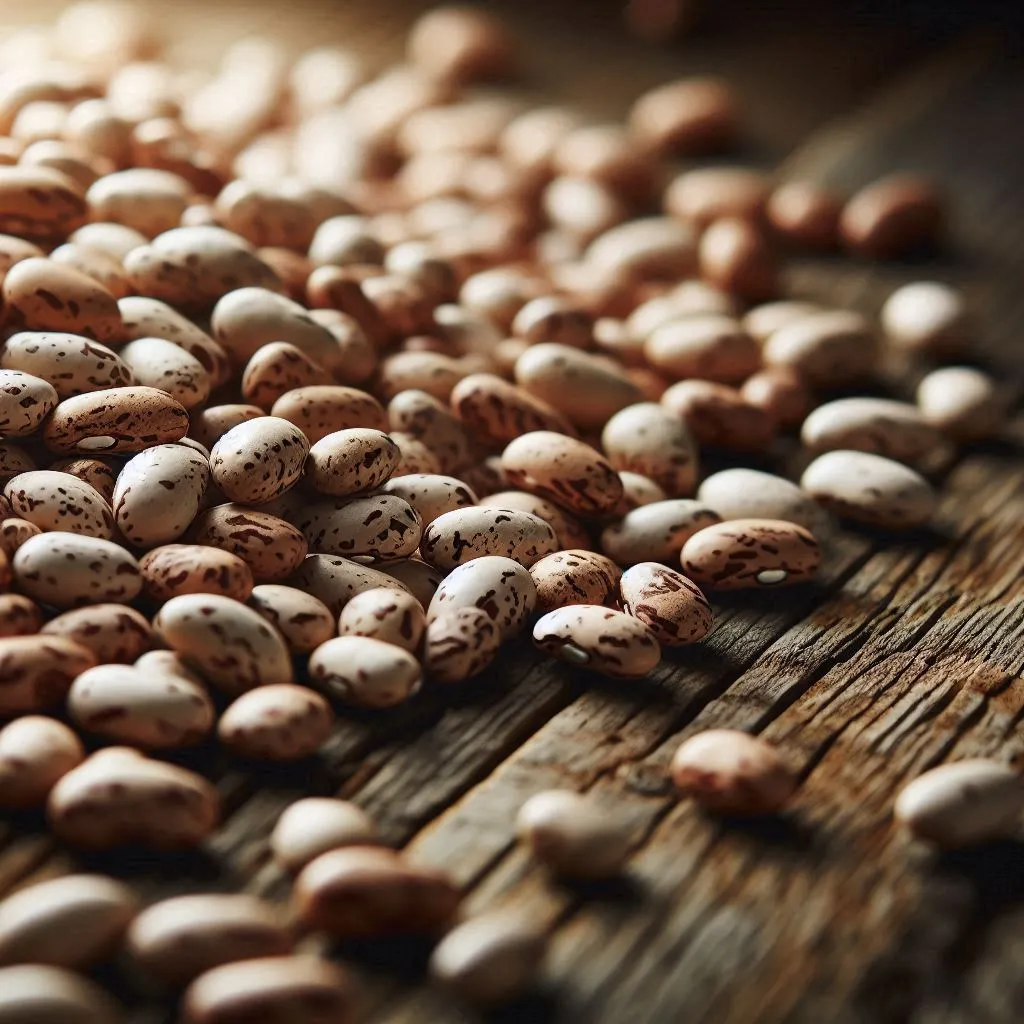
Pinto beans are a nutritious and versatile legume packed with protein, fiber, and essential vitamins and minerals.
Understanding pinto beans nutrition facts can help you incorporate them into a balanced diet, manage weight, and support heart health.
This guide provides a complete breakdown of calories, macronutrients, vitamins, minerals, and health benefits of pinto beans, giving you all the important pinto beans nutrition facts in one place.
Pinto Beans Nutrition Facts – Nutritional Value Per 100g
1. Calories: 100 g of cooked pinto beans provides approximately 143 kcal, supplying a good source of plant-based energy from carbohydrates and protein for daily metabolic needs.
2. Total Protein: Pinto beans contain about 9 g of protein per 100 g, making them an excellent source of plant-based protein for muscle repair, tissue growth, and overall metabolic function.
3. Total Carbohydrates: Each 100 g serving contains approximately 27 g of carbohydrates, which serve as the primary energy source for the body and support brain and muscle activity.
4. Dietary Fiber: Pinto beans provide about 9 g of fiber per 100 g, aiding digestion, promoting satiety, regulating blood sugar, and supporting heart health by reducing cholesterol.
5. Sugars: A 100 g serving contains roughly 0.3 g of naturally occurring sugars, making them a low-sugar option suitable for blood sugar management.
6. Starch: Most of the carbohydrate content in pinto beans comes from complex starches, which release glucose slowly and help maintain steady energy levels.
7. Total Fat: Pinto beans contain approximately 0.65 g of fat per 100 g, with very low saturated fat, supporting heart health while providing essential fatty acids.
8. Saturated Fat: Only about 0.1 g per 100 g, making pinto beans a heart-healthy, low-saturated-fat food that fits well in cholesterol-conscious diets.
9. Monounsaturated Fat: Pinto beans contain trace amounts of monounsaturated fats, which help improve blood lipid profiles and reduce inflammation.
10. Polyunsaturated Fat: Approximately 0.3 g per 100 g, including essential omega-6 fatty acids that contribute to cell membrane integrity and cardiovascular health.
11. Potassium: Pinto beans provide about 436 mg per 100 g, which helps regulate fluid balance, supports proper heart and muscle function, and maintains healthy blood pressure.
12. Sodium: Naturally very low in sodium (~1 mg per 100 g), making pinto beans an ideal food for low-sodium diets.
13. Magnesium: They contain around 50 mg per 100 g, essential for muscle and nerve function, energy production, bone health, and blood sugar regulation.
14. Calcium: Pinto beans supply approximately 45 mg per 100 g, which supports bone and teeth health, nerve signaling, and muscle contraction.
15. Iron: About 2.1 mg per 100 g, important for hemoglobin production, oxygen transport, energy metabolism, and overall immune function.
16. Phosphorus: Pinto beans provide around 140 mg per 100 g, which is crucial for bone strength, energy storage, and DNA/RNA synthesis.
17. Zinc: Approximately 1.1 mg per 100 g, supporting immune function, wound healing, enzyme activity, and cell growth.
18. Copper: They contain around 0.2 mg per 100 g, which aids in red blood cell formation, antioxidant defense, and proper iron metabolism.
19. Manganese: Pinto beans supply about 0.5 mg per 100 g, a trace mineral essential for metabolism, bone development, collagen formation, and antioxidant defense.
20. Folate (Vitamin B9): 100 g of pinto beans provides roughly 172 mcg, essential for DNA synthesis, red blood cell formation, cell division, and fetal development during pregnancy.
Related: 153+ Pizza Hut Nutrition Facts
Pinto Beans Nutrition Facts – Calories and Macronutrients
1. Calories: 100 g of cooked pinto beans provides approximately 143 kcal, making them an excellent low-calorie source of energy suitable for meals, snacks, or as part of a balanced diet.
2. Total Protein: Pinto beans contain about 9 g of protein per 100 g, providing a plant-based source of essential amino acids that support muscle repair, tissue growth, and overall metabolism.
3. Protein Quality: While not a complete protein alone, when paired with grains like rice, pinto beans provide all nine essential amino acids needed for human health.
4. Total Carbohydrates: Each 100 g serving contains roughly 27 g of carbohydrates, supplying slow-digesting energy that helps maintain steady blood sugar and sustained physical performance.
5. Dietary Fiber: Pinto beans provide about 9 g of fiber per 100 g, which aids digestion, promotes satiety, regulates blood sugar, and contributes to heart health by lowering cholesterol levels.
6. Soluble Fiber: The soluble fiber in pinto beans helps reduce LDL cholesterol, stabilizes blood glucose, and feeds beneficial gut bacteria to support overall gut health.
7. Insoluble Fiber: The insoluble fiber adds bulk to stool, promoting regular bowel movements and reducing the risk of constipation.
8. Sugars: 100 g of pinto beans contains about 0.3 g of natural sugars, making them a low-sugar food suitable for people monitoring glucose levels.
9. Starch: Most carbohydrates in pinto beans come from complex starches, which release glucose gradually, preventing rapid blood sugar spikes.
10. Resistant Starch: Pinto beans contain resistant starch, which acts like fiber in the gut, supporting colon health, feeding gut bacteria, and improving insulin sensitivity.
11. Total Fat: Pinto beans are naturally low in fat, containing approximately 0.65 g per 100 g, making them heart-healthy and ideal for low-fat diets.
12. Saturated Fat: Only about 0.1 g of saturated fat per 100 g, supporting cardiovascular health while providing minimal cholesterol risk.
13. Monounsaturated Fat: Pinto beans contain small amounts of monounsaturated fat, which can help reduce LDL cholesterol and support heart health.
14. Polyunsaturated Fat: About 0.3 g per 100 g, including essential omega-6 fatty acids that are vital for cell membrane integrity, hormone production, and inflammation regulation.
15. Omega-3 Fatty Acids: Trace amounts are present, contributing to anti-inflammatory properties and cardiovascular support.
16. Caloric Contribution by Macronutrient: Approximately 25–27 g of carbohydrates contribute the majority of calories, protein about 9 g contributes 25% of energy, and fat contributes a minor portion.
17. Glycemic Load: Pinto beans have a low glycemic index and moderate glycemic load, which helps maintain steady blood sugar levels and supports long-term energy balance.
18. Amino Acid Highlights: Pinto beans are rich in lysine, an essential amino acid often limited in grains, making them a valuable component of plant-based diets.
19. Satiety Factor: The combination of protein, fiber, and slow-digesting carbohydrates in pinto beans promotes fullness, helping with appetite control and weight management.
20. Digestive Benefits: The high fiber and resistant starch content improve gut health, enhance nutrient absorption, and contribute to a healthy digestive system while preventing blood sugar spikes.
Pinto Beans Nutrition Facts – Protein and Amino Acids
1. Calories: 100 g of cooked pinto beans provides approximately 143 kcal, making them an excellent low-calorie source of energy suitable for meals, snacks, or as part of a balanced diet.
2. Total Protein: Pinto beans contain about 9 g of protein per 100 g, providing a plant-based source of essential amino acids that support muscle repair, tissue growth, and overall metabolism.
3. Protein Quality: While not a complete protein alone, when paired with grains like rice, pinto beans provide all nine essential amino acids needed for human health.
4. Total Carbohydrates: Each 100 g serving contains roughly 27 g of carbohydrates, supplying slow-digesting energy that helps maintain steady blood sugar and sustained physical performance.
5. Dietary Fiber: Pinto beans provide about 9 g of fiber per 100 g, which aids digestion, promotes satiety, regulates blood sugar, and contributes to heart health by lowering cholesterol levels.
6. Soluble Fiber: The soluble fiber in pinto beans helps reduce LDL cholesterol, stabilizes blood glucose, and feeds beneficial gut bacteria to support overall gut health.
7. Insoluble Fiber: The insoluble fiber adds bulk to stool, promoting regular bowel movements and reducing the risk of constipation.
8. Sugars: 100 g of pinto beans contains about 0.3 g of natural sugars, making them a low-sugar food suitable for people monitoring glucose levels.
9. Starch: Most carbohydrates in pinto beans come from complex starches, which release glucose gradually, preventing rapid blood sugar spikes.
10. Resistant Starch: Pinto beans contain resistant starch, which acts like fiber in the gut, supporting colon health, feeding gut bacteria, and improving insulin sensitivity.
11. Total Fat: Pinto beans are naturally low in fat, containing approximately 0.65 g per 100 g, making them heart-healthy and ideal for low-fat diets.
12. Saturated Fat: Only about 0.1 g of saturated fat per 100 g, supporting cardiovascular health while providing minimal cholesterol risk.
13. Monounsaturated Fat: Pinto beans contain small amounts of monounsaturated fat, which can help reduce LDL cholesterol and support heart health.
14. Polyunsaturated Fat: About 0.3 g per 100 g, including essential omega-6 fatty acids that are vital for cell membrane integrity, hormone production, and inflammation regulation.
15. Omega-3 Fatty Acids: Trace amounts are present, contributing to anti-inflammatory properties and cardiovascular support.
16. Caloric Contribution by Macronutrient: Approximately 25–27 g of carbohydrates contribute the majority of calories, protein about 9 g contributes 25% of energy, and fat contributes a minor portion.
17. Glycemic Load: Pinto beans have a low glycemic index and moderate glycemic load, which helps maintain steady blood sugar levels and supports long-term energy balance.
18. Amino Acid Highlights: Pinto beans are rich in lysine, an essential amino acid often limited in grains, making them a valuable component of plant-based diets.
19. Satiety Factor: The combination of protein, fiber, and slow-digesting carbohydrates in pinto beans promotes fullness, helping with appetite control and weight management.
20. Digestive Benefits: The high fiber and resistant starch content improve gut health, enhance nutrient absorption, and contribute to a healthy digestive system while preventing blood sugar spikes.
Pinto Beans Nutrition Facts – Fiber and Carbohydrates
1. Total Carbohydrates: 100 g of cooked pinto beans contains about 27 g of carbohydrates, which provide slow-releasing energy for sustained physical and mental activity.
2. Dietary Fiber: Pinto beans provide roughly 9 g of dietary fiber per 100 g, making them an excellent food for digestion, satiety, and overall gut health.
3. Soluble Fiber: A portion of the fiber in pinto beans is soluble, which can help lower LDL cholesterol, stabilize blood sugar, and support healthy gut bacteria.
4. Insoluble Fiber: Pinto beans also contain insoluble fiber, which adds bulk to the stool, prevents constipation, and promotes regular bowel movements.
5. Resistant Starch: Some of the starch in pinto beans is resistant starch, acting like fiber to feed gut microbes, improve insulin sensitivity, and reduce blood sugar spikes.
6. Sugar Content: Pinto beans contain minimal natural sugar (~0.3 g per 100 g), making them ideal for low-sugar diets or blood sugar management.
7. Starch Composition: The majority of carbohydrates in pinto beans come from complex starches, which are digested slowly and provide long-lasting energy.
8. Glycemic Index: Pinto beans have a low glycemic index, meaning they cause a slow, gradual rise in blood sugar, which is beneficial for diabetics and energy control.
9. Glycemic Load: Despite the carbohydrate content, the glycemic load of pinto beans is moderate, allowing them to stabilize blood glucose and reduce insulin spikes.
10. Carbohydrate-Calorie Contribution: Most of the 143 kcal per 100 g serving of pinto beans comes from carbohydrates, contributing about 75% of the energy in this portion.
11. Fiber and Satiety: High fiber content slows digestion, prolongs feelings of fullness, and may help with appetite control and weight management.
12. Prebiotic Benefits: Soluble fiber and resistant starch act as prebiotics, nourishing beneficial gut bacteria and improving digestive health.
13. Carbohydrates for Energy: The complex carbs in pinto beans provide glucose slowly, supporting sustained energy levels for both exercise and mental performance.
14. Fiber and Blood Sugar Control: Both soluble and insoluble fibers help regulate blood sugar by slowing carbohydrate absorption, reducing spikes after meals.
15. Impact on Heart Health: Fiber-rich foods like pinto beans are associated with lower cholesterol and reduced risk of heart disease, partly due to their soluble fiber content.
16. Digestive Enzyme Modulation: The combination of resistant starch and soluble fiber helps regulate digestive enzyme activity and promotes healthy nutrient absorption.
17. Carbohydrate Variety: Pinto beans contain a mix of digestible starches, resistant starches, and minimal natural sugars, making them versatile for sustained energy without high sugar impact.
18. Fiber in Weight Management: High fiber content promotes satiety, reduces overall calorie intake, and helps control body weight when included regularly in the diet.
19. Prebiotic Short-Chain Fatty Acids: Fermentation of fiber in the gut produces short-chain fatty acids, which improve colon health and reduce inflammation.
20. Overall Nutritional Balance: Pinto beans combine moderate carbohydrates with high fiber, low sugar, and protein, making them a nutrient-dense, blood-sugar-friendly food that supports heart and gut health.
Pinto Beans Nutrition Facts – Vitamins and Minerals
1. Total Carbohydrates: 100 g of cooked pinto beans contains about 27 g of carbohydrates, which provide slow-releasing energy for sustained physical and mental activity.
2. Dietary Fiber: Pinto beans provide roughly 9 g of dietary fiber per 100 g, making them an excellent food for digestion, satiety, and overall gut health.
3. Soluble Fiber: A portion of the fiber in pinto beans is soluble, which can help lower LDL cholesterol, stabilize blood sugar, and support healthy gut bacteria.
4. Insoluble Fiber: Pinto beans also contain insoluble fiber, which adds bulk to the stool, prevents constipation, and promotes regular bowel movements.
5. Resistant Starch: Some of the starch in pinto beans is resistant starch, acting like fiber to feed gut microbes, improve insulin sensitivity, and reduce blood sugar spikes.
6. Sugar Content: Pinto beans contain minimal natural sugar (~0.3 g per 100 g), making them ideal for low-sugar diets or blood sugar management.
7. Starch Composition: The majority of carbohydrates in pinto beans come from complex starches, which are digested slowly and provide long-lasting energy.
8. Glycemic Index: Pinto beans have a low glycemic index, meaning they cause a slow, gradual rise in blood sugar, which is beneficial for diabetics and energy control.
9. Glycemic Load: Despite the carbohydrate content, the glycemic load of pinto beans is moderate, allowing them to stabilize blood glucose and reduce insulin spikes.
10. Carbohydrate-Calorie Contribution: Most of the 143 kcal per 100 g serving of pinto beans comes from carbohydrates, contributing about 75% of the energy in this portion.
11. Fiber and Satiety: High fiber content slows digestion, prolongs feelings of fullness, and may help with appetite control and weight management.
12. Prebiotic Benefits: Soluble fiber and resistant starch act as prebiotics, nourishing beneficial gut bacteria and improving digestive health.
13. Carbohydrates for Energy: The complex carbs in pinto beans provide glucose slowly, supporting sustained energy levels for both exercise and mental performance.
14. Fiber and Blood Sugar Control: Both soluble and insoluble fibers help regulate blood sugar by slowing carbohydrate absorption, reducing spikes after meals.
15. Impact on Heart Health: Fiber-rich foods like pinto beans are associated with lower cholesterol and reduced risk of heart disease, partly due to their soluble fiber content.
16. Digestive Enzyme Modulation: The combination of resistant starch and soluble fiber helps regulate digestive enzyme activity and promotes healthy nutrient absorption.
17. Carbohydrate Variety: Pinto beans contain a mix of digestible starches, resistant starches, and minimal natural sugars, making them versatile for sustained energy without high sugar impact.
18. Fiber in Weight Management: High fiber content promotes satiety, reduces overall calorie intake, and helps control body weight when included regularly in the diet.
19. Prebiotic Short-Chain Fatty Acids: Fermentation of fiber in the gut produces short-chain fatty acids, which improve colon health and reduce inflammation.
20. Overall Nutritional Balance: Pinto beans combine moderate carbohydrates with high fiber, low sugar, and protein, making them a nutrient-dense, blood-sugar-friendly food that supports heart and gut health.
Pinto Beans Nutrition Facts – Cooked vs Uncooked Pinto Beans
1. Water Content: Uncooked pinto beans have very low water content (~10–12%), whereas cooked pinto beans absorb water during boiling, increasing their water content to about 70–75%, which reduces calorie density per 100 g.
2. Calories: 100 g of uncooked pinto beans contains approximately 347 kcal, whereas 100 g of cooked pinto beans contains only about 143 kcal due to water absorption and volume expansion.
3. Protein: Uncooked beans provide roughly 21 g of protein per 100 g, while cooked beans have about 9 g per 100 g, reflecting dilution after water absorption but still a good source of plant-based protein.
4. Protein Quality: Cooking does not significantly degrade protein quality, but it improves digestibility by breaking down anti-nutrients that inhibit absorption, such as lectins and protease inhibitors.
5. Total Carbohydrates: Uncooked pinto beans contain about 63 g of carbohydrates per 100 g, while cooked beans contain about 27 g per 100 g, showing dilution due to water content.
6. Starch Availability: Cooking gelatinizes starch, making it more digestible, while raw pinto beans contain resistant starch and anti-nutrients that can inhibit digestion.
7. Dietary Fiber: Uncooked pinto beans have roughly 16 g of fiber per 100 g, while cooked beans provide around 9 g per 100 g due to water absorption increasing weight but not reducing total fiber.
8. Soluble vs Insoluble Fiber: Cooking maintains both soluble and insoluble fiber, which continue to support digestive health, cholesterol reduction, and blood sugar stabilization.
9. Sugars: Both uncooked and cooked pinto beans are very low in sugars, with cooked beans containing roughly 0.3 g per 100 g and uncooked beans slightly higher proportionally per dry weight.
10. Fat Content: Pinto beans are naturally low in fat. Uncooked beans contain about 1.2 g of fat per 100 g, while cooked beans have around 0.65 g per 100 g due to water absorption and expansion.
11. Saturated Fat: Minimal in both forms, with uncooked beans at ~0.2 g and cooked beans at ~0.1 g per 100 g, making them heart-healthy.
12. Mineral Concentration: Cooking slightly reduces some water-soluble minerals like potassium or magnesium due to leaching into cooking water, but pinto beans remain rich in essential minerals.
13. Sodium: Both uncooked and cooked pinto beans are naturally very low in sodium (~1 mg per 100 g cooked), making them ideal for low-sodium diets.
14. Folate and Vitamins: Pinto beans retain most vitamins like folate after cooking, although prolonged boiling can reduce water-soluble vitamins; canned or soaked beans may lose slightly more.
15. Digestibility: Cooking significantly improves digestibility by softening the beans, reducing anti-nutrients, and making carbohydrates and protein easier for the body to absorb.
16. Resistant Starch: Uncooked beans contain more resistant starch proportionally, but cooking increases total digestible starch while reducing resistant starch content.
17. Caloric Density: Uncooked beans are more calorie-dense per 100 g, making them better for storage and meal prep, whereas cooked beans are lower in calorie density and better for portion-controlled meals.
18. Anti-Nutrients: Cooking reduces lectins, phytic acid, and enzyme inhibitors, which are present in higher amounts in uncooked beans and can interfere with nutrient absorption.
19. Serving Size Comparison: 100 g of uncooked beans yields roughly 250–270 g cooked beans, so nutrient intake depends on serving weight rather than raw vs cooked status.
20. Practical Implication: For dietary planning, using cooked pinto bean values is essential for accurate calorie, macronutrient, and fiber intake, while uncooked values are better for storage, bulk calculations, and nutrient density comparisons.
Pinto Beans Nutrition Facts – Health Benefits and Uses
1. Water Content: Uncooked pinto beans have very low water content (~10–12%), whereas cooked pinto beans absorb water during boiling, increasing their water content to about 70–75%, which reduces calorie density per 100 g.
2. Calories: 100 g of uncooked pinto beans contains approximately 347 kcal, whereas 100 g of cooked pinto beans contains only about 143 kcal due to water absorption and volume expansion.
3. Protein: Uncooked beans provide roughly 21 g of protein per 100 g, while cooked beans have about 9 g per 100 g, reflecting dilution after water absorption but still a good source of plant-based protein.
4. Protein Quality: Cooking does not significantly degrade protein quality, but it improves digestibility by breaking down anti-nutrients that inhibit absorption, such as lectins and protease inhibitors.
5. Total Carbohydrates: Uncooked pinto beans contain about 63 g of carbohydrates per 100 g, while cooked beans contain about 27 g per 100 g, showing dilution due to water content.
6. Starch Availability: Cooking gelatinizes starch, making it more digestible, while raw pinto beans contain resistant starch and anti-nutrients that can inhibit digestion.
7. Dietary Fiber: Uncooked pinto beans have roughly 16 g of fiber per 100 g, while cooked beans provide around 9 g per 100 g due to water absorption increasing weight but not reducing total fiber.
8. Soluble vs Insoluble Fiber: Cooking maintains both soluble and insoluble fiber, which continue to support digestive health, cholesterol reduction, and blood sugar stabilization.
9. Sugars: Both uncooked and cooked pinto beans are very low in sugars, with cooked beans containing roughly 0.3 g per 100 g and uncooked beans slightly higher proportionally per dry weight.
10. Fat Content: Pinto beans are naturally low in fat. Uncooked beans contain about 1.2 g of fat per 100 g, while cooked beans have around 0.65 g per 100 g due to water absorption and expansion.
11. Saturated Fat: Minimal in both forms, with uncooked beans at ~0.2 g and cooked beans at ~0.1 g per 100 g, making them heart-healthy.
12. Mineral Concentration: Cooking slightly reduces some water-soluble minerals like potassium or magnesium due to leaching into cooking water, but pinto beans remain rich in essential minerals.
13. Sodium: Both uncooked and cooked pinto beans are naturally very low in sodium (~1 mg per 100 g cooked), making them ideal for low-sodium diets.
14. Folate and Vitamins: Pinto beans retain most vitamins like folate after cooking, although prolonged boiling can reduce water-soluble vitamins; canned or soaked beans may lose slightly more.
15. Digestibility: Cooking significantly improves digestibility by softening the beans, reducing anti-nutrients, and making carbohydrates and protein easier for the body to absorb.
16. Resistant Starch: Uncooked beans contain more resistant starch proportionally, but cooking increases total digestible starch while reducing resistant starch content.
17. Caloric Density: Uncooked beans are more calorie-dense per 100 g, making them better for storage and meal prep, whereas cooked beans are lower in calorie density and better for portion-controlled meals.
18. Anti-Nutrients: Cooking reduces lectins, phytic acid, and enzyme inhibitors, which are present in higher amounts in uncooked beans and can interfere with nutrient absorption.
19. Serving Size Comparison: 100 g of uncooked beans yields roughly 250–270 g cooked beans, so nutrient intake depends on serving weight rather than raw vs cooked status.
20. Practical Implication: For dietary planning, using cooked pinto bean values is essential for accurate calorie, macronutrient, and fiber intake, while uncooked values are better for storage, bulk calculations, and nutrient density comparisons.
Final Thoughts
Pinto beans are a wholesome, nutrient-rich food that fits perfectly into a healthy diet. Knowing accurate pinto beans nutrition facts—from calories and protein to fiber and vitamins—helps you make better dietary choices, manage energy, and support overall health.
Whether used in soups, salads, or main dishes, pinto beans are an affordable and versatile source of plant-based nutrition.