
The world of economics influences everyday life, from the prices we pay and the jobs we choose to the way businesses grow and countries develop. With fascinating concepts, historical events, financial systems, and global trends, economics offers countless interesting topics to explore. Whether you’re a student, business enthusiast, or simply curious about how the economy works, economic trivia is a fun way to test your knowledge and learn something new.
This collection of economic trivia questions and answers covers a wide range of topics, including supply and demand, markets, money, trade, famous economists, economic history, financial concepts, and global economic facts. With a mix of easy, medium, and challenging questions, there’s something for students, professionals, teachers, and trivia lovers alike.
Get ready to challenge yourself, discover surprising economic facts, and explore the ideas that shape the world around us. Perfect for classrooms, quiz nights, business activities, or casual learning, these economic trivia questions and answers provide an engaging and educational experience for everyone.
Economic Trivia Questions and Answers
20 Economic Trivia Questions (Multiple Choice) with Answers & Explanations
1. What does GDP stand for in economics?
A) General Development Product
B) Gross Domestic Product
C) Global Demand Price
D) Government Debt Percentage
Answer: B) Gross Domestic Product
Explanation: GDP measures the total value of goods and services produced within a country over a specific period and is commonly used to evaluate economic performance.
2. What is inflation?
A) A decrease in the money supply
B) A rise in the general price level of goods and services
C) A fall in employment
D) An increase in exports only
Answer: B) A rise in the general price level of goods and services
Explanation: Inflation occurs when prices increase over time, reducing the purchasing power of money.
3. Which economist is known as the “Father of Modern Economics”?
A) Karl Marx
B) Adam Smith
C) John Maynard Keynes
D) Milton Friedman
Answer: B) Adam Smith
Explanation: Adam Smith wrote The Wealth of Nations in 1776 and introduced many ideas that shaped modern economic thought.
4. What is a recession?
A) A period of rapid economic growth
B) A decline in economic activity
C) A rise in stock prices
D) A government budget plan
Answer: B) A decline in economic activity
Explanation: A recession is a significant slowdown in economic activity, often involving lower production, income, and employment.
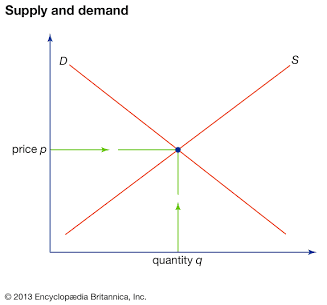
5. What does supply and demand determine in a market economy?
A) Weather patterns
B) Product prices and availability
C) Government elections
D) Population growth
Answer: B) Product prices and availability
Explanation: Supply and demand interact to influence the prices of goods and services in competitive markets.
6. What is the main purpose of a central bank?
A) Sell consumer products
B) Manage monetary policy
C) Build highways
D) Control private companies
Answer: B) Manage monetary policy
Explanation: Central banks control interest rates, money supply, and financial stability.
7. Which currency is used by many countries in the European Union?
A) Dollar
B) Yen
C) Euro
D) Pound
Answer: C) Euro
Explanation: The euro is the official currency used by many EU member countries.
8. What does a stock market represent?
A) A place where company shares are bought and sold
B) A government tax office
C) A bank loan department
D) A currency exchange only
Answer: A) A place where company shares are bought and sold
Explanation: Stock markets allow investors to buy ownership shares in publicly traded companies.
9. What is unemployment?
A) People refusing to spend money
B) People without jobs who are seeking work
C) Companies earning profits
D) Rising product prices
Answer: B) People without jobs who are seeking work
Explanation: The unemployment rate measures the percentage of the workforce actively looking for employment but unable to find it.
10. What is a budget deficit?
A) When government spending exceeds revenue
B) When exports exceed imports
C) When prices decrease
D) When banks lower interest rates
Answer: A) When government spending exceeds revenue
Explanation: A budget deficit occurs when a government spends more money than it collects through taxes and other income.
11. Which economic system is based on private ownership and free markets?
A) Capitalism
B) Communism
C) Feudalism
D) Barter system
Answer: A) Capitalism
Explanation: Capitalism allows individuals and businesses to own property and operate in markets with limited government control.
12. What does a high interest rate usually do?
A) Encourages more borrowing
B) Makes borrowing more expensive
C) Eliminates inflation completely
D) Increases free goods
Answer: B) Makes borrowing more expensive
Explanation: Higher interest rates usually reduce borrowing and spending because loans become more costly.
13. What is the term for buying and selling goods between countries?
A) Domestic trade
B) International trade
C) Local commerce
D) Internal production
Answer: B) International trade
Explanation: International trade involves the exchange of goods and services across national borders.
14. What is a monopoly?
A) A market with many equal competitors
B) A market controlled by one company
C) A government savings plan
D) A type of currency
Answer: B) A market controlled by one company
Explanation: A monopoly exists when one firm dominates a market and faces little or no competition.
15. What is the main goal of monetary policy?
A) Control money supply and maintain economic stability
B) Increase population growth
C) Reduce international trade
D) Set company salaries
Answer: A) Control money supply and maintain economic stability
Explanation: Monetary policy helps manage inflation, employment, and economic growth through tools like interest rates.
16. What does a trade surplus occur when a country:
A) Imports more than it exports
B) Exports more than it imports
C) Stops trading completely
D) Has no businesses
Answer: B) Exports more than it imports
Explanation: A trade surplus means a country sells more goods and services abroad than it purchases.
17. Which organization provides loans and economic assistance to countries?
A) International Monetary Fund (IMF)
B) World Health Organization
C) United Nations Security Council
D) Olympic Committee
Answer: A) International Monetary Fund (IMF)
Explanation: The IMF helps countries manage financial crises and maintain economic stability.
18. What is the stock market term “bull market” associated with?
A) Falling prices
B) Rising prices
C) Closed markets
D) High taxes
Answer: B) Rising prices
Explanation: A bull market describes a period when stock prices are generally increasing and investor confidence is strong.
19. What is the basic economic problem that all societies face?
A) Unlimited resources
B) Scarcity of resources
C) Too many products
D) No consumer needs
Answer: B) Scarcity of resources
Explanation: Economics studies how people and societies use limited resources to satisfy unlimited wants and needs.
20. What does the term “minimum wage” refer to?
A) The lowest legal pay employers can give workers
B) The highest salary in a company
C) A government tax payment
D) A business profit limit
Answer: A) The lowest legal pay employers can give workers
Explanation: Minimum wage laws establish the lowest hourly pay rate employers are legally allowed to pay employees.
Read Also:139+ Peza Puns
Economic Trivia Questions and Answers for Students

💰 20 More Economic Trivia Questions (Multiple Choice) with Answers & Explanations
1. What does the term “capital” mean in economics?
A) Only money kept in a bank
B) Resources used to produce goods and services
C) Government taxes
D) Consumer spending
Answer: B) Resources used to produce goods and services
Explanation: In economics, capital includes tools, machines, buildings, and other resources used to create products and services.
2. Which economic principle explains that people make choices because resources are limited?
A) Scarcity
B) Inflation
C) Monopoly
D) Trade
Answer: A) Scarcity
Explanation: Scarcity means resources are limited while human wants are unlimited, forcing individuals and societies to make choices.
3. What is the Consumer Price Index (CPI) used to measure?
A) Stock market performance
B) Changes in prices of consumer goods and services
C) Government spending
D) International trade
Answer: B) Changes in prices of consumer goods and services
Explanation: CPI tracks changes in the cost of a basket of goods and services and is often used to measure inflation.
4. What is a market economy mainly based on?
A) Government ownership of all businesses
B) Supply and demand
C) Military production
D) Fixed prices for all goods
Answer: B) Supply and demand
Explanation: Market economies rely on buyers and sellers interacting to determine prices and production.
5. What is the opposite of inflation?
A) Expansion
B) Deflation
C) Growth
D) Investment
Answer: B) Deflation
Explanation: Deflation occurs when the overall price level of goods and services decreases over time.
6. What does the term “GDP per capita” measure?
A) Total government debt
B) Economic output per person
C) Number of businesses
D) Total exports
Answer: B) Economic output per person
Explanation: GDP per capita divides a country’s GDP by its population to estimate average economic output per person.
7. Which institution controls monetary policy in the United States?
A) Congress
B) Federal Reserve
C) Department of Commerce
D) Supreme Court
Answer: B) Federal Reserve
Explanation: The Federal Reserve manages interest rates and money supply to support economic stability.
8. What is a tariff?
A) A payment to workers
B) A tax on imported goods
C) A company investment
D) A bank loan
Answer: B) A tax on imported goods
Explanation: Tariffs are taxes placed on imports to influence trade and protect domestic industries.
9. What is a bull market?
A) A period of rising stock prices
B) A period of falling stock prices
C) A closed financial market
D) A government program
Answer: A) A period of rising stock prices
Explanation: A bull market occurs when investors are optimistic and stock prices generally increase.
10. What is a bear market?
A) A market with no investors
B) A period of declining stock prices
C) A market with only foreign companies
D) A type of currency exchange
Answer: B) A period of declining stock prices
Explanation: A bear market describes a significant decline in stock prices and often reflects investor uncertainty.
11. Which country uses the dollar as its official currency?
A) United States
B) Japan
C) India
D) Germany
Answer: A) United States
Explanation: The U.S. dollar is the official currency of the United States and a major global reserve currency.
12. What does a bank loan usually require the borrower to pay?
A) Interest
B) Dividend
C) Tax refund
D) Salary
Answer: A) Interest
Explanation: Interest is the cost of borrowing money and is usually paid in addition to the original loan amount.
13. What is entrepreneurship?
A) Managing government budgets
B) Creating and running a business
C) Studying only stock prices
D) Controlling currency exchange
Answer: B) Creating and running a business
Explanation: Entrepreneurs identify opportunities, create businesses, and take financial risks to earn profits.
14. What is a trade deficit?
A) When exports exceed imports
B) When imports exceed exports
C) When taxes increase
D) When prices fall
Answer: B) When imports exceed exports
Explanation: A trade deficit occurs when a country buys more goods and services from other countries than it sells.
15. Which economic system combines private businesses with government regulation?
A) Mixed economy
B) Pure capitalism
C) Traditional economy
D) Barter economy
Answer: A) Mixed economy
Explanation: A mixed economy combines free-market activity with government involvement and regulations.
16. What does the term “investment” mean in economics?
A) Spending money only on entertainment
B) Using resources to create future benefits
C) Avoiding all financial risks
D) Reducing production
Answer: B) Using resources to create future benefits
Explanation: Investments involve putting money or resources into assets expected to generate future returns.
17. Which organization publishes the World Economic Outlook report?
A) IMF
B) WTO
C) United Nations
D) World Trade Organization
Answer: A) IMF
Explanation: The International Monetary Fund publishes economic forecasts and analysis through its World Economic Outlook.
18. What is the unemployment rate?
A) Percentage of people without jobs who are seeking work
B) Number of companies in a country
C) Amount of government spending
D) Total exports
Answer: A) Percentage of people without jobs who are seeking work
Explanation: The unemployment rate measures the share of the labor force actively looking for employment but without a job.
19. What is a monopoly’s main characteristic?
A) Many small competitors
B) One dominant seller
C) Free products
D) No customers
Answer: B) One dominant seller
Explanation: A monopoly exists when one company controls a large portion of a market with limited competition.
20. What does the term “economic growth” refer to?
A) A decrease in production
B) An increase in a country’s production of goods and services
C) A fall in population
D) A rise in taxes only
Answer: B) An increase in a country’s production of goods and services
Explanation: Economic growth occurs when an economy expands by producing more goods and services over time.
Read Also:167+ Business Major Puns
Fun Economic Trivia Questions and Answers
💰 20 More Economic Trivia Questions (Multiple Choice) with Answers & Explanations
1. What is the main purpose of a central bank?
A) Produce consumer goods
B) Manage monetary policy and financial stability
C) Set company prices
D) Control international trade
Answer: B) Manage monetary policy and financial stability
Explanation: Central banks control interest rates, regulate money supply, and help maintain economic stability.
2. What does the term “market equilibrium” mean?
A) When government controls all prices
B) When supply equals demand
C) When businesses stop producing
D) When inflation reaches zero
Answer: B) When supply equals demand
Explanation: Market equilibrium occurs when the quantity supplied matches the quantity demanded, creating a stable market price.
3. Which organization is responsible for international financial cooperation and economic stability?
A) IMF
B) UNESCO
C) FIFA
D) WHO
Answer: A) IMF
Explanation: The International Monetary Fund promotes global monetary cooperation and provides financial assistance to countries facing economic problems.
4. What is the main function of a stock exchange?
A) Print money
B) Allow buying and selling of securities
C) Set government taxes
D) Create national budgets
Answer: B) Allow buying and selling of securities
Explanation: Stock exchanges provide a marketplace where investors trade shares, bonds, and other financial assets.
5. What is the term for a continuous increase in a country’s production and income?
A) Economic growth
B) Deflation
C) Stagnation
D) Recession
Answer: A) Economic growth
Explanation: Economic growth refers to an increase in the production of goods and services, often measured by GDP.
6. What is the main goal of competition in a market?
A) Eliminate all businesses
B) Encourage efficiency and better prices
C) Prevent innovation
D) Increase government control
Answer: B) Encourage efficiency and better prices
Explanation: Competition encourages companies to improve products, reduce costs, and offer better value to consumers.
7. What does the term “human capital” refer to?
A) Money owned by governments
B) Skills, education, and abilities of workers
C) Natural resources
D) Factory equipment
Answer: B) Skills, education, and abilities of workers
Explanation: Human capital represents the knowledge and skills that increase worker productivity.
8. What is a subsidy?
A) A tax on imports
B) Financial support provided by a government
C) A business loan from a bank
D) A reduction in wages
Answer: B) Financial support provided by a government
Explanation: Governments provide subsidies to support industries, lower costs, or encourage certain activities.
9. What does the term “liquidity” describe?
A) How easily an asset can be converted into cash
B) The amount of company debt
C) The number of employees
D) The size of a market
Answer: A) How easily an asset can be converted into cash
Explanation: Highly liquid assets, such as cash, can quickly be used for payments without losing much value.
10. Which economic indicator measures unemployment levels?
A) Consumer Price Index
B) Unemployment rate
C) GDP growth rate
D) Trade balance
Answer: B) Unemployment rate
Explanation: The unemployment rate shows the percentage of people in the labor force who are actively seeking work but do not have jobs.
11. What is a budget surplus?
A) Government spending exceeds revenue
B) Revenue exceeds government spending
C) Imports exceed exports
D) Prices increase rapidly
Answer: B) Revenue exceeds government spending
Explanation: A budget surplus occurs when a government collects more money than it spends.
12. What is the main purpose of saving money?
A) Reduce all economic activity
B) Build financial security and prepare for future needs
C) Increase inflation
D) Eliminate investment
Answer: B) Build financial security and prepare for future needs
Explanation: Savings provide funds for emergencies, future purchases, and investment opportunities.
13. Which economic system relies mainly on customs and traditions?
A) Capitalist economy
B) Traditional economy
C) Command economy
D) Digital economy
Answer: B) Traditional economy
Explanation: Traditional economies base decisions about production and distribution on cultural customs and long-established practices.
14. What is a command economy?
A) An economy controlled mainly by government decisions
B) An economy with no rules
C) An economy based only on farming
D) An economy without money
Answer: A) An economy controlled mainly by government decisions
Explanation: In a command economy, the government determines production levels, prices, and resource allocation.
15. What is the purpose of diversification in investing?
A) Increase risk by buying one asset
B) Spread investments to reduce risk
C) Avoid all financial planning
D) Stop earning returns
Answer: B) Spread investments to reduce risk
Explanation: Diversification reduces risk by investing in different assets instead of relying on a single investment.
16. What does “supply” refer to in economics?
A) The amount of goods and services producers are willing to sell
B) Consumer preferences only
C) Government spending
D) Worker salaries
Answer: A) The amount of goods and services producers are willing to sell
Explanation: Supply represents how much producers offer for sale at different prices.
17. What is the role of banks in an economy?
A) Create laws
B) Provide financial services and loans
C) Control elections
D) Set product quality standards
Answer: B) Provide financial services and loans
Explanation: Banks help economies by accepting deposits, providing credit, and supporting investment.
18. What is a financial market?
A) A place where financial assets are traded
B) A government tax office
C) A factory location
D) A farming system
Answer: A) A place where financial assets are traded
Explanation: Financial markets allow investors and businesses to exchange assets such as stocks, bonds, and currencies.
19. What does the term “purchasing power” mean?
A) The ability of money to buy goods and services
B) The amount of money printed
C) The number of banks in a country
D) The value of exports
Answer: A) The ability of money to buy goods and services
Explanation: Purchasing power decreases when inflation causes prices to rise faster than income.
20. What is entrepreneurship’s role in an economy?
A) Prevent innovation
B) Create businesses, jobs, and new products
C) Reduce competition
D) Eliminate consumer choices
Answer: B) Create businesses, jobs, and new products
Explanation: Entrepreneurs drive economic growth by creating companies, introducing innovations, and generating employment opportunities.**
Read Also:135+ Handpicked Audit Puns
Easy Economic Trivia Questions and Answers
1. Question: What’s the priciest property in Monopoly?
Answer: Boardwalk
Fun Fact: Land on it with a hotel — say goodbye to your cash.
2. Question: What’s the term for rising prices over time?
Answer: Inflation
Fun Fact: Your favorite chips used to cost half as much. Ouch.
3. Question: Who’s called the father of modern economics?
Answer: Adam Smith
Fun Fact: His book Wealth of Nations dropped in 1776 — same year as U.S. independence.
4. Question: What’s the “invisible” force guiding markets?
Answer: The Invisible Hand
Fun Fact: It’s like the economy’s secret puppet master.
5. Question: Which country had wild hyperinflation in the 2000s?
Answer: Zimbabwe
Fun Fact: They printed a 100 trillion dollar bill. Yes, really.
6. Question: What’s GDP short for?
Answer: Gross Domestic Product
Fun Fact: It’s the total value of everything a country produces — even your morning latte.
7. Question: Which system lets supply and demand rule?
Answer: Capitalism
Fun Fact: It’s the economic version of “survival of the fittest.”
8. Question: What’s it called when one company owns the whole market?
Answer: Monopoly
Fun Fact: Real monopolies = less fun, more lawsuits.
9. Question: Who sets interest rates in the U.S.?
Answer: The Federal Reserve
Fun Fact: The Fed’s decisions can make Wall Street dance — or cry.
10. Question: What’s a recession?
Answer: A period of falling GDP and rising unemployment
Fun Fact: Basically, the economy’s version of a bad mood.
11. Question: Who said “In the long run, we are all dead”?
Answer: John Maynard Keynes
Fun Fact: He had a flair for dramatic mic-drop quotes.
12. Question: What’s the opposite of inflation?
Answer: Deflation
Fun Fact: Falling prices sound cool — until nobody wants to spend.
13. Question: What’s global GDP?
Answer: The total value of all goods and services worldwide
Fun Fact: It’s Earth’s economic scoreboard.
14. Question: What’s the Dow Jones?
Answer: A stock index of 30 major U.S. companies
Fun Fact: It’s like the mood ring of the economy.
15. Question: Which country invented paper money?
Answer: China
Fun Fact: The Tang Dynasty said goodbye to heavy coins — smart move.
16. Question: What’s a capital gain?
Answer: Profit from selling an asset for more than you paid
Fun Fact: Buy low, sell high — the investor’s mantra.
17. Question: What’s the OG cryptocurrency?
Answer: Bitcoin
Fun Fact: First real purchase? Two pizzas. Today? Worth millions.
18. Question: What’s Keynesian economics all about?
Answer: Government spending to boost demand
Fun Fact: Keynes believed in spending your way out of trouble.
19. Question: What’s opportunity cost?
Answer: The value of what you gave up
Fun Fact: Choosing Netflix over studying? That GPA might be the cost.
20. Question: What’s perfect competition?
Answer: A market with many buyers and sellers, none dominant
Fun Fact: It’s the unicorn of economics — rarely seen in the wild.
Hard Economic Trivia Questions and Answers
1. Question: Remember 1929? (Well, probably not.) That’s when the stock market fell faster than your Wi-Fi during a storm. What was this event called?
Answer: The Great Depression
Fun Fact: It lasted over a decade—basically the world’s longest “economic hangover.”
2. Question: If everything starts costing more and your wallet starts crying, what’s that situation called?
Answer: Inflation
Fun Fact: The price of a movie ticket in 1960 was 69 cents. Now? You might need a small loan.
3. Question: Who’s the economics legend who gave us the “invisible hand” idea, like a ghost running the market?
Answer: Adam Smith
Fun Fact: He dropped The Wealth of Nations in 1776—economics and independence in one year!
4. Question: Picture this: You buy Bitcoin for $1, then sell it for $60,000. What’s that profit called?
Answer: Capital gain
Fun Fact: Warren Buffett calls this “making money while you sleep.” Not a bad plan.
5. Question: What’s it called when one company completely rules the market like a corporate supervillain?
Answer: Monopoly
Fun Fact: The board game Monopoly was actually created to teach people how bad monopolies are. Irony much?
6. Question: You’ve got two options: buy pizza or invest in stocks. The thing you don’t choose? That’s what economists call what?
Answer: Opportunity cost
Fun Fact: Every “Netflix night” instead of studying might cost you more than you think.
7. Question: When a country’s money becomes basically confetti, what terrifying word describes it?
Answer: Hyperinflation
Fun Fact: In 2008, Zimbabwe printed a $100 trillion bill. Spoiler: it couldn’t even buy lunch.
8. Question: Which economic system lets businesses and consumers call the shots—no government bossing them around?
Answer: Capitalism
Fun Fact: It’s basically the “free market Hunger Games.” May the odds be ever in your favor.
9. Question: What’s GDP short for, and why does every news anchor love saying it?
Answer: Gross Domestic Product
Fun Fact: Think of it as the country’s “report card” for how much it makes and spends.
10. Question: If prices keep dropping and people stop buying because they’re waiting for lower ones, what’s that called?
Answer: Deflation
Fun Fact: It sounds great—until businesses start panicking and firing people. Yikes.
11. Question: Which U.S. agency controls interest rates and makes Wall Street either cheer or cry?
Answer: The Federal Reserve
Fun Fact: The Fed doesn’t “print” money—it’s more like the economy’s DJ, adjusting the vibe.
12. Question: Which 20th-century British economist said government spending could fix economic slumps?
Answer: John Maynard Keynes
Fun Fact: He basically invented “stimulus packages” before they were cool.
13. Question: If a country sells more than it buys from others, what’s that called?
Answer: Trade surplus
Fun Fact: China’s had one for years—it’s basically the world’s overachieving student.
14. Question: What was the ancient trade route connecting Asia to Europe, long before Amazon Prime existed?
Answer: The Silk Road
Fun Fact: It wasn’t just silk—spices, gold, and ideas traveled that road for centuries.
15. Question: What’s the term for a long period of economic gloom, like a bad sequel to a recession?
Answer: Depression
Fun Fact: The Great Depression was so bad that Monopoly became popular—because pretending to be rich was free.
16. Question: Which 1630s craze made tulip bulbs more expensive than houses?
Answer: Tulip Mania
Fun Fact: Proof that humans were making bad investments long before crypto.
17. Question: What’s the term for an economy growing too fast, like a sugar-rushed toddler?
Answer: Overheating
Fun Fact: Central banks usually step in and raise rates to cool it off—like an economic time-out.
18. Question: What’s it called when the economy slows down for two quarters in a row?
Answer: Recession
Fun Fact: It’s the economy’s way of saying, “I need a nap.”
19. Question: Which U.S. president ended the gold standard in 1971, letting the dollar float freely?
Answer: Richard Nixon
Fun Fact: Economists call it the “Nixon Shock.” Investors still haven’t fully recovered.
20. Question: What’s it called when many small firms compete, and none can boss the market around?
Answer: Perfect competition
Fun Fact: It’s the unicorn of economics—sounds magical, but you’ll never actually see it.
Best Economic Trivia Questions and Answers

1. Question: Every economy, from the largest nation to your personal budget, faces this relentless challenge: we want everything, but we can’t have everything. What is the fundamental economic problem that results from unlimited wants bumping up against limited resources?
Answer: Scarcity
Fun Fact: If scarcity didn’t exist, economics classes would be about five minutes long, and money would be utterly pointless.
2. Question: You chose to binge-watch that new show instead of studying for your final. The value of the higher grade you could have earned is the true cost of your binge. What is the two-word phrase for the value of the next best alternative you sacrificed when making a choice?
Answer: Opportunity Cost
Fun Fact: Economists love calculating this, which is why they never pick the cheapest lunch, only the one with the highest marginal benefit.
3. Question: If you are looking at the health of the entire nation’s economy—examining total inflation, unemployment, and growth—you are wearing the right set of glasses. Which major field of economics studies the economy as a whole, focusing on these large-scale aggregates?
Answer: Macroeconomics
Fun Fact: Its nerdy sibling, Microeconomics, studies individual consumers and firms—it’s all about the supply and demand for your favorite avocado toast.
4. Question: This 18th-century Scottish philosopher and economist gave the world the concept of the “Invisible Hand” in his 1776 masterpiece, The Wealth of Nations. Name this father of modern free-market capitalism.
Answer: Adam Smith
Fun Fact: Smith believed that people, by pursuing their own selfish goals, are often led by that Invisible Hand to promote society’s overall well-being. Aww, how sweet!
5. Question: This three-letter metric is the ultimate economic report card, measuring the total dollar value of all final goods and services produced within a country’s borders in a year. What is this vital measure?
Answer: GDP (Gross Domestic Product)
Fun Fact: For a true measure of real growth, economists look at Real GDP, which has been adjusted to account for the shrinking power of the dollar (inflation).
6. Question: Your grandparents always talk about how a movie ticket used to cost five cents, and your $20 bill buys less and less over time. What is the economic term for the general increase in prices and the corresponding fall in the purchasing value of money?
Answer: Inflation
Fun Fact: The opposite, a general decrease in prices, is called Deflation and can be surprisingly harmful—it makes consumers wait for prices to drop even lower!
7. Question: The first slice of pizza is amazing, but by the seventh slice, the extra satisfaction you get is rapidly dwindling. What “Law” states that the additional satisfaction (utility) gained from each subsequent unit of a good eventually begins to decline?
Answer: The Law of Diminishing Marginal Utility
Fun Fact: This is why you rarely see a movie twice in a row, but you might watch it again a few years later when the utility has had a chance to recharge!
8. Question: Economists use this term to measure how much consumers change their buying habits when the price of a product changes. Does a tiny price hike cause a huge drop in sales, or does demand barely budge?
Answer: Elasticity
Fun Fact: Necessities, like medicine or gas, tend to have inelastic demand (people keep buying them!), while luxury goods have highly elastic demand (they’re very sensitive to price changes).
9. Question: This powerful group is the central banking system of the U.S., tasked with managing the money supply, setting key interest rates, and striving for stable prices and full employment. What is the common nickname for the Federal Reserve System?
Answer: The Fed
Fun Fact: Their main goal is called the Dual Mandate: maximizing employment and stabilizing prices. It’s like trying to keep two very large, very grumpy dogs happy at the same time.
10. Question: When the government decides to inject cash into the economy by either increasing its own spending (on public works) or cutting taxes, they are utilizing this policy. What policy uses government spending and taxation to influence the economy?
Answer: Fiscal Policy
Fun Fact: When things are slow, the government uses expansionary fiscal policy (spending more!) to try and rev up demand, like a turbo boost button.
11. Question: It’s the perfect, harmonious price point in the marketplace where the quantity of a good that buyers want (demand) exactly equals the quantity that sellers are willing to supply. What is this magical price point called?
Answer: Market Equilibrium
Fun Fact: If the market price is above equilibrium, you get a surplus (too much inventory). Below it, you get a shortage (empty shelves). The market always tries to return to the middle!
12. Question: In this less-than-ideal market structure, there is only one firm that sells a particular product or service, giving it near-total control over prices and output (think utilities or certain pharma patents). What is the name for this single-seller market?
Answer: A Monopoly
Fun Fact: The government has antitrust laws to keep markets competitive, stepping in to break up (or regulate) monopolists, because nobody likes a bully.
13. Question: A factory produces cheap toys, which is great for consumers, but it also pumps smoke into the air, costing the public clean-up money. What is the term for a cost or benefit that affects a party who did not directly choose to incur that cost or benefit?
Answer: An Externality
Fun Fact: That pollution is a negative externality. If your neighbor plants beautiful flowers that everyone gets to enjoy, that’s a positive externality!
14. Question: This principle dictates that even if Country A is better at producing everything (absolute advantage), Country B should still specialize in the good it can produce with the least sacrifice. What is this fundamental theory that is the basis for global trade?
Answer: Comparative Advantage
Fun Fact: Even if a lawyer is a faster typist than their assistant, it makes sense for the lawyer to focus on law and the assistant to focus on typing, because of this principle!
15. Question: Streetlights and national defense are classic examples: you can’t stop people from using them, and one person using them doesn’t stop another. Goods that are both non-excludable and non-rivalrous are known as what type of goods?
Answer: Public Goods
Fun Fact: Since people can enjoy them without paying, they suffer from the famous “Free Rider Problem,” which is why the government usually has to step in and fund them.
16. Question: The economy isn’t a steady climb—it’s a series of peaks (booms), troughs (depressions), and recoveries. What is the name for this recurring, cyclical fluctuation in overall economic activity?
Answer: The Business Cycle
Fun Fact: When the downward turn, or contraction, is particularly nasty and prolonged, it officially becomes a recession.
17. Question: Economists have to simplify the real world by pretending certain variables don’t change so they can isolate the one factor they do want to study. What Latin phrase, meaning “all other things being equal,” is the go-to safety net for building economic models?
Answer: Ceteris Paribus
Fun Fact: If an economist ever gives you an opinion without saying this phrase, they probably aren’t a real economist. 😉
18. Question: A government decides to slap an extra fee onto foreign-made computer chips coming across their border, hoping to encourage domestic chip production. What is this tax on imported goods or services called?
Answer: A Tariff
Fun Fact: Tariffs are designed to be a form of protectionism, but they often lead to higher prices for consumers, who pay the tax in the end.
19. Question: Money has three crucial jobs. It serves as a Medium of Exchange (you trade it for stuff) and a Unit of Account (it helps you measure worth). What is the third and final key function of money, meaning it must retain its purchasing power over time?
Answer: A Store of Value
Fun Fact: When a country experiences hyperinflation, its currency quickly fails as a Store of Value, forcing people to rely on bartering or more stable foreign currencies.
20. Question: When an economist says “Investment” (the ‘I’ in the GDP equation), they are NOT talking about buying Google stock. They are talking about a purchase that directly boosts future production. What does “Investment” refer to in strict economic terms?
Answer: The purchase of new capital goods (like machinery, factories, and equipment)
Fun Fact: Buying a new factory robot? Economic Investment! Buying a $5,000 bond? Financial Transaction! It’s a key distinction that separates the pros from the casual observers.
Conclusion
Exploring economics through trivia is a fun way to understand the ideas, events, and systems that influence the world around us. From markets and money to trade, business, and financial history, each question provides an opportunity to discover important concepts in an engaging way.
Whether you answered every question correctly or learned something new along the way, these economic trivia questions and answers offer an enjoyable challenge for learners of all backgrounds. They are perfect for classrooms, quiz nights, study activities, business events, or anyone who enjoys expanding their knowledge.
We hope this collection inspired your curiosity about economics and helped you appreciate how economic principles shape everyday life. Share these questions with friends and family, challenge each other’s knowledge, and continue exploring the fascinating world of economics.