

Malcolm X quotes are powerful expressions of courage, self-determination, and the fight for justice.
As a revolutionary leader and activist, Malcolm X spoke boldly about equality, empowerment, and the importance of knowledge in achieving freedom.
Malcolm X quotes continue to inspire individuals to challenge injustice, embrace their identity, and stand up for their beliefs, making them timeless lessons in resilience and leadership.
Malcolm X Quotes Oppressor
1. “The most disrespected person in America is the Black man. The oppressor knows that control comes not only through force but through denying people their dignity, their history, and their ability to define themselves. Awareness is the first step toward liberation.”
2. “An oppressor maintains power by keeping the oppressed ignorant, divided, and fearful. To challenge that power, you must educate yourself, unite with others, and refuse to accept the distorted narratives designed to hold you down.”
3. “It is criminal for anyone to exploit ignorance, manipulate fear, and deny freedom to those who have been systematically oppressed. The oppressor thrives when the oppressed are distracted, disorganized, and unaware of their own strength.”
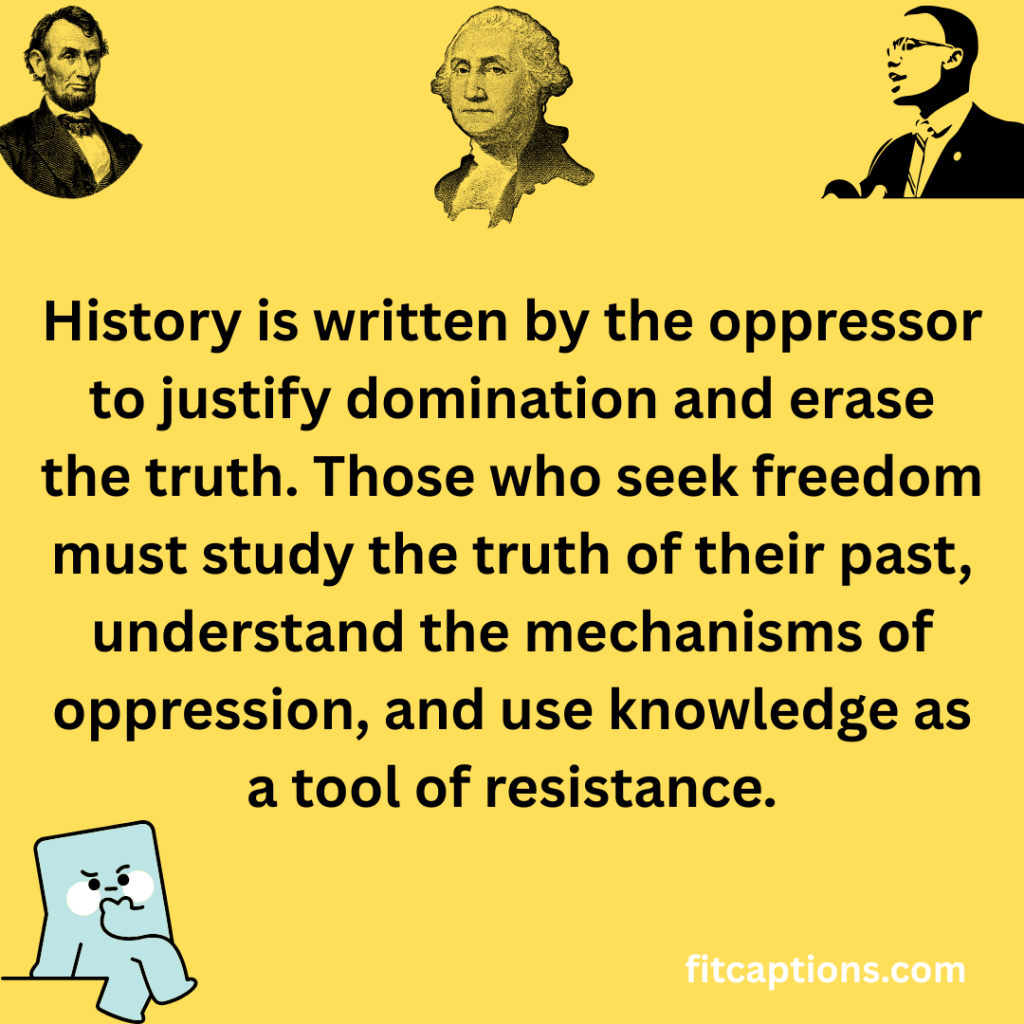
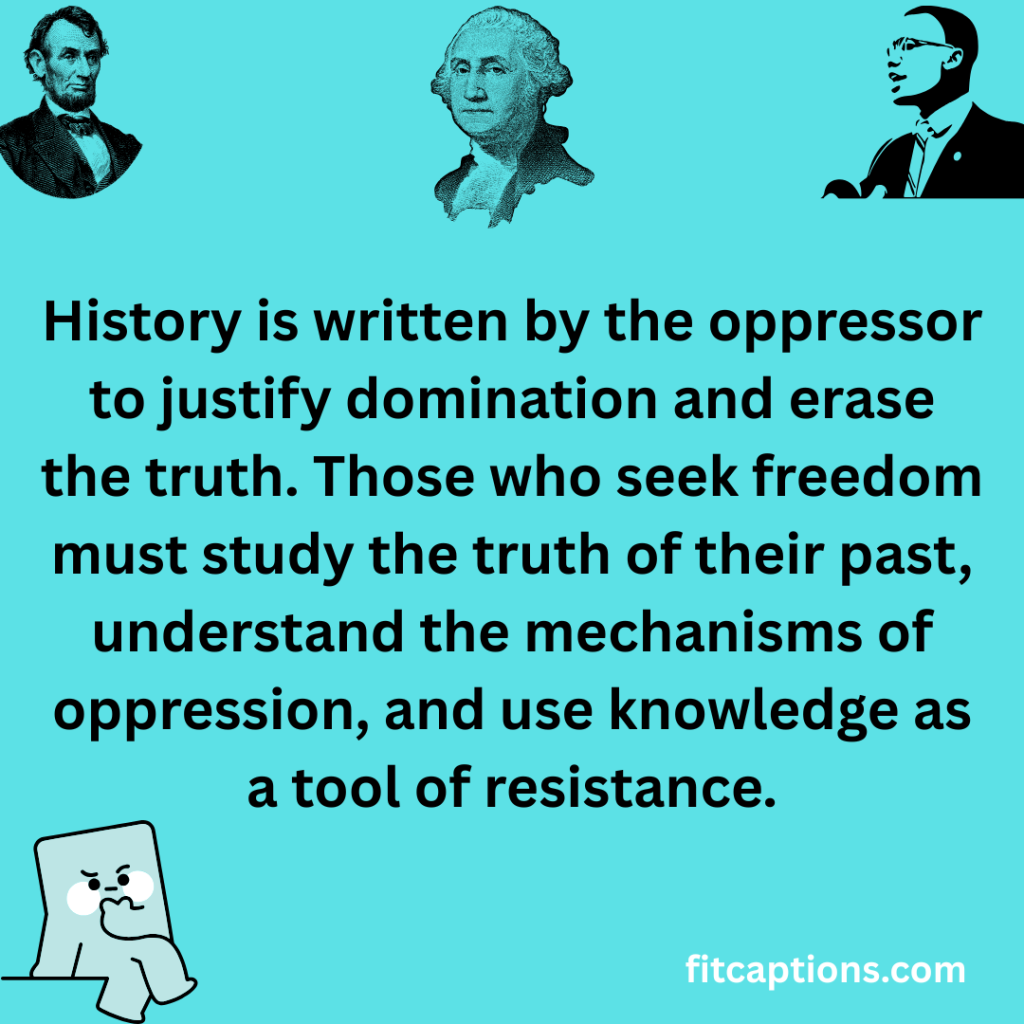
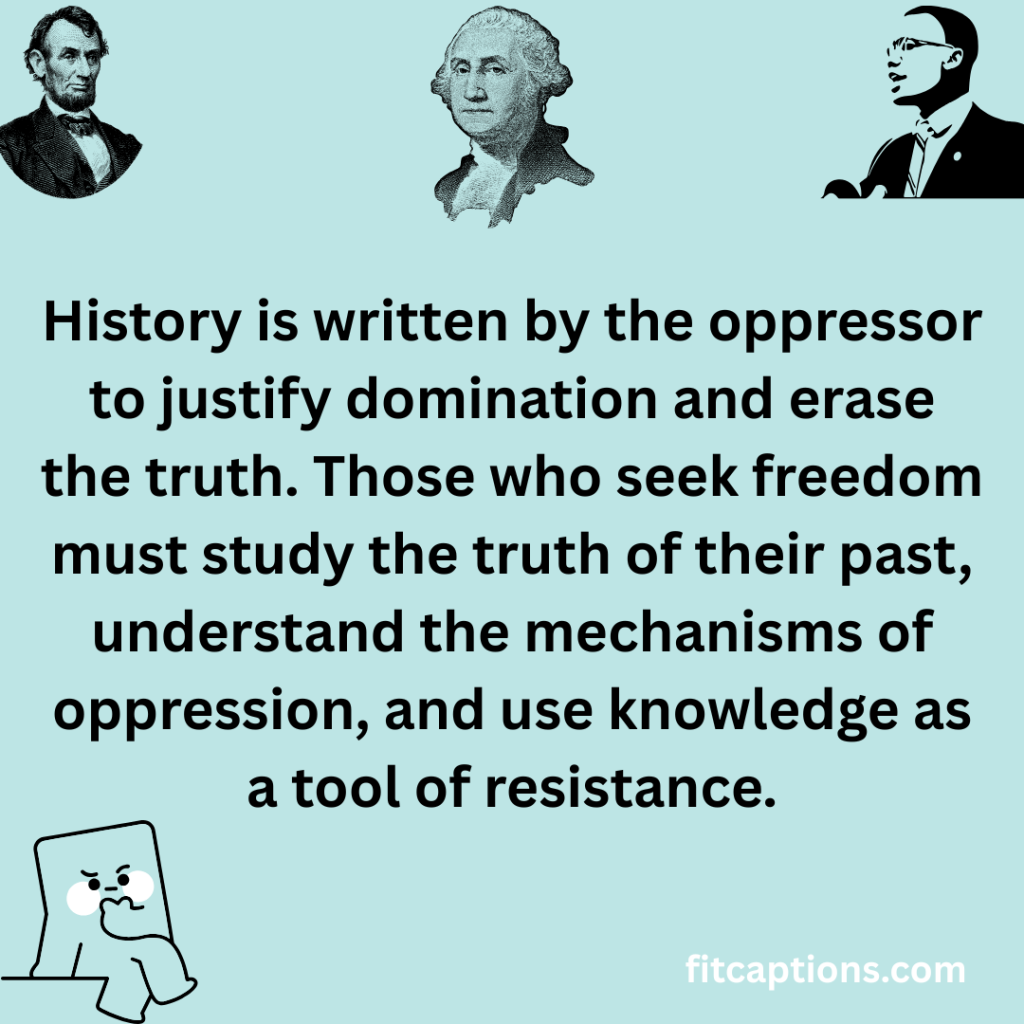
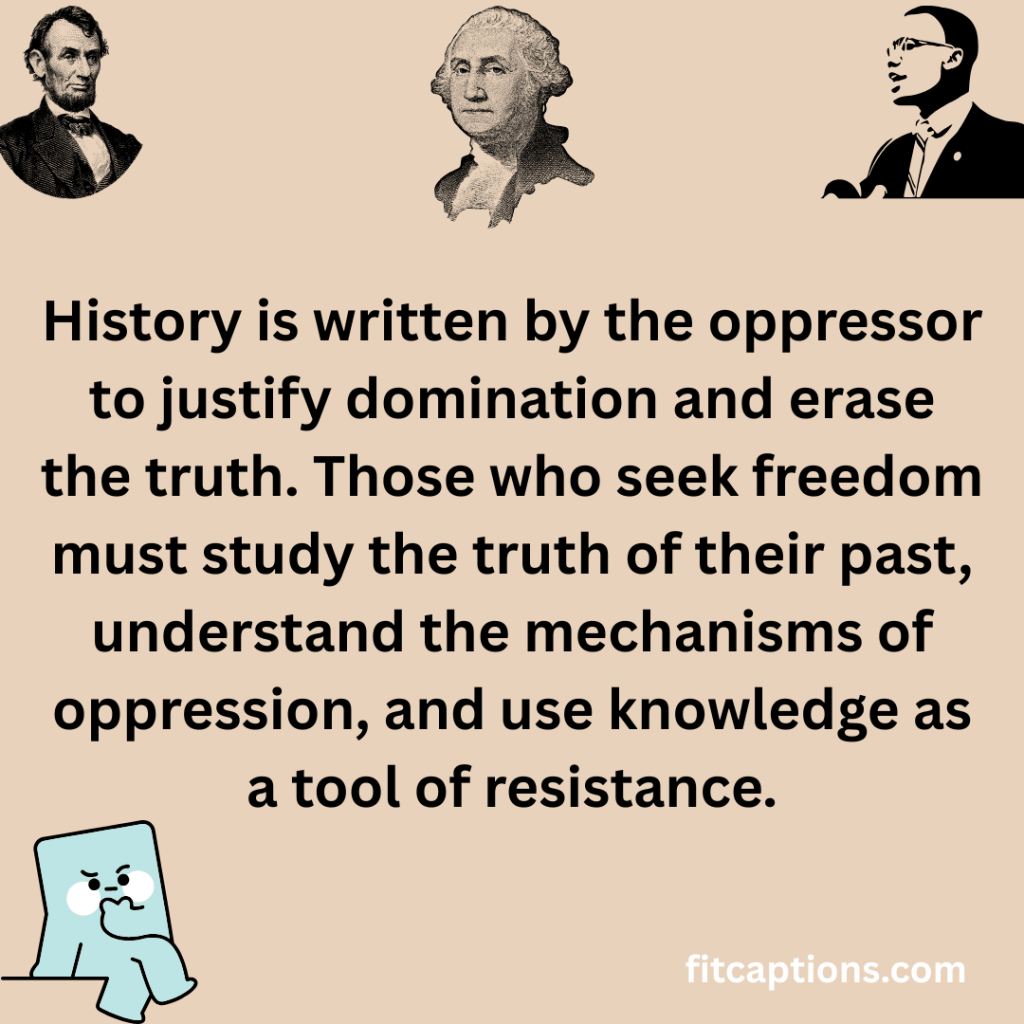
4. “History is written by the oppressor to justify domination and erase the truth. Those who seek freedom must study the truth of their past, understand the mechanisms of oppression, and use knowledge as a tool of resistance.”
5. “The oppressor often disguises control as benevolence, offering crumbs while stealing dignity. True liberation requires seeing beyond appearances, recognizing manipulation, and asserting one’s rights unapologetically.”
6. “Oppression is maintained by fear, conformity, and the silencing of dissent. To break free, one must be fearless, speak truth boldly, and refuse to be intimidated by threats, ridicule, or systemic pressure.”
7. “The oppressor depends on the oppressed internalizing their own inferiority. Freedom begins with self-respect, pride in identity, and the refusal to let anyone define your worth or limit your potential.”
8. “Oppressors control the narrative, dictate laws, and manipulate public opinion. Recognizing these tools of power is essential for empowerment; education, unity, and action are the weapons of those who refuse to be dominated.”
9. “Every system of oppression relies on compliance and submission. To challenge it, one must be vigilant, organized, and willing to act collectively against injustice, while understanding that moral courage is essential to victory.”
10. “The oppressor’s power is strongest when the oppressed are divided. Solidarity, shared purpose, and a commitment to justice weaken the foundations of oppression and create a force that cannot be ignored.”
11. “Oppressors fear knowledge more than strength. Education, awareness, and critical thinking illuminate truth, reveal manipulation, and provide the tools for the oppressed to reclaim power and demand justice.”
12. “The oppressor thrives on distraction, keeping the masses focused on trivialities while ignoring the systemic exploitation that governs their lives. Consciousness, focus, and activism are acts of resistance.”
13. “To confront an oppressor is not only to fight for yourself but to fight for those who come after you. Every act of defiance, every stand for justice, chips away at the structures designed to suppress humanity.”
14. “Oppression is maintained by law, custom, and fear. To dismantle it requires courage, strategy, and the refusal to accept excuses or delays in the pursuit of equality and human dignity.”
15. “The oppressor cultivates dependence, weakness, and hopelessness. True empowerment comes from education, self-determination, and the unwavering belief that liberation is not only possible but inevitable when people rise together.”
16. “Oppression is often subtle, hidden in policies, media narratives, and everyday interactions. Recognizing it requires critical thought, awareness of history, and the courage to confront injustice wherever it exists.”
17. “An oppressor seeks to control not only bodies but minds. Mental freedom, self-respect, and confidence in one’s abilities are revolutionary acts that threaten the foundations of systemic oppression.”
18. “Oppressors fear unity because united people can demand justice, equality, and accountability. Solidarity among the oppressed transforms fear into power and creates a force that cannot be silenced.”
19. “The oppressor’s goal is to normalize injustice so that it seems natural. Awareness, activism, and the refusal to accept inequality are the antidotes that restore justice and challenge the false morality of domination.”
20. “Oppression is a tool used by those who wish to retain power, but it can be dismantled through knowledge, courage, and collective action. The first step is seeing clearly, refusing submission, and committing to change with persistence and strategy.”
Related: 190+ Nightmare Captions for Instagram
Malcolm X Quotes Respect
1. “Education is our passport to the future, for tomorrow belongs to those who prepare for it today; the pursuit of knowledge and understanding is what gives life meaning and purpose.”
2. “You can’t separate peace from freedom because no one can be at peace unless he has his freedom; a life worth living is one where justice, dignity, and self-respect are not optional but essential.”
3. “The future belongs to those who understand the value of struggle, who refuse to be silent in the face of oppression, and who commit themselves to living a life of purpose and action.”
4. “Life is about standing up for what you believe in, even when others try to silence you; courage, conviction, and integrity are what make life meaningful and transformative.”
5. “If you don’t stand for something, you will fall for anything; life demands that we take responsibility for our values, choices, and the legacy we leave behind.”
6. “Power in life is not about domination but about knowledge, self-respect, and the ability to act with intention; a life without these is a life half-lived.”
7. “Life is not measured by material wealth but by the courage to challenge injustice, the strength to resist oppression, and the wisdom to learn from every experience.”
8. “A man who stands for nothing will fall for anything; a meaningful life is rooted in principles, guided by morality, and driven by the desire to create positive change.”
9. “We cannot think of being acceptable to others until we have achieved our self-acceptance; the journey of life begins with understanding, valuing, and respecting ourselves fully.”
10. “Life is a constant struggle for freedom, dignity, and justice; it is through this struggle that we learn, grow, and discover the strength of our own character.”
11. “Your life will be defined not by how easy the road was, but by how you persevered in the face of obstacles, challenges, and those who doubted your potential.”
12. “In life, nothing comes to you unless you take action; waiting for opportunity without effort only ensures that your dreams remain unfulfilled.”
13. “The most unselfish act a person can commit is to educate themselves and their community, because knowledge is the tool that shapes life, empowers action, and transforms the world.”
14. “Life is not about fitting into someone else’s expectations; it’s about finding your own path, embracing your identity, and living in alignment with your truth.”
15. “A life lived in fear is a life half-lived; true fulfillment comes from embracing challenges, confronting injustice, and acting boldly despite uncertainty.”
16. “The future of life depends on our courage today; every decision, every choice, every act of integrity lays the foundation for a meaningful existence.”
17. “We are not born with freedom or power handed to us; life demands that we claim our rights, define our purpose, and work relentlessly to achieve it.”
18. “Life is a test of character, will, and perseverance; it is the struggles, setbacks, and obstacles that shape who we are and define the legacy we leave behind.”
19. “Don’t be afraid of death; be afraid of an unlived life, of a life without purpose, growth, and commitment to principles that matter both to you and to the world.”
20. “In the end, life is about taking responsibility for yourself, your community, and your future; it is about transforming pain into purpose, oppression into action, and dreams into reality.”
Related: 165+ Empowering Black Girl Quotes
Malcolm X Quotes About Life
1. “The media’s role is not just to inform, but to shape perception. Too often, it manipulates facts, controls narratives, and frames the story to serve those in power. A discerning mind must always question what is presented and seek the truth beyond the headlines.”
2. “The most powerful weapon in the hands of the oppressor is the ability to control what people think and believe. Media can liberate, but it can also enslave, depending on whether it empowers the people with knowledge or confuses them with propaganda.”
3. “We live in a society where the masses are fed stories crafted by those with agendas. Media is a battlefield of ideas, and anyone who wants freedom, justice, and equality must learn to read between the lines and seek truth independently.”
4. “Too many people accept what they see in newspapers, on television, or online as absolute truth. Real understanding requires questioning, analysis, and the recognition that media often presents reality selectively to influence thought and opinion.”
5. “Media is a reflection of power. Those who control it decide what is newsworthy and how events are interpreted. For the oppressed, awareness of this power is crucial to avoid being misled or manipulated by the narratives designed to maintain control.”
6. “Education alone is not enough; one must also be media literate. Understanding the sources, biases, and intentions behind every story allows people to distinguish between manipulation and truth, giving them the ability to act with insight.”
7. “Information is freedom, but only if it is accurate and complete. The media has the capacity to illuminate injustice or conceal it, to empower or to deceive. Critical thinking is essential to ensure that information leads to liberation rather than confusion.”
8. “Those in power understand the subtle influence of media. By shaping what people see and hear, they mold perceptions, maintain dominance, and suppress dissent. Awareness and independent thinking are the antidotes to such control.”
9. “A free mind is not simply educated; it is informed, skeptical, and alert to manipulation. Media has the potential to educate, but without vigilance, it can indoctrinate. True freedom requires discernment of what is presented to us.”
10. “The media tells stories about the oppressed from the perspective of the powerful. To truly understand the reality, one must seek alternative voices, examine facts critically, and resist narratives designed to mislead or normalize injustice.”
11. “Mass media often serves as a gatekeeper of truth. What is broadcast, printed, or shared is filtered through lenses of interest and ideology. To remain independent and informed, one must analyze context, question motives, and not accept appearances at face value.”
12. “Manipulation through media is subtle but pervasive. When people are constantly exposed to selective reporting, their perception of reality shifts. To maintain awareness, one must actively seek multiple sources and challenge commonly accepted narratives.”
13. “Powerful institutions rely on media to shape public opinion. Recognizing this influence is essential for anyone seeking justice, equality, or truth. The first step toward liberation is understanding how information is controlled and how narratives are constructed.”
14. “Media is not neutral. It reflects the interests of those who fund, own, and influence it. For the oppressed and the marginalized, questioning what is reported and amplifying alternative perspectives is crucial to ensuring their voices are heard.”
15. “Those who fail to critically examine media content risk being passive participants in their own oppression. Awareness of bias, omission, and framing is necessary to resist manipulation and make informed decisions that align with reality.”
16. “Media can either enlighten or deceive. It can incite change or maintain the status quo. It is not enough to consume information passively; one must interrogate its sources, intentions, and context to uncover the truth behind the message.”
17. “In a world dominated by images, headlines, and soundbites, the power of the media cannot be underestimated. It shapes beliefs, influences behavior, and can either liberate minds or reinforce oppression depending on how it is used.”
18. “Critical thinking and media literacy are inseparable from true freedom. The ability to discern, question, and analyze information protects against manipulation and allows individuals and communities to act with clarity, purpose, and justice.”
19. “Media often portrays reality through a lens crafted by those in power. To resist being deceived, one must seek truth actively, compare perspectives, and question narratives that serve privilege rather than justice.”
20. “The struggle for justice includes the struggle for accurate information. Media shapes consciousness, so learning to see beyond manipulation, challenge falsehoods, and amplify truthful voices is central to empowering communities and achieving equality.”
Malcolm X Quotes Media
1. “The media’s role in society is not just to inform, but to shape opinions, influence beliefs, and reinforce power structures. As consumers, we must question the sources, examine the motives, and never accept information blindly, understanding that truth is often filtered through bias and agenda.”
2. “The most potent tool of control is the manipulation of information. The media can enlighten or deceive, uplift or oppress, and it is our responsibility to engage critically, seek diverse perspectives, and refuse to be passive recipients of curated narratives.”
3. “If you don’t control the narrative, someone else will, and it will not always serve your interests. The media has the power to frame reality, and understanding this power is essential to protecting our communities, our rights, and our freedom.”
4. “We must recognize that the press is not always a neutral observer. Often, it functions as a conveyor of ideology, shaping perception, reinforcing stereotypes, and subtly influencing how society views events, people, and movements.”
5. “Media can be a weapon as well as a mirror. It reflects reality selectively, amplifying some voices while silencing others. As critical thinkers, we must learn to identify bias, question assumptions, and seek the truth beyond headlines and soundbites.”
6. “Those who control information often control thought. The media is a powerful tool for shaping public opinion, and citizens who fail to question, verify, and analyze are vulnerable to manipulation, propaganda, and distortion of truth.”
7. “Mass media has the ability to mold beliefs, create heroes and villains, and construct narratives that influence entire generations. Recognizing its influence allows us to become informed participants rather than passive consumers, capable of discerning fact from manipulation.”
8. “We must not underestimate the subtle power of media in reinforcing systemic inequality. What is reported, what is ignored, and how stories are framed affects perception and policy, often perpetuating injustice while giving the illusion of objectivity.”
9. “Information is power, but only when critically examined. Media can enlighten or mislead, and those who approach it uncritically risk accepting narratives designed to maintain control rather than empower understanding.”
10. “The media often presents reality not as it is, but as those in power want it perceived. Awareness of this fact is essential for communities striving for justice, as the fight for truth begins with questioning the images, stories, and voices presented to us.”
11. “Education in media literacy is as important as any classroom learning. Understanding the mechanisms of manipulation, bias, and framing equips individuals to navigate society, challenge false narratives, and advocate effectively for justice.”
12. “Too many accept what they see in the media as the absolute truth. Critical thinking is essential: questioning who benefits, what is omitted, and how information is presented ensures that we do not become instruments of someone else’s agenda.”
13. “Media can unify or divide, inform or mislead, enlighten or oppress. Its influence is immense, and recognizing this power is the first step toward using information responsibly, understanding societal structures, and challenging injustice.”
14. “Freedom of the press is meaningless if the press serves only the powerful. True liberation requires media that reflects diverse voices, challenges assumptions, and empowers people to think independently rather than conform unquestioningly.”
15. “Every story presented in the media carries a perspective, and often that perspective is carefully chosen to support a particular agenda. Critical engagement, questioning, and verification are necessary to see beyond the surface and understand the full reality.”
16. “Media literacy is a form of self-defense. In a society where information can be weaponized, understanding bias, agenda, and framing equips individuals with the tools to discern truth, protect their communities, and make informed decisions.”
17. “The media can glorify some and demonize others, shaping public perception in ways that reinforce societal hierarchies. Awareness of this power encourages skepticism, research, and the courage to challenge dominant narratives rather than accept them passively.”
18. “Media is not neutral; it is a reflection of social, political, and economic power. Understanding this helps people question authority, recognize manipulation, and advocate for narratives that reflect justice, equality, and human dignity.”
19. “What is reported is never everything, and what is omitted is often just as important. Critical consumers of media must read between the lines, recognize bias, and seek knowledge from multiple sources to construct a more accurate understanding of reality.”
20. “Information shapes thought, and thought shapes action. The media’s influence is profound, and those who fail to engage critically are easily swayed. The path to empowerment begins with education, skepticism, and the courage to demand truth rather than accept illusion.”
Related: 190+ Nightmare Captions for Instagram
Malcolm X Quotes On Equality
1. “I believe in the human right of every individual to be treated with dignity, respect, and fairness; equality is not a privilege to be granted—it is a responsibility we must uphold in every aspect of life.”
2. “You can’t have true freedom without equality, and you can’t achieve equality without justice; the fight for civil rights demands courage, persistence, and a refusal to accept anything less than fairness for all.”
3. “Equality is not something to wait for—it is something to demand, to claim, and to defend; those who remain silent while injustice persists are complicit in the denial of basic human rights.”
4. “No society can truly progress when inequality prevails; the measure of a nation is not in its wealth or power, but in how it treats its most vulnerable and marginalized members.”
5. “We cannot talk about peace while some people are denied equality; justice, fairness, and equal opportunity are the foundations upon which meaningful social progress is built.”
6. “True equality requires more than laws on paper—it demands action, accountability, and the courage to challenge systems that perpetuate discrimination, oppression, and unfair treatment.”
7. “The struggle for equality is a struggle for humanity itself; it is a fight to ensure that every person, regardless of race, creed, or background, has the right to live with dignity and freedom.”
8. “Equality is not negotiable; it is not a favor to be granted by those in power. It is an inalienable right, and every individual must be willing to fight to secure it for themselves and others.”
9. “Until we embrace equality as a guiding principle, society will remain fractured; lasting peace and progress are only possible when every individual is given an equal voice and opportunity.”
10. “Equality is not about making everyone the same—it is about giving every person the same respect, opportunity, and access to justice so they can reach their fullest potential.”
11. “You cannot achieve social harmony without confronting inequality head-on; the fight for equality is the fight for fairness, justice, and the recognition of every human being’s worth.”
12. “We cannot allow prejudice, discrimination, or indifference to continue; equality must be demanded in every workplace, school, and community, because it is the foundation of human dignity.”
13. “True equality transforms society; it is not merely a goal, but a principle that guides decisions, shapes policies, and inspires individuals to act with justice, compassion, and fairness.”
14. “Equality requires vigilance and courage; it is not enough to pass laws or make statements. We must actively challenge systems of oppression, advocate for justice, and hold ourselves accountable.”
15. “The measure of a society is found in its commitment to equality; until all people are treated fairly and have the same opportunities, no community can claim to be truly free or just.”
16. “Equality is inseparable from freedom; you cannot enjoy liberty while others are oppressed or denied their rights, and true leaders fight for both simultaneously.”
17. “Fighting for equality is a moral imperative, not a political choice; it is the responsibility of every individual to ensure that justice is upheld and no one is left behind.”
18. “Every step toward equality is a victory for humanity; progress requires persistence, courage, and the willingness to confront uncomfortable truths about discrimination and injustice.”
19. “Equality is the recognition of our shared humanity; it demands that we treat others with fairness, honor their rights, and ensure that no one is excluded from opportunity or justice.”
20. “The struggle for equality is ongoing, but it is essential; every action taken to dismantle injustice, every voice raised for fairness, and every life treated with dignity brings us closer to a world we all deserve.”
Malcolm X Quotes On Love
1. “Love is not just a feeling; it is a commitment to justice, equality, and the well-being of others. True love requires action, courage, and the willingness to confront oppression wherever it exists.”
2. “I believe in love as a force for liberation. When we care for one another, protect each other, and work together, love becomes a weapon against injustice, fear, and division.”
3. “Love is the only force that can unite people across boundaries of race, class, and culture. Without love, our efforts toward justice are hollow; with it, even the greatest challenges can be overcome.”
4. “To love truly is to recognize the humanity in everyone, even those who oppose you. It is not passive—it is active, demanding empathy, understanding, and the commitment to build a world where all can thrive.”
5. “Love is inseparable from justice. We cannot claim to love humanity while tolerating oppression, inequality, and cruelty. Real love motivates action, demands fairness, and insists on respect for every individual.”
6. “When we love our community, we fight for its freedom, education, and well-being. Love is not selfish—it manifests in efforts to protect, empower, and uplift others so that no one is left behind.”
7. “Love requires courage, especially in the face of hatred. To act with love is to stand against injustice, to speak truth to power, and to seek reconciliation even when the world encourages division.”
8. “Love is a form of resistance. It defies oppression by fostering unity, encouraging solidarity, and inspiring collective action to create a society where everyone’s dignity is honored.”
9. “The greatest love is love that is selfless, that extends beyond comfort and convenience. It challenges us to sacrifice, to serve, and to act in ways that make the world more just and humane.”
10. “To love is to take responsibility for the welfare of others. It is to acknowledge that injustice anywhere affects us all, and that caring for each other is not optional but essential for survival and dignity.”
11. “Love is a discipline. It requires patience, persistence, and the willingness to educate, uplift, and challenge not only ourselves but society as a whole to live up to the ideals of justice and equality.”
12. “True love motivates action. It is not satisfied with words or sentiment alone; it demands that we confront poverty, inequality, discrimination, and oppression with determination and courage.”
13. “Love is a revolutionary force. It transforms fear into courage, hatred into understanding, and despair into hope. When directed toward justice, love becomes the engine of societal change.”
14. “I have learned that love without understanding is empty, and understanding without love is cold. To serve humanity fully, one must combine compassion with insight, empathy with action.”
15. “Love is the antidote to division. It breaks down barriers, fosters connection, and reminds us that we are all bound together in our humanity, responsibility, and destiny.”
16. “We must love our people enough to demand change. Love is not passive acceptance—it is challenging injustices, questioning authority, and working tirelessly to create a society that honors all lives.”
17. “Love is courage in action. It compels us to face inequality, oppression, and ignorance head-on, to protect the vulnerable, and to build systems that reflect dignity and fairness for everyone.”
18. “The practice of love requires sacrifice and perseverance. It is consistent action in support of others, even when recognition is absent and resistance is strong. That is the love that transforms communities.”
19. “To love someone is to fight for their potential, their rights, and their dignity. Love is never passive; it is a call to empower, to educate, and to ensure that every human being can live fully and freely.”
20. “Ultimately, love is inseparable from justice. To love fully is to work toward a world where equality, fairness, and humanity are not ideals but lived realities for everyone, everywhere, at all times.”
Final Thoughts
The legacy of Malcolm X quotes reminds us that personal strength, education, and advocacy are essential tools for creating change.
His words motivate us to confront challenges with courage, speak out against inequality, and pursue justice relentlessly.
Reflecting on Malcolm X quotes encourages self-empowerment, critical thinking, and a commitment to building a more equitable world.