
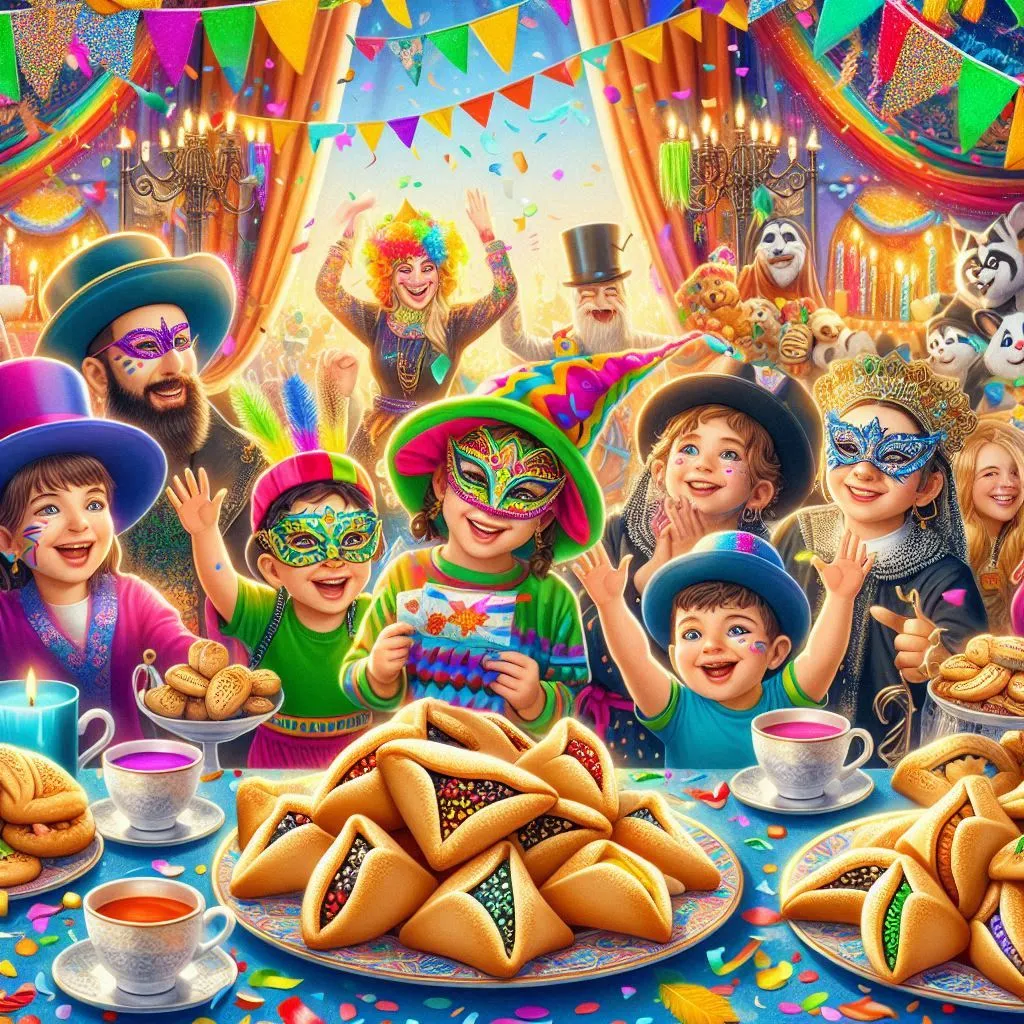
Purim is one of the happiest and most colorful celebrations in the Jewish calendar, known for costumes, sweet treats, festive parties, and acts of kindness. The holiday celebrates the inspiring story of Queen Esther and the Jewish people’s survival, making it a time of joy, gratitude, and community.
In this list of Purim fun facts, you’ll explore interesting traditions, history, foods, and unique customs celebrated around the world.
Whether you’re learning about Purim for the first time or looking for fun holiday trivia, these facts will help you better understand this joyful Jewish festival.
Purim Fun Facts For Adults
1. Purim’s name comes from “pur,” the lots Haman cast to pick a genocide date—talk about bad luck!
2. God’s name never appears in the Book of Esther, making it the only biblical story where the divine works invisibly.
3. In walled cities like Jerusalem, Purim is celebrated a day later on Shushan Purim, due to delayed news of victory.
4. Haman had 10 sons, all hanged on Purim—echoed eerily in 1946 Nuremberg executions.
5. Ireland banned pub drinking on St. Patrick’s Day from 1903-1970, but Purim mandates festive boozing until you can’t tell heroes from villains.
6. Hamantaschen cookies mimic Haman’s three-cornered hat, pockets for bribe money, or even his ears—gruesome origins!
7. The Megillah is read twice: night and day, with groggers drowning out Haman’s name every mention.
8. Purim 2025 falls March 13-14, but in leap years, it’s always Adar II for maximum joy.
9. Ahasuerus (Xerxes I) wasn’t royal blood; he was a usurper who married Esther without knowing she was Jewish.
10. Purim occurred ~216 years before Chanukah, predating many other holidays.
11. During WWII, Jews in a German camp celebrated Purim secretly, reading Megillah amid peril.
12. It’s a mitzvah to get drunk on Purim—enough to blur Mordechai and Haman, but not pass out.
13. Mordechai and Esther are the heroes, but Vashti’s defiance started the plot by refusing to strip.
14. Purim spiels are comedic plays mocking the story, with adults in wild costumes.
15. First historical antisemitism account: Haman’s plot against Persian Jews.
16. Mishloach manot requires sending food gifts via messenger—at least two food types to one friend.
17. Matanot la’evyonim mandates giving charity to at least two poor people.
18. Se’udat mitzvah means obligatory feast, often with wine flowing freely.
19. In leap years, Adar I gets a minor “Purim Katan,” but no full partying.
20. Haman was hanged on Passover, but Purim marks the foiled extermination date he chose.
Read More: 118+ Awesome Pi Day Fun Facts
Purim Fun Facts In English

1. Purim is celebrated on the 14th of the Hebrew month of Adar.
2. In Jerusalem and other walled cities, Purim is celebrated a day later, called Shushan Purim.
3. The word “Purim” means “lots,” referring to the lots cast by Haman to choose the date for his plot.
4. Purim commemorates the salvation of the Jewish people in ancient Persia.
5. The story of Purim is told in the Book of Esther.
6. One mitzvah of Purim is to hear the Megillah reading twice—once at night and once during the day.
7. During the Megillah reading, people use groggers (noisemakers) to drown out Haman’s name.
8. It is customary to wear costumes on Purim, symbolizing hidden miracles.
9. Traditional Purim pastries are called hamantaschen, triangular cookies with sweet fillings.
10. One mitzvah of Purim is mishloach manot—sending food gifts to friends.
11. Another mitzvah is matanot la’evyonim—giving charity to the poor.
12. A festive meal called the Purim seudah is held, often with wine and singing.
13. Drinking alcohol is a Purim tradition, with the idea of celebrating joyfully.
14. Queen Esther, the heroine of Purim, is said to have kept kosher in the palace by eating vegetarian food.
15. Purim is considered one of the most joyous holidays in the Jewish calendar.
16. The Purim story took place in Shushan, the capital of the Persian Empire.
17. The villain Haman was an advisor to King Ahasuerus.
18. Purim is sometimes called the “Jewish Mardi Gras” because of its costumes and festive atmosphere.
19. In leap years, Purim is celebrated in Adar II.
20. Many communities hold Purim spiels—comic plays retelling the story with humor.
Read More: 139+ Full Moon Quotes
Purim Fun Facts For Kids
1. Purim is a Jewish holiday that celebrates the bravery of Queen Esther, who saved the Jewish people from an evil plot in ancient Persia over 2,500 years ago .
2. The name “Purim” means “lots” or “lottery” in Hebrew. This refers to the lottery that the villain Haman used to pick the date for his evil plan .
3. The Purim story is told in the Book of Esther, which is read from a special scroll called the Megillah during the holiday .
4. Here’s something strange—God’s name is never mentioned anywhere in the entire Book of Esther! It’s the only book in the Hebrew Bible where God doesn’t appear .
5. During the Megillah reading, every time the name of the villain Haman is said, everyone in the room boos, hisses, and twirls special noisemakers called groggers to drown out his name .
6. People dress up in costumes on Purim, kind of like Halloween! Kids love dressing as Queen Esther, Mordechai, or other characters from the story .
7. A special Purim treat is hamantaschen, which are triangle-shaped cookies. They’re shaped to look like Haman’s three-cornered hat—or some say his ears! .
8. Traditional hamantaschen fillings include poppy seed, prune, and apricot, but today people also use chocolate, Nutella, and raspberry jam .
9. Giving gifts is a big part of Purim. People send Mishloach Manot—baskets filled with yummy foods and treats—to friends and family .
10. Purim is also about helping others. Jews are commanded to give charity (called Matanot L’Evyonim) to people in need during the holiday .
11. Some cities like Jerusalem celebrate Purim one day later than everywhere else. This special day is called Shushan Purim, remembering that the Jews in the walled city of Shushan fought for an extra day .
12. Purim is a super joyful holiday—it’s actually a mitzvah (good deed) to eat a big festive meal and be happy! .
13. The holiday usually falls in March on regular calendars, but on the Hebrew calendar it’s always on the 14th day of the month called Adar .
14. Purim has been celebrated for a very long time—the earliest observances go back to the 5th century BCE! .
15. There’s a fun tradition of putting on Purim spiels, which are funny plays or parodies that retell the Purim story. Some use popular songs with new Purim lyrics .
16. Before the fun begins, there’s actually a small fast called the Fast of Esther, remembering when Queen Esther fasted before bravely approaching the king .
17. Many synagogues and Jewish communities hold Purim carnivals with games, prizes, and lots of fun activities for kids .
18. In some communities, people even burn an effigy of Haman or hang his name on signs and stomp on it during the celebration .
19. The whole Megillah reading takes about 45 minutes, but with all the booing and noisemaking, it feels much shorter and way more fun! .
20. Purim teaches kids that one person can make a difference. Queen Esther was brave and spoke up, even though she was scared, and she saved her entire people .
Funny Purim Facts

1. Purim is basically the Jewish Halloween + New Year’s Eve + April Fools’ Day rolled into one very long drinking game.
2. The Talmud literally says you should drink on Purim until you can’t tell the difference between “cursed be Haman” and “blessed be Mordechai” — so getting blackout-level drunk is halachically encouraged.
3. If you fall asleep drunk during the Purim seudah (festive meal), that’s not a bug — that’s a feature.
4. The entire Book of Esther never once mentions God’s name — the only book in the Bible to pull off that ultimate mic-drop.
5. Hamantaschen means “Haman’s ears” in Yiddish… which is weird because the pastry is triangular and filled with poppy seeds, jam, or chocolate — so whose ears are those really?
6. Some rabbis ruled that if you get so drunk you give away all your money to charity, it’s still a mitzvah — Purim finances are wild.
7. In some communities, kids dress up as the villain Haman and then get booed — imagine Halloween but the devil gets candy anyway.
8. The fastest way to spot an Ashkenazi vs. Sephardi Purim party: Ashkenazi hamantaschen have poppy seeds; Sephardi ones have dates and are 10× better.
9. Purim is the only Jewish holiday where cross-dressing is not just allowed — it’s basically the point.
10. There is a custom in some places to boo, stamp feet, and use groggers (noisemakers) every time Haman’s name is read — it’s the Jewish version of “talk smack to the villain” ASMR.
11. The Purim spiel (play) tradition started because people were too drunk to follow the megillah reading, so actors had to act it out.
12. In Israel, Purim is the one day a year when the entire country turns into Comic-Con but with more schnapps and less lines.
13. Some Hasidic groups have a custom where the rebbe gets “drunk” on grape juice so everyone else feels okay about drinking real wine.
14. The megillah reading is the only time in Jewish tradition where making noise during Torah reading is a mitzvah.
15. There is a famous joke: “On Purim you drink until you can’t tell Haman from Mordechai. On Simchat Torah you drink until you can’t tell Torah from Haman.”
16. In the 1700s, some European Jewish communities had Purim rabbis — fake rabbis who gave ridiculous halachic rulings while drunk (e.g., “it is permitted to steal your friend’s hat”).
17. Purim is the only Jewish holiday where giving food gifts (mishloach manot) is required — basically Jewish Secret Santa but mandatory and with more hamantaschen.
18. Some people celebrate “Purim Katan” (little Purim) in Adar II of a leap year — so they get two chances to get drunk and wear costumes per cycle.
19. The villain Haman is the only person in Jewish history whose name is literally drowned out by noise every year — cancel culture, ancient edition.
20. Purim is the holiday that proves Jews can party harder than anyone — we turned a near-genocide survival story into an annual costume party with mandatory drinking and charity.
Short Purim Fun Facts
1. Purim celebrates the events told in the Book of Esther.
2. The holiday honors how Queen Esther saved the Jewish people of Persia.
3. Esther’s cousin Mordecai helped uncover a royal plot.
4. The villain of the story is Haman.
5. Purim is one of the happiest holidays in Judaism.
6. People often celebrate by wearing costumes.
7. Loud noises are made when Haman’s name is read aloud.
8. Special noisemakers used are called graggers.
9. A popular Purim treat is hamantaschen, triangle-shaped pastries.
10. Giving food gifts to friends is called mishloach manot.
11. Giving charity to people in need is a key Purim tradition.
12. The Purim story takes place in ancient Persia.
13. Funny performances called Purim spiels are common.
14. The name “Purim” comes from the word meaning “lots.”
15. Celebration and joy are major themes of the holiday.
16. Some cities hold colorful Purim parades.
17. A festive meal called the Seudat Purim is enjoyed.
18. The Book of Esther never directly mentions God’s name.
19. Children and adults both dress in creative costumes.
20. Purim celebrates courage, bravery, and hidden miracles.
Best Purim Fun Facts
1. Purim means “lots,” from the dice Haman cast to pick his genocide date—ironic bad luck for him.
2. God’s name is absent from the entire Book of Esther, the only biblical book without it.
3. Walled cities like Jerusalem celebrate Shushan Purim a day later, on the 15th of Adar.
4. Haman’s 10 sons were all hanged; their execution dates eerily match the 1946 Nuremberg hangings.
5. It’s a mitzvah to drink on Purim until you can’t distinguish “cursed Haman” from “blessed Mordechai.”
6. Hamantaschen cookies symbolize Haman’s three-cornered hat, pockets, or even his ears.
7. The Megillah is read twice—night and day—with groggers noisily blotting out Haman’s name 54 times.
8. Purim always falls in Adar II during leap years to maximize joy, per rabbinic tradition.
9. Queen Esther hid her Jewish identity from King Ahasuerus until the plot was revealed.
10. Vashti’s refusal to parade naked before drunk nobles led to Esther’s rise.
11. Four mitzvot define Purim: Megillah reading, mishloach manot (food gifts), matanot la’evyonim (charity), se’udah (feast).
12. Purim spiels are satirical plays parodying the story, with costumes and absurdity.
13. During WWII, Jews in a Buchenwald subcamp secretly celebrated Purim days before liberation.
14. “Drowning the shamrock” has an Irish analog, but Purim ups it with mandatory merriment.
15. The story is set in ancient Persia, roughly 483-473 BCE, under Xerxes I.
16. Jerusalem’s “Purim Taka” commemorates a miraculous bag of gold saving the community.
17. Hamantaschen fillings vary wildly: poppy seed, chocolate, even savory—symbolizing hidden truths.
18. Purim Katan in Adar I leap months gets minor observances, no full festivities.
19. Women must hear the Megillah, as they too were endangered by Haman’s decree.
20. Purim’s joy reverses fasts; it’s a rabbinic mandate to party like the Jews did post-victory.
People also ask
What are the four rules of Purim?
1. Reading the Megillah (Book of Esther)
2. Giving gifts of food to friends (Mishloach Manot)
3. Giving charity to the poor (Matanot La’Evyonim)
4. Eating a festive meal (Seudat Purim)
What is special about Purim?
Purim is special because it celebrates how the Jewish people were saved from danger in ancient Persia, and it is a joyful holiday marked by costumes, gifts, charity, and celebrations.
What is a fun fact about Purim?
A fun fact about Purim is that people often dress up in costumes, making it one of the most playful and festive Jewish holidays.
Final Thoughts
Purim is more than just a festive holiday filled with costumes and sweet treats—it’s a celebration of courage, joy, and community. These Purim fun facts highlight the rich history, meaningful traditions, and cheerful spirit that make this Jewish festival so unique and loved around the world.
From the story of Queen Esther to lively celebrations and acts of kindness, Purim reminds people to celebrate resilience, share happiness, and support one another. Whether you’re exploring the holiday for learning, teaching, or pure curiosity, Purim continues to bring laughter, tradition, and togetherness to every generation.